Shopping closer and smarter
17:09
According to Colliers, as much as 70% of the newly completed retail space (some 103,000 sqm) was added within retail parks in H1 2023. The only other two competitions in the first six months of the year were in pre-existing, traditional shopping centers: Fort Wola in Warsaw and Bawełnianka in Bełchatów.
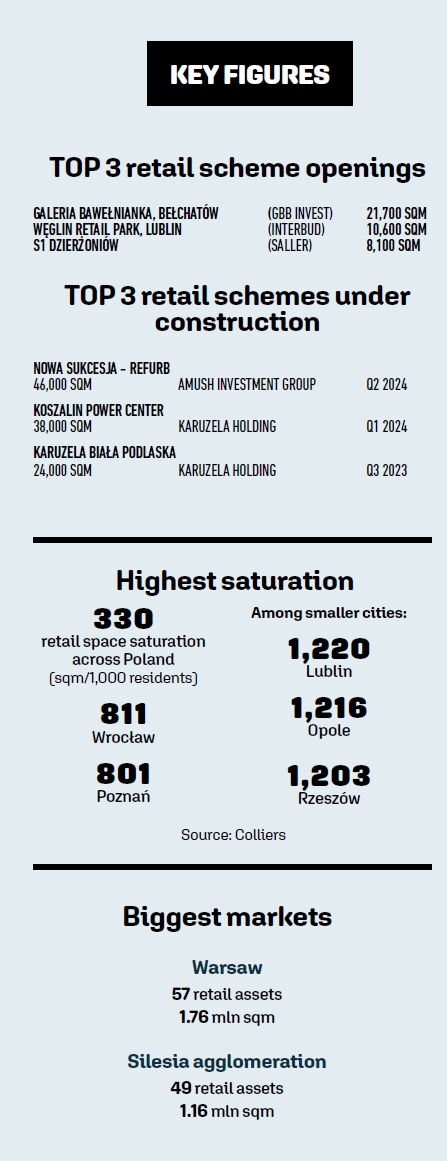
“The development of retail parks and convenience centers in smaller cities remains the most marked trend in the market,” said Agnieszka Piekarska, associate director in Colliers’ retail space department.
An additional 227,000 sqm is expected to come out of the pipeline by the end of 2023, the majority of which will come within retail parks.
Convenience on the rise
The three types of retail parks include big box retail parks, with at least 10,000 sqm of GLA, traditional retail parks between 5,000 and 10,000 sqm of GLA, and the smallest, “convenience” type with GLA below 5,000 sqm. Due to their size, big box parks have the largest market share in total space. However, the smallest type has the largest number and is growing the fastest. Over 50% of the new retail space was added in “convenience” retail parks in small cities of below 100,000 residents, according to a report by CBRE.
Discount stores and other non-food “value retailers,” including Action, Dealz, Pepco, and Tedi, are the fastest-growing tenant segment in the market, according to CBRE analysts. According to CBRE experts, they facilitate shopping close to home and also fit the current trend of smart shopping, where consumers are more careful about spending their money.
“Customers value retail parks for their uncomplicated nature, spacious and convenient outdoor parking, and basic but comprehensive offer, which includes our store chains Pepco and Dealz. The offer is often complemented with a grocery discount story,” said Maciej Preis, Expansion Director Europe, Pepco Poland.
New brands and discount stores
Discount stores, particularly the non-food type, have long established themselves as core tenants of retail parks, which have seen a real boom in activity. While tenant revenues across retail properties grew by 7.7% y/y in June, according to data from the Polish Shopping Centers Council, it was the smallest properties (of between 5,000 sqm and 20,000 sqm) that saw the strongest growth (of an impressive 14.5% y/y).
The first half of the year was also marked by many new brands entering the Polish market. The German discount chain Woolworth, plans to open 10 stores in Poland by the end of 2023 with a target of 400. The first six Woolworth stores are located in Kraków, Warsaw, Poznań, Bełchatów, Zielona Góra and Łódź. Poland is the first international market the German brand is venturing into. Woolworth is focusing on new or recently refurbished, but not premium, shopping malls and retail parks. Other newcomers to the Polish market include German Hugo and Mixt Markt, American Popeyes, Ukrainian Snail Bob, and Lithuanian Candy Pop.