



SYSTEMIC ISSUES
21:52
WBJ: You are now holding Poland’s human rights commissioner’s office (RPO) at a time when the country is in a very difficult political situation. Your position gives you the authority to intervene in individual cases regarding, for example, human rights and the prevention of torture and deprivation of freedom. What are your priorities at this moment?
Marcin Wiącek: My credo is Article 30 of the Polish Constitution, which expresses the principle of protection of human dignity. In practice, this means taking care to protect and realize all human rights and civil rights and freedoms, as each of them determines to some extent whether citizens have decent living conditions, whether the principle of equal treatment is respected towards them and whether they can realize their right to have resort to justice. I would like to emphasize, however, that I will try to provide special protection to excluded people. In this category, I include people with disabilities, the homeless, the elderly, victims of violence and discrimination and people affected by poverty or disease. This is my priority in the office: caring for such people. I intend to carry out this task both on an individual basis by, among others, instigating or joining court and administrative proceedings, and through so-called general appeals, which concern systemic solutions to improve the situation of people with disabilities and of their carers and which may also serve, for example, to combat the phenomenon of homelessness.
The EU described Poland's Constitutional Tribunal (TK) as an inoperative and illegitimate institution. You filed a motion for excluding from TK several judges, including Krystyna Pawłowicz, and the so-called double-judges [judges who were appointed to already taken positions on the Tribunal’s bench: Mariusz Muszyński, Justyn Piskorski and JarosławWyrembak]. However, the request was rejected by the president of TK, Julia Przyłębska. What is your reaction to this?
I acknowledge the position of TK. I have no other choice as there are no legal grounds to question the Court's rulings even if I disagree with them. I believe that by filing a motion to TK for exclusion of these judges I fulfilled my duty. I signaled to the Court the risk that its ruling may be challenged at the international level due to the defectiveness of its adjudicating panel. This was confirmed by the judgment of the European Court of Human Rights (ECHR) in the case "Xero Flor v. Poland." This judgment is final as the Polish government has not appealed it. Therefore, I have asked the prime minister how this verdict will be executed. I am waiting for his response.
At the meeting with EU Commissioner Věra Jourová, who was in Gdańsk on the occasion of the 41st anniversary of the August Agreements, you discussed with her the necessity of respecting fundamental rights related to human rights and media freedom in Poland. However, despite the fact that you have been advocating for these rights from the beginning of your term in office, nothing is changing in Poland in this respect. So how do you see the possibility of resolving this situation?
This is a very general question. In Poland — as in every country — there are problems with respecting certain freedoms and human rights. In the area of media freedom, I raised doubts — following in the footsteps of my predecessor Professor Adam Bodnar — regarding the prolonged procedure for awarding a broadcasting license to the TVN24 news station. I, therefore, welcome the decision of Poland’s National Broadcasting Council (KRRiT) to extend this license.
The case of the legality of the acquisition by Polski Koncern Naftowy Orlen (PKN Orlen) oil company of the shares of Polska Press media group is still being investigated in the court. This case, initiated by my predecessor, is precedent-setting and gives rise to many legal problems and disputes. In a democratic state governed by the rule of law, the court is the body that should resolve such disputes. So I am looking forward to the court's verdict.
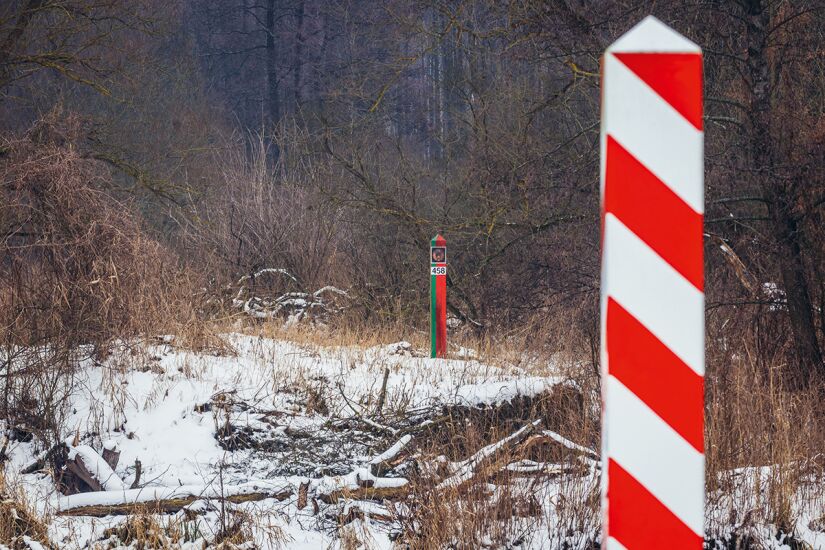
RPO is also acting in some cases concerning the dismissal of journalists. In addition, I have recently pointed out that, while having no legal objections to the way in which a state of emergency was introduced along Poland's border with Belarus, I do not understand the ban on journalists working in that area. I believe that they should have access to that region even if one could perhaps envisage the issue of special press passes for them [Migrants are dying in Poland's forested border with Belarus, as the countries are locked in a geopolitical standoff. Warsaw accuses Minsk of deliberately abandoning migrants near the country’s border in an attempt to destabilize the EU because the bloc imposed sanctions on Belarus after its disputed election. Meanwhile, Poland plans to build a border wall and nearly doubled the number of soldiers (6,000) deployed to guard its border with Belarus.]
Like Bodnar, you are de facto being ignored by the Law and Justice (PiS) government, despite the constitutional importance of your office. RPO-like organizations currently exist in 110 countries on different continents. There also exists a similar office on the EU level, a position which is being held for the second time by Emily O'Reilly, appointed under the Maastricht Treaty. Your own term of office will last five years. Do you think that the question of the superiority of EU law over Polish legislation will continue to raise controversies?
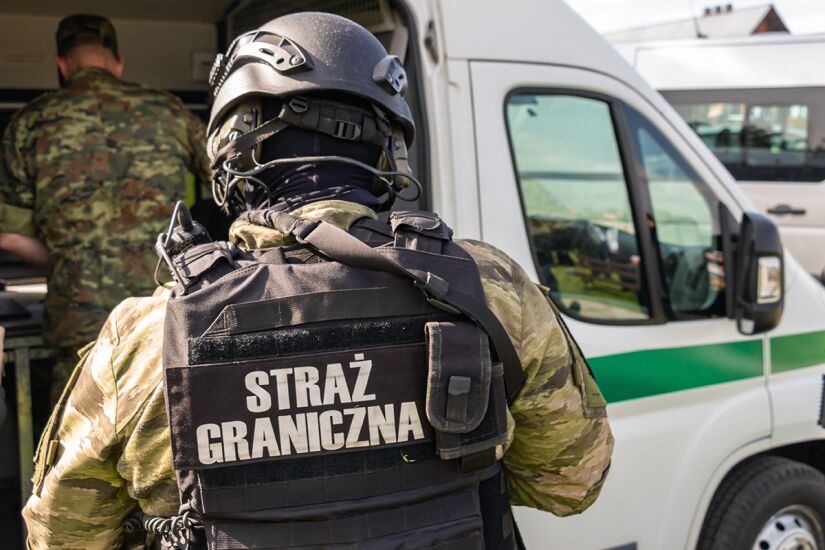
I do not feel ignored by the Polish government. I am glad to say that on many issues the government and its subordinate bodies cooperate with RPO. They address my concerns and respond to my comments. For example, I had a very successful meeting with the chief of police. Together we discussed the issues of detentions and preventing those dramatic cases when a person dies as a result of police intervention. Also, in connection with the introduction of the state of emergency on the Polish-Belarusian border, I appreciate the cooperation with the Border Guards (SG), who help RPO representatives to carry out their work. For example, SG pointed out that we have the right to visit areas where a state of emergency has been declared.
As far as EU law is concerned, however, I have always stressed my position, including in my academic work, that the Polish Constitution has precedence over international law, including European law. Here my position is in principle the same as that of the government. We differ, however, in our assessment as to whether there has been a violation of the Polish Constitution in specific cases. I am referring here, for example, to the assessment of the functioning of the Supreme Court's Disciplinary Chamber. I am of the view that the EU treaties are consistent with the Polish Constitution and also that there is no inconsistency between the CJEU judgment of July 15, 2021, concerning the disciplinary responsibility of judges and the Polish Constitution. What’s more, I believe that they confirm the standards set out in Poland's Constitution.
You’re persistent in your actions and envoys from your office visited groups of refugees camping in Usnarz Górny at the Polish-Belarusian border. Marcin Kusy, an RPO representative, who managed to get there before the introduction of the state of emergency, said that the Polish authorities, being aware of the terrible conditions in which these people have found themselves, are responsible for violating the Convention for the Protection of Human Rights.
I cannot comment on this issue at the moment. During the state of emergency, I am forbidden to disclose to the public any information about the actions of SG at the Polish-Belarusian border. However, I will always take care to respect national and international refugee law, as well as the dignity of every human being. I intend to address the Polish authorities about the situation on the Polish-Belarusian border. However, it will be covered by the secrecy clause.
You are not affiliated with any political party in Poland. You are a lawyer and you lectured at the University of Warsaw. Do you think that once there is a change of government in Poland you will be able to more actively respond to the needs of Poles who expect their rights to be respected?
I will work diligently and give my best as ombudsman, no matter what political majority is in power during my term of office. I am not a politician. I am an independent advocate for the public. I believe that I should avoid any statements that would give real grounds to suspect me of sympathy, or lack thereof, for any political party. My activities are guided — as they have been for years — exclusively by my legal knowledge and not by my worldview or political sympathies. Therefore, it is not that important to me who is in power and who is in opposition. Human rights have no political colors. I want everyone, regardless of his or her political views, worldview, or religion, to feel equally comfortable knocking on the door of RPO and seeking support in solving their problems.
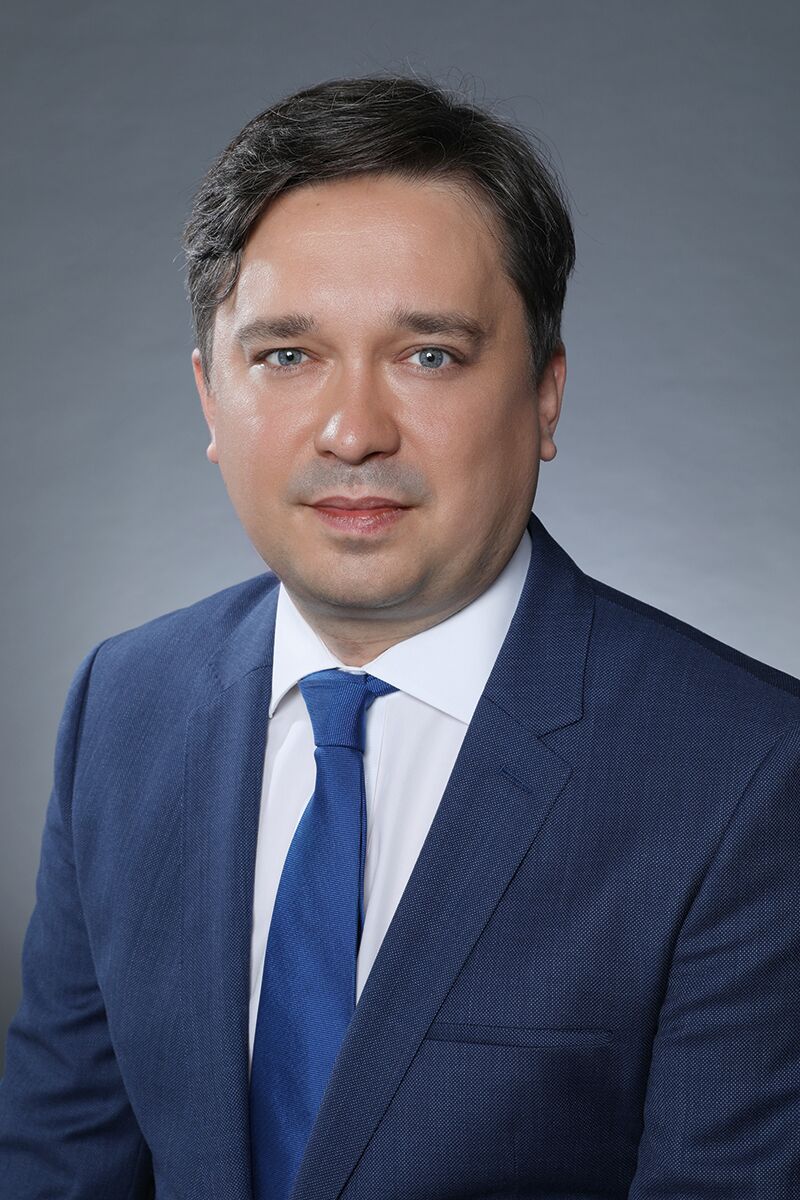
Professor Marcin Wiącek has been appointed Poland's new Commissioner for Human Rights. In July, both houses of the Polish parliament appointed Professor Wiącek to the position of ombudsman in the sixth attempt to fill the position due to party disagreements.


