



THE ELECTRIFICATION OF ROAD TRANSPORT IN POLAND DRIVES FORWARD
22:57
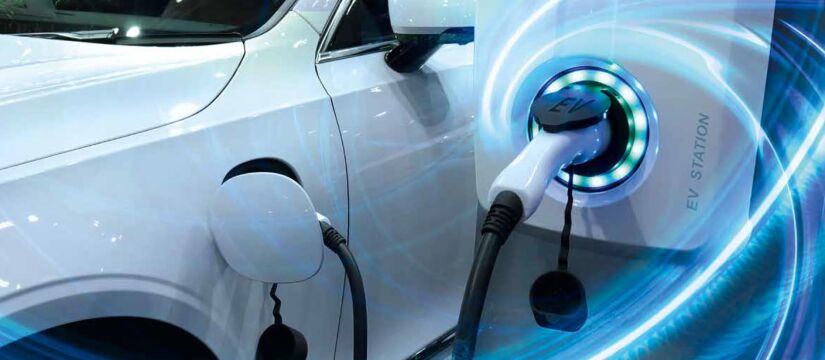
The E-Mobility Index, operated by the Polish Alternative Fuels Association (PSPA) and the Polish Automotive Industry Association (PZPM), shows that at the end of May there were jointly 25,407 electric personal vehicles registered in Poland. This means that a new 6,671 electric cars were added during the first five months of 2021, providing a 149 percent increase against the same period in the previous year.
Fully electric BEVs made up 49 percent of the numbers listed above (with 12,432 units), while the other 51 percent were PHEVs (plug-in hybrid electric vehicles) with 12,975 such cars. These statistics show a positive trend, where the proportion of BEVs is becoming more balanced and continues to grow. Moreover, numbers are rising in other areas of e-mobility as well. The utility and heavy electric car park now count 966 vehicles. There is also an observable growth in the number of e-bicycles and e-motorbikes, which reached 10,105 in May. Poland continues to hold its position as an e-bus hub in the CEE region, with 526 such buses in the country. The fleet of e-buses increased by 94 zero-emission vehicles between January and May. The growth in this segment is very impressive, as it constituted a rise of 203% against the analogous period of 2020 when only 31 such vehicles were registered in this timeframe.
The development of the electric car park is supported by higher statistics in the EV charging infrastructure. At the end of May, 1,495 public charging stations were available, which constitute 2,897 charging points. As many as 33 percent of these were DC-type chargers and 67 percent were AC, lower power, or 22kW chargers. Just in May alone, 39 new public charging stations were launched (providing 59 new charging points). The pace of growth in this area is slower, however than in previous periods. Between June 2019 and May 2020, nearly 500 public stations were installed in Poland. Only 322 were installed in the following 12 months. Unfortunately, the positive signals for the industry still meet negative counterparts. The introduction of the e-tariff was definitely a great breakthrough for the Polish EV charging infrastructure industry but the fact that Poland continues to have the most time-consuming connection procedures for charging stations does not help the development of this segment.
A new step in making e-mobility a reality was introduced, however, with no small input from PSPA. The website operated by the Polish Government Legislation Center (RCL) informed that the resolutions regulating signs and road signals, as well as other relevant acts of law will be amended in order to introduce new roadsigns dedicated to EV drivers. The new signs, based on the proposals recommended by the White Book on E-Mobility, authored by PSPA and proposed during the 2019 New Mobility Congress in Lublin comprise but are not limited to the directions regarding the location of an EV charging point (sign D-23C) and a gas station with a charging point (D-23b). There will also be a sign with information regarding charging stations or charging points on signboards with other road information as well (D-34b). The new signs will provide the EV community with the necessary information about where the charging stations are and they will also be installed on highways and expressways. Hence, another important step is made in the strive for zero-emission road transport in Poland.
Aleksander Rajch
The Polish Alternative Fuels Association (PSPA) states that it is the largest, fully representative industry organization, which promotes zero- and low-emission technologies in transport in Poland. Aleksander Rajch is the director for external relations and board member at PSPA.


