The future of Warsaw looks bright
12:46
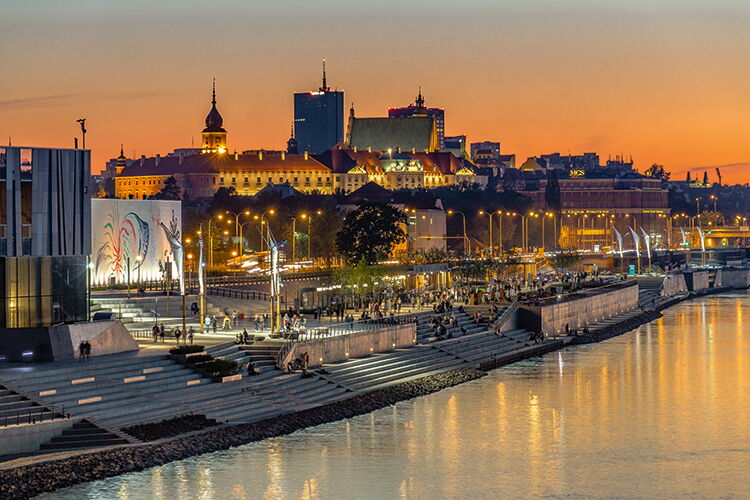
In 2023, Warsaw is about to adopt a new Studium – the city's most important planning document. The Studium is not a direct implementation tool. Instead, it provides a strategic framework for forthcoming decades of planning. It determines the future size of the city and coordinates the development of a few key aspects: mobility, greenery, public spaces, new development zones, and others.
Housing First
Over the last three decades, Warsaw has seen unprecedented growth. But it has also experienced a drastic increase in housing prices, exacerbated by the recent refugee crises caused by the Russo-Ukrainian War.
The priority of the new Studium is to provide the city with new development zones while simultaneously increasing housing quality. In addition, the Studium will coordinate the redevelopment of centrally located brownfields while limiting suburban sprawl. As a result, up to 95,000 new apartments will be built on former industrial, commercial, and railway lands.
"Warsaw has multiple brownfields that need bold regeneration schemes. We already have outstanding examples of such mixed-use investments developed in a sustainable way that benefit the city and its inhabitants," says Mayor of Warsaw Rafał Trzaskowski
The Studium will abolish strict zoning. It will be easier to mix apartments with offices and shops, develop apartments for rent and create public-private partnerships. It will also make planning more flexible, allowing the city to react efficiently to rapid political, climate, and economic changes. As a result, the standard of housing will increase. A more compact and mixed-use city will provide its inhabitants with better public transport, various services, and more greenery.
A thriving local life
According to local government data, 94% of Warsaw residents like their city. They particularly love their neighborhoods, defining their "neighborhood" as the area around them located within an 11-minute walk. Hence the ambition to design a 10-minute city.
By 2050, 93% of Warsaw residents will have all their daily services available within a 10-minute walk, including a local center, a school, a park, a bus stop, a shop, or a cafe. All peripheral districts will be within reach of a tram, a local train, or a subway. They will also receive any now-missing schools and parks. Limiting suburban sprawl will reduce the costs of building infrastructure by five times.
The thriving city center will expand into Wola and Ochota and to Praga on the right bank of the Vistula river. Additionally, 272 local- and 41 district-level centers will be created. The five most important railway stations will transform into five metropolitan gateways: comfortable mixed-use districts organized around transfer nodes.
Future Warsaw will also be more healthy. By 2050, every resident will be within a 15-minute walk of recreational areas and have direct access to green walking and cycling routes. Local neighborhood centers will also reduce the plague of loneliness threatening senior citizens. This is particularly important due to demographic changes: by 2050, every fourth person living in Warsaw will be over 65.
The healing power of nature
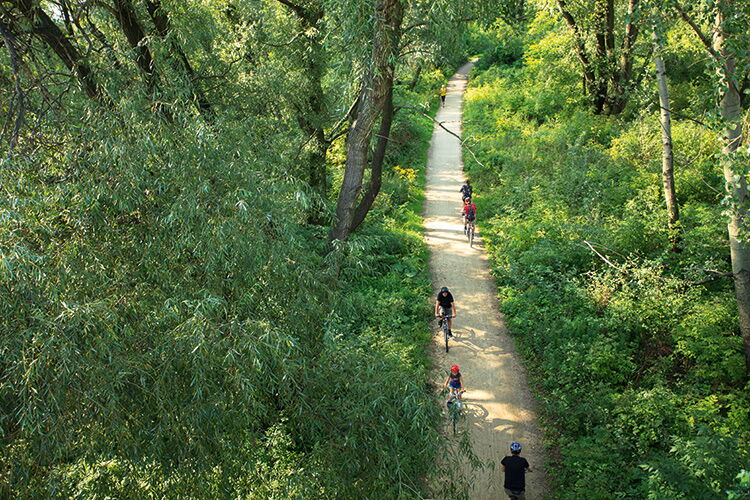
Warsaw is already among the top ten greenest cities in Europe. By 2050, every citizen of Warsaw will have a view of greenery from their window. Protection areas of the most valuable natural area will increase by 39%. Parks and squares will double in size, and forests will increase by 11%. Residents will have a high-quality park only a 15-minute walk from their homes. The embankment of the Vistula and the adjacent escarpment will become one of the largest green public spaces in Europe, distinguishing Warsaw's central district from other European capitals.
Robust natural zones will guarantee safety. Planning indexes introduced in the new Studium will provide more greenery throughout the whole area of the city. This improved system of natural zones will constitute blue and green infrastructure, which increases biodiversity, making cities more resilient to the adverse effects of climate change. It is also 28% more productive than traditional infrastructure and costs half as much. It will make Warsaw resistant to droughts and flooding and reduce the costs of fighting climate change.
Warsaw will also decrease energy use and develop clean energy sources. All new construction will be subject to new green standards and existing buildings will undergo thermal modernization. The city will also support creating a distributed network of renewable energy sources, decrease the energy consumption of air conditioning, and continue developing electro-mobility.