



The world upgraded
11:03
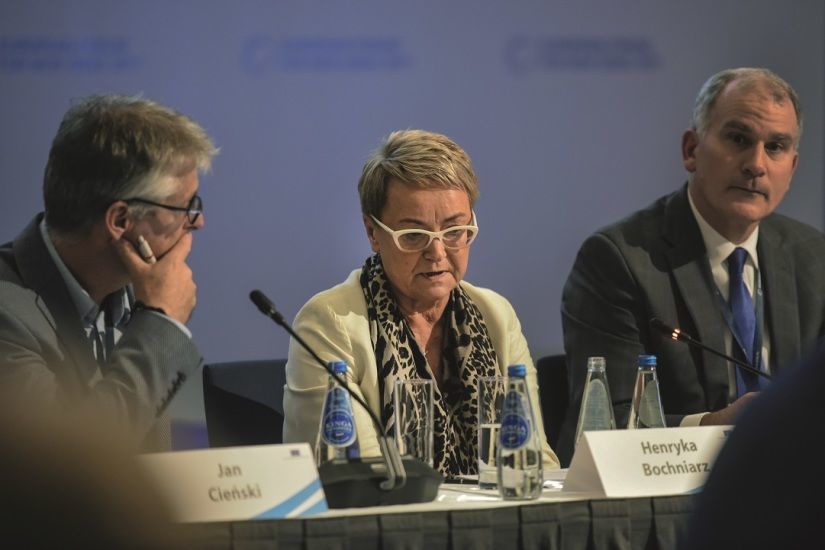
WBJ: One of the main themes of this year’s European Forum for New Ideas (EFNI) is sustainable development, energy and climate issues. Are Polish companies open to dialogue about how business affects the environment?
Henryka Bochniarz: Naturally, not all companies are, and the degree of their engagement in the dialogue also varies. But the trend is clear. Companies are not only discussing environmental issues, they are rebuilding their strategies and taking action. Regulations remain the main stimulus for change, but pressure from customers, the public sector and particularly local governments is also increasing.
The debate at EFNI will not be on whether to meet sustainable development requirements, but how to do so while keeping a company profitable and how to finance such development. The discussion will be launched by a keynote speech from Jyrki Katainen, European Commission Vice-President for Jobs, Growth, Investment and Competitiveness.
Can Poland realistically think of reaching a closed-loop economy?
When we look at the diminishing natural resources and the growing population of our planet, it becomes apparent that we have to create a more circular economy globally, and not only in Poland. Of course, it will be a tedious and long-term process, because we need a shift in growth philosophy from “more” to “less and more wisely.”
A circular economy entails lower consumption of resources, less waste, well-designed products with a longer lifespan instead of cheap, low-quality items. This requires strong intra-sectoral cooperation and more awareness from the regulator, producers and consumers, both private and public.
Where to start? In Poland, we should focus on renewable energy sources and improving buildings’ energy efficiency, which will also significantly influence air quality. We need to develop digital and material technology, increase the responsibility of producers to be able to finance waste recycling and educate consumers.
How have entrepreneurs reacted to the withdrawal of plastic packaging?
They have responded very positively to the European Commission’s Strategy for Plastics in a Circular Economy, which was published in January this year. It is well balanced, it diagnoses the role of plastics in the economy and the environment. They are, after all, both a blessing and a curse. Therefore, we have to limit plastic production and consumption wherever it makes sense considering the environmental impact throughout the entire lifecycle of a product.
We need to do it wisely, because – as indicated in a study from a Danish government agency – the production of a plastic bag requires so little energy and produces so little CO2 that we would have to use a cotton bag 7,100 times to offset the emissions from its production.
A third of all the food produced in the world is wasted and ends up as landfill, emitting harmful methane. Plastic containers protect the food but then they also end up as landfill, where their durability stops being a benefit and becomes a terrible drawback. We need both research into materials and their required properties, as well as a system for collecting and processing plastics.
In many cases, a simple ban (on drinking straws, cotton swabs or wet wipes) seems the best solution, as suggested in the directive on disposable plastics.
What role should business play in implementing the COP24 decisions that will be taken this December in Katowice?
First of all, businesses should be present at the table where climate decisions are made. Undoubtedly, industry, transport and agriculture are the source of greenhouse gas emissions, but industry can also create technological and organizational solutions to limit such emissions. Financing low-emission technologies will not be possible without private capital involvement.
The EU has ambitious goals for 2030 and 2050. It is important for European businesses that other leading economies in the world also set equally ambitious goals and that the process of their implementation be monitored in a transparent way. This year at EFNI in Sopot, we will hold a roundtable talk devoted to the role business will play in implementing COP24 decisions. It will include leaders from the Ministry of the Environment and our partners: UNEP/GRID-Warsaw, UN Global Compact, Employers’ Group, the European Economic and Social Committee, as well as Political Insight.
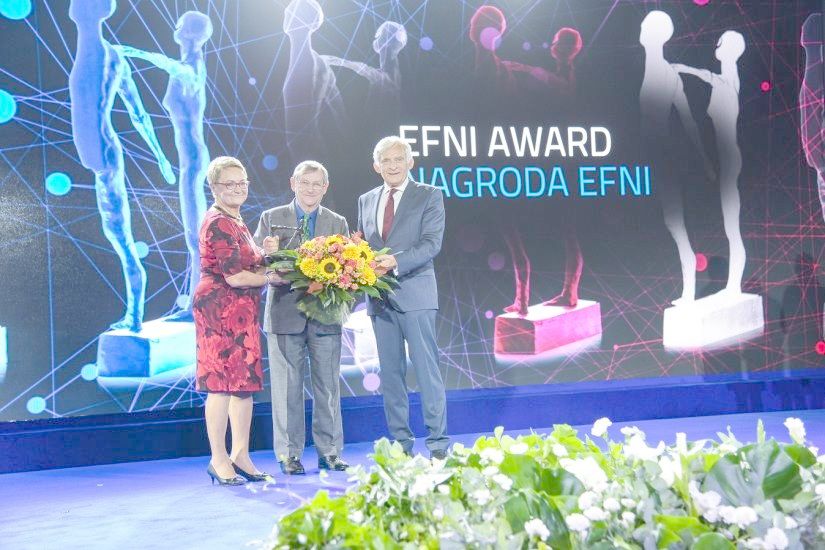
The Forum will also focus on other important topics, such as trade wars. For instance, how is the current US-China trade war affecting Poland?
The trade war between the US and China is only one of the aspects of the new trade “disorder.” The impact on our economy will be mostly indirect, unless it affects copper, which is a major export that Poland sells to China. For instance, Chinese customs have recently been stopping shipments of US cars produced by German automotive concerns. This could create ripples across the Polish automotive car part industry. But these effects are secondary and difficult to measure.
Poland should be more interested in the trade conflict between the EU and the US. We can see some real threats here, such as customs duties on EU-manufactured cars that could hit Polish car part suppliers. Polish Confederation “Lewiatan” believes that President Trump’s goal is to renegotiate the NAFTA deal with Canada and Mexico, but also to create a trade balance with Germany and Japan. We should remember that the European market is not an attractive target for American producers, because it is unlikely that US car exports to Europe will increase, even with lower duties. US cars simply don’t meet the European market’s needs.
US sanctions on companies trading with Iran is yet another issue. The European Commission still upholds the nuclear deal with Iran, which allows for trade in exchange for the country abandoning its nuclear program. The US rejected the deal. The EC is trying to protect EU companies active in or trading with Iran, as they may face severe sanctions from the US, including losing US contracts and being forced out of the American market. We have yet to see how effective the EC’s instruments will be.
The UK’s exit from the EU is drawing closer. What impact is Brexit having on the logistics industry and on Polish transport companies?
Efficient road transport has been our calling card in the EU for years and our organization continues to support legislative solutions that benefit the industry. Polish Confederation “Lewiatan” brings together companies in the industry, including the Polish Transport and Logistics association. In fact, many other industry associations within the Confederation supported our appeal to MEPs to exclude all trans-border cargo traffic from the regulation on posted workers before the July vote in the European Parliament.
Unfortunately, regulations like the mobility package damage the competitiveness of European transport and affect our companies. Brexit is another problem the Polish road transport industry will have to face. Forecasts suggest that even as much as 50-60 percent of cargo between the UK and the EU will have to switch from road transport via the “Eurotunnel” to sea transport, mainly to Belgium and the Netherlands.
We also cannot foresee what the border and customs checks will finally look like, because we still don’t know on which side of the English Channel the check points will be located. There is still no agreement as to how the EU and the UK will share responsibility for the checks on both sides of the channel. There are still more questions than answers, and logistics is not the only headache for Polish and European firms before the London-Brussels divorce takes effect. Brexit has been one of the major topics EFNI for two years now and will once again come up on the agenda this year.
Increasing automation and its impact will also be featured among EFNI themes. Is Polish business quick enough in implementing new technologies to maintain the current growth rate?
Polish companies have tremendous potential. Poles have the knowledge and skills necessary to develop products and services with the latest technologies. We have to remember that implementing innovation happens in several stages. A great idea or a working prototype is not enough. A company needs to design the production process, identify customer needs, secure a good quality supply chain both to procure resources and to deliver the product to the customer. And of course, financing is crucial, at the incubation phase, through implementation as well as at the growth stage. To maintain a high growth rate, we need to look at educational policy, which has to start incorporating new technologies and the changes that they entail.
Naturally, technology creates challenges, also outside of the business world. Some of the questions we have to answer are who takes responsibility for what robots do, what is their status and how it translates into taxes. Undoubtedly, technology will limit the amount of time we work, which will be a sociological challenge. We will discuss these issues at the eighth edition of the European Forum for New Ideas in Sopot.


