



WAGE GROWTH MAY REACH 10% IN 2022
23:25
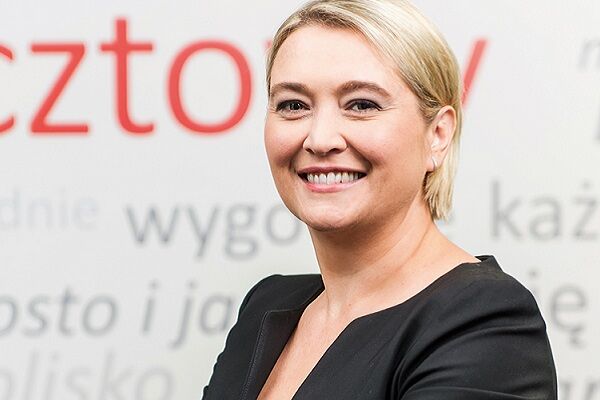
WBJ: Of all the macroeconomic indicators, the CPI, or inflation, attracts the most attention at present. What will the CPI path look like in 2022?
Monika Kurtek: Unfortunately, the path of inflation this year does not look optimistic, despite the two so-called “governmental anti-inflation shields” (in Polish: Tarcze antyinflacyjne). However, it is difficult to fully predict how inflation in Poland will develop due to the generally high uncertainty as to inflation processes in the world.
Perhaps, the highest reading of the CPI, exceeding 9.0% y/y, will be seen in January, as increases in energy and gas prices, excise taxes on alcohol and tobacco, or an increase in the minimum wage will be clearly noticeable. In addition, we have a relatively low reference base from the corresponding period of 2020. But it is not sure what will happen with anti-inflation shields in the second half of this year.
So in the second half of 2022 inflation will decrease?
The governmental shields that have been implemented are expected to function until the end of July, but we do not know what the political decisions will be later. Will energy and fuel taxes be fully restored from August? Will the tax rates return immediately to the levels they were in before the reductions? Or maybe the shields will be extended, and the tax recovery will be postponed and gradual?
Depending on the answers to those questions, the inflation path in the second half of 2022 may look very different. In the scenario where everything is restored on August 1, we have a good chance of achieving a double-digit CPI index, much higher than in January. If the shields tax reduction stays with us for longer, inflation should decline slowly, but with the emphasis on "slowly." Of course, one should also remember about the already implemented interest rate increases by the Monetary Policy Council (MPC), and also take into account those increases that are expected to come. MPC decisions should also “keep inflation down,” and this effect should be the most visible in the second half of the year. Summing up, the average annual CPI this year will most likely reach around 7.5% in the optimistic scenario, and in the pessimistic scenario, it may exceed even 9.0%.
To what extent will inflation be burdensome for Polish entrepreneurs? Is it not the case that it balances itself on the side of companies? In simple terms, I will buy more expensive, but also sell more expensive?
Undoubtedly, inflation affects the final recipients, i.e. consumers, the most. Indeed, entrepreneurs, in reaction to the rising prices of raw materials, energy, etc., increase the prices of their products and services. But at some point, the situation becomes very dangerous, because consumers are at the same time employees and go to their bosses with demands for salary increases. In this way, the so-called wage-price spiral appears which is very difficult to break and ultimately has negative consequences for both entrepreneurs and the economy as a whole. Unfortunately, it seems that this trend has just emerged in Poland. Therefore, the MPC will probably have to react stronger than previously expected.
If “stronger than previously expected,” how does Bank Pocztowy forecast the interest rate path in 2022?
The MPC raised interest rates three times in 2021, continued the increases in January and February this year, but it is definitely not the end yet. We are in the monetary policy tightening cycle and most likely another rate hike awaits us at the March MPC meeting. Depending on the inflation estimates for January and February, I expect an increase by 50-75bp, which means that the reference rate would then be at the level of 3.25% or 3.50%. Then we still have to expect increases in the third and possibly the fourth quarter. This means that at the end of 2022 the reference rate may be — according to my expectations — at the level of 4.00% to 4.50%.
To what extent will inflation put pressure on wages?
Already at the end of 2021, information appeared that workers here and there demanded wage increases due to inflation. At the beginning of 2022, this trend grew stronger and the employers themselves, for example, in the latest survey conducted for the National Bank of Poland (NBP), indicate that they are experiencing wage pressure that has not been seen for years. Moreover, they intend to raise salaries. Thus, wage pressure in the economy has been present for several months, but what is more worrying is that it is turning into wage and price pressure. For now, such conclusions can be drawn on the basis of the results of research among entrepreneurs. We will have to wait a while for the data that will confirm this. However, it is extremely important to make decisions that will stop this trend as soon as possible.
What can employees' expectations be and will the wage growth in 2022 be similar to the inflation growth?
In the latest NBP survey on the economic situation, the share of companies forecasting an average wage increase in the next quarter increased to the highest recorded level. The majority of entrepreneurs (around 60%) assessed that the key factor in wage change is employee demands motivated by inflation.
The wage increases will probably not apply to all employees and will be different depending on the sector.
There are industries, such as the hotel, catering, and transport, where employers have more and more problems finding employees. So, if they just want to retain their current staff, they will offer higher pay rises than in industries where such problems are much smaller or completely absent.
For the entire enterprise sector, I forecast the average annual nominal increase in average wages and salaries in 2022 by approximately 10.0%, i.e. more than in 2021 and above the forecasted inflation.
What other factors will be key in 2022 for the business environment operating in Poland?
There are a lot of these factors, both external and internal. The most important thing is the further development of the pandemic situation in the world, because it may have an impact on the economic situation of individual countries. On this, in turn, the availability of raw materials, components, goods, and services will depend, and therefore, will continue to have an impact on price formation.
Funding conditions are likely to change, as several central banks in the world, including the NBP, started to tighten monetary policy last year, and this year will probably be joined by more central banks, including the US Fed and maybe the European Central Bank (ECB). For Polish entrepreneurs, it will certainly be important how the “Polski Ład” — a very large-scale tax reform — will continue to function and whether we will receive EU funds under the National Reconstruction Plan (in Polish: Krajowy Plan Odbudowy), which would allow the economy to start investments.
Finally, a question about the strength of the Polish currency, złoty (PLN). What factors, both internal and external, will have the main influence on the behavior of PLN?
The internal ones will include, above all, decisions of the MPC regarding interest rates and problems between Warsaw and Brussels. External factors include the development of the pandemic situation in the world, the actions of the largest central banks — mainly the Fed and the ECB — and central banks of our region, like those of Hungary and the Czech Republic, and the threat of Russia's invasion of Ukraine.
What will the EUR/PLN and USD/PLN exchange rates be like in 2022?
PLN remained relatively weak in 2021, taking into account the foundations of the Polish economy and the commenced tightening of the monetary policy by the MPC. So PLN definitely has space to consolidate. Thanks to, for example, the expected further increases in interest rates, the EUR/PLN exchange rate should run around 4.50 on average in 2022, and at the end of the year even around 4.40. A more marked strengthening of PLN will probably not be allowed by Poland's conflicts with the EU, while the threat of an armed conflict in Ukraine is also a significant obstacle at the moment.
When talking about the USD/PLN exchange rate, the decisions of the Fed, which will strengthen the USD, will be very important. On the other hand, the ECB at the last meeting also signaled the possibility of rate hikes this year, which in turn should strengthen the EUR against the USD. In this situation, I expect average USD/PLN quotations of around 4.00 in 2022, and at the end of the year around 3.95.


