WARSAW AVOIDS FLIGHT CUTS
09:38
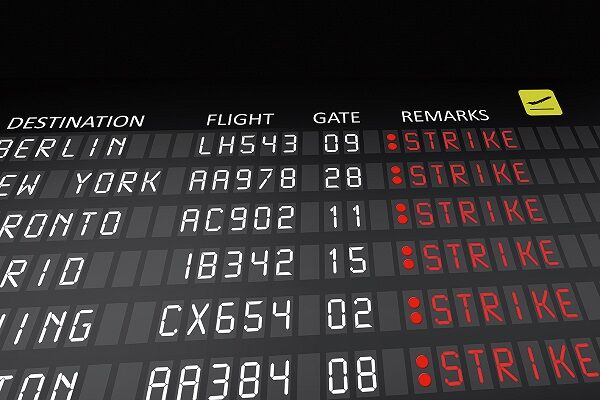
Ahead of Poland’s May holidays at the beginning of the month, thousands of Poles faced the risk of their flights being canceled due to the air traffic controllers’ dispute over the salary and working conditions. The government prepared an emergency plan to reduce flights at Warsaw’s two main airports drastically. At the last moment, air traffic controllers’ union ZZKRL and the Polish Air Navigation Services Agency (PANSA) agreed on a binding deal until July 10. The three-month agreement, however, is a truce rather than the end of the fight.
Polish air traffic controllers threatened to quit their jobs after the air traffic control authority PANSA introduced new payment regulations at the beginning of the year. In Warsaw, 180 out of 208 controllers did not agree to the changes, and as a result, 44 employees left at the end of March, while the remaining 136 could have left at the end of April had negotiations failed.
PANSA said in a statement that controllers demanded a return to pre-pandemic rates, which, according to the organization, were the highest in history. It had initially said that agreeing to the requirements would undermine its financial stability.
Airlines around the globe have been hit hard by coronavirus-related restrictions, leading to a sharp decline in the number of passengers and revenue. The war in Ukraine has put additional pressure, contributing to rising energy costs and further supply chain disruptions.
“Peace in Ukraine and a shift in China’s Covid-19 policy would do much to ease the industry’s headwinds. As neither appears likely in the short-term, we can expect growing challenges for air cargo just as passenger markets are accelerating their recovery,” Willie Walsh, International Air Transport Association (IATA) head, said.
According to PANSA, under new regulations, air controllers could earn up to PLN 45,000 gross per month. However, ZZKRL spokesperson Anna Glaubicz-Garwolińska said the figure was not realistic. “An employee who works 33 years earns about PLN 23,000 net (or PLN 33,000 gross),” she told the Warsaw Business Journal. In the regional airports, most controllers have salaries ranging from PLN 7,500 to PLN 19,000 gross, according to Poland’s National Trade Union of Air Traffic Services (OZZSRL).
Safety first
According to Glaubicz-Garwolińska, the union requires a clearer remuneration structure and better working conditions to ensure passengers’ safety. “We want to work eight hours per day, not twelve. Eight hours in front of the computer is really enough to stay focused and take care of the safety of thousands of people,” she said. The union also appeals against “Single Person Operations” (SPO), whereby one controller alone monitors traffic.
Ahead of May 1, the deadline for reaching a deal, the government prepared for a scenario under which Warsaw’s Chopin and Modlin airports would only handle flights from key destinations. The conflict came at a time when world leaders had been visiting the Polish capital to discuss support for Ukraine.
Under the emergency plan, mainly flights from Chopin Airport, served by LOT Polish Airlines, would receive priority status. This was worrying news for passengers of low-cost airlines who planned to go abroad for the May holidays. Dublin-headquartered Ryanair, which is the biggest carrier by passenger numbers in Poland, operates from Modlin flights to popular destinations, such as London, Dublin, and Paris.
The airport in Łódź, a city located about 120km west of Warsaw, offered help in handling flights. “Of course, as the Łódź airport, we are able to help in the difficult situation over the Warsaw sky,” airport commercial director Artur Fraj told Radio Łódź.
On April 28, PANSA and ZZKRL announced in a joint statement that they had reached an agreement to ensure the continuity of air traffic service in Poland and that passengers would be able to travel as planned. “There is no threat of air traffic paralysis anymore,” said infrastructure minister Andrzej Adamczyk, cited in a statement. Still, during three months, when the agreement is binding, the talks will continue.
“We managed to reach an agreement, but this is not the end of the war, it is a truce. In the name of further good cooperation to paralyze air traffic in Poland,” said Andrzej Fenrych, vice-chairman ZZKRL, cited by TVN24, a Polish 24-hour commercial news channel.
PANSA said it is already implementing 24 demands for the improvement of safety procedures formulated by the union. It did not immediately respond to the WBJ’s request for details.
Poland is not the only country facing the airline industry turbulence. Amid staff shortages, management at Amsterdam Schiphol Airport has called on airlines to cancel flights ahead of the long May weekend and asked them not to accept any new bookings between May 2-8. Dutch national carrier KLM agreed to the request, saying that more than 100 flights scheduled for Friday, April 29, were canceled to keep operations at the airport manageable and reduce workloads for employees.
IATA, the international airline organization, however, was critical of the situation at Schiphol. “We do not support Schiphol's request to cancel bookings for departing local passengers," IATA said in a letter to the airport. “Passengers book flights weeks or months in advance. Some of them will have to cancel their vacation plans”. According to trade unions, low rates of pay and irregular hours are the main reason for the staff shortages.
Polish state-owned media covered the dispute with air traffic controllers in Warsaw, portraying them as an elite group that is never satisfied. PM Mateusz Morawiecki described the monthly salary for air traffic controllers as “very good” and said their working time was among the shortest in Europe. He also called the demands “excessive.” Unions, however, insist that air traffic controllers’ remuneration system is not transparent, sky-high salary is a myth and that shifts last up to 12 hours. They also say wages were cut by more than 20% last year.
Although Warsaw managed to avoid massive flight cancellations for the May holidays, as the sides continue talks, it is still uncertain whether PANSA will reach a final agreement with air traffic controllers to avoid the new risk of air traffic collapse in the summer.