Wings of uncertainty
21:01
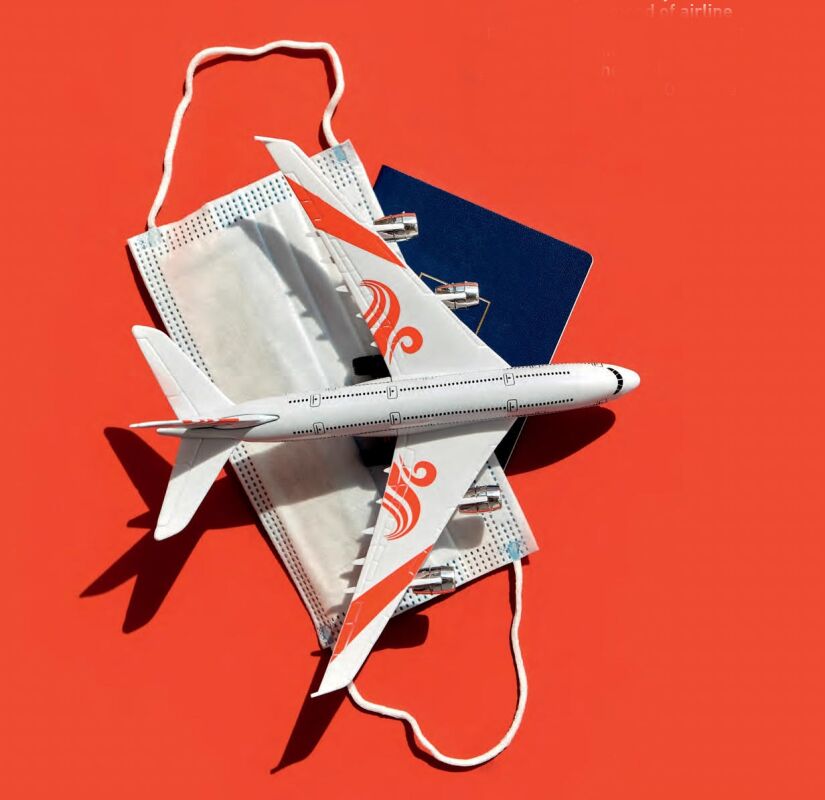
Aviation in 2019 contributed directly and indirectly to 3.5% of global gross product and $2.7 trillion of added value annually. The problem with aviation’s unprecedented ability to connect people and economies is that in addition to 4.3 billion passengers and 58 million tonnes of cargo per year, airplanes can spread epidemics rapidly. Unexpected and uncoordinated decisions of individual governments about lockdowns, closing borders and introducing obligatory quarantines disrupted the current order on the market. The result was the worst month — April 2020 — in the history of the aviation industry. According to the statistics of the International Air Transport Association (IATA), air traffic decreased by an incredible 99% year on year! The entire aviation industry ceased to function. Global passenger airline revenues fell by more than $314 billion in 2020 (a 55% decrease compared to 2019), and as IATA points out, the crisis is so deep that the Revenue Passenger Kilometers (RPK: the number of passengers multiplied by distances covered by them during the year) will not reach the 2019 level until 2024.
TEACHER’S PETS VS TROUBLEMAKERS
When we imagine the aviation market from before the pandemic, it is a bit reminiscent of a school class in which we have students favorited by the teacher and the very active, energetic troublemakers. Most often, all want to stick with the latter, and the teachers’ pets live in their own world. And even if they stumble on a test, the teacher will turn a blind eye or help. "Troublemaker" stands for low-cost airlines such as Wizz Air, Ryanair, EasyJet, which conquered the European market thanks to low prices (as well as low costs), entrepreneurship of the owners and a flexible, wide network of connections. In 2019, Ryanair was the most frequently chosen airline by Poles — it carried 29.48% of all passengers, while 18.86% used Wizz Air’s services. However, low-cost lines have limitations. Luggage? The price includes a small backpack or suitcase measuring 42x32x25cm and weighing up to 10kg. That’s little, isn’t it?
A separate category is the teacher’s favorites state-owned airlines operating in many countries in Europe. In the case of Poland, it is LOT airlines. In the past, LOT was a natural monopoly, so it shaped prices and offers. The Company was painfully adjusting to the market competition — it even tried to launch its own low-cost carrier Centralwings, which ultimately ended in collapse, giving up part of the market share to Ryanair and Wizz Air. After a series of changes in the company, which used to employ about 4,000 employees, it reduced the workforce to a thousand. Despite the trade unions' claim protests, in 2010-2014, the remuneration system at LOT changed to more closely resemble market realities. A sequence of restructuring operations has improved the condition of LOT, but despite all this, PLN 400 million of state subsidies in 2012 was needed to move LOT away from bankruptcy. After the subsidy, it was supposed to be sold, but after the 2015 elections, the new government came up with a different policy. Expansion and focus on national champions: large state-owned companies that will implement the strategies of economic patriotism. LOT is among them. The country is feeding its pet, creating various visions of reality devoted only to the existence of the line. An example is the decision to build the New Central Polish Airport (CPK), which would be a hub for LOT’s future expansion, ready to receive 40 million passengers annually in 2027, despite being aware of the fact that LOT transported only 27.14% of Poles in 2019.
STATE-OWNED VS PRIVATE PLAYERS
It should also be pointed out that the narrative — LOT is a state-owned company, preferred on the market and pushing private entities out — is not entirely true, because low-cost carriers such as Ryanair and Wizz Air are also subsidized by local governments in regions depending on the existence of air connections. Flights, perhaps, belong to a category that could be defined as public transport, as exemplified by bus, train and metro networks managed by local governments. Nevertheless, competing with subsidized state public services is a nightmare for private entrepreneurs.
The crisis that followed the coronavirus pandemic has hit all carriers in Poland. Some of them, Ryanair or Wizz Air, however, had stocks — capital that made it possible for them to survive the crisis. The moods, however, are still not positive. When we compare the years 2015-2019, the operating profit of commercial airlines worldwide ranged between $43.2 billion and $62 billion annually. However, in 2020, due to the coronavirus outbreak, the airlines reported operating profit losses of $105 billion. The industry reported $477 billion in expenditure in that same year. In April 2021, instead of earning an average of $5.2-8.6 per flying passenger, as in the years before the pandemic, the airlines lost $20 (compared to a $71.7 loss in April 2020). The crisis shows which companies are well-managed and flexible enough to operate in the hustle and bustle of chaotically changing regulations and lockdowns. On the other hand, LOT asked for PLN 4.5 billion of public aid, which is 11 times more than it received in 2012, which the European Commission agreed to. It is no coincidence. LOT is one of the many national airlines that received public aid from the government of their country during the pandemic, otherwise, they would be at risk of bankruptcy. Ryanair filed a complaint with the Court of Justice of the EU against Brussels’ consent to state aid for LOT and other airlines, calculating that during the pandemic the carriers received over €30 billion in state subsidies.
Ultimately, when public aid comes into force, LOT will receive a subsidy of 100 for each of its passengers. And every working Pole will add their PLN 180 so that Polish planes with a crane on the fuselage can still fly.
For now, it is not possible to assess the impact of the crisis on the aviation industry, because it is not known when the Covid-19 epidemic will be contained. IATA emphasizes that new Covid-19 variants may delay the opening of certain markets. For passengers, the increased risk of flight cancellation is a barrier to booking a trip. Reason? Long waiting time for a refund for a canceled flight. In addition, mandatory PCR tests are performed 72 or 96 hours before the flight and the uncertainty of the result does not help with travel. The largest airlines in Europe in connection with the pandemic will want to "loosen" passenger rights, especially in terms of refunds for canceled flights and compensation. It is going to be a fierce battle. Carriers explain that maintaining such liberal regulations may result in the bankruptcy of many airlines, while consumer organizations and passengers themselves are against any changes. Author Stewart Stafford once said: an airport is a place where you go through hell to reach your alleged paradise. It’s more real now than ever.