Worlds apart, yet so alike...
10:30
The effects of the war in Ukraine are reshaping not only Europe but also extending as far east as South Korea. The war has led to a remarkable 140% increase in South Korea’s arms exports in 2022, reaching a record $17.3 billion, with agreements worth $12.4 billion signed with Poland.
Seoul’s long-standing endeavor to establish a domestic arms industry has finally come to fruition, catapulting it from the 31st spot in global arms sales in 2000 to the eighth position in the 2017-2021 period, accounting for nearly 3% of the world’s total defense exports, as per the Stockholm International Peace Research Institute (SIPRI).
The orders from Poland are helping South Korean President Yoon Suk Yeol fulfill his promise to make his country the fourth-largest weapons exporter by 2027, following the United States, Russia, and France. The surge in arms exports will also assist South Korea in offsetting the increase in its domestic defense budget required in response to China’s 7% boost in defense spending for 2022. “It’s a gold rush period for arms producers,” SIPRI’s Siemon Wezeman told Forbes.
Break with Moscow
The South Koreans were impacted by the Russian-Ukrainian war in other ways, too, as they had to adjust their relationship with Russia, which was now under some of the strictest international sanctions in history.
South Korea’s ties to Russia provided Seoul with the help needed for its nascent space industry in the mid-2000s. Russia played a significant role in the development of the KSLV-1 rocket, which was part of a program that ran from 2009 to 2013. South Korea relied heavily on Russian expertise in rocket propulsion and had a contract to launch South Korean satellites into space using Russian rocket technology before the sanctions were imposed. The sanctions severely impacted South Korea’s plan to launch a national security monitoring system, which is again detrimental to their national security.
Shifting alignment and new allies
While Russia and South Korea have been on friendly terms in the past, this by no means implies that they are necessarily allies.
Vladimir Putin warned South Korea against aiding Ukraine militarily and has implied that direct aid to Ukraine would force Russia to deepen military ties with North Korea, including the sale of fighter aircraft. South Korea, for its part, has taken care to ensure that while exporting weapons to other nations, it does not intentionally aid Ukraine against Russia. If, however, those arms end up in Ukraine through one of South Korea’s allies, this does not imply direct military support for Ukraine. One expert at the Asan Institute for Policy Studies in Seoul, Yang Uk, stated that he doubts South Korea would enforce its export controls.
It is, therefore, hardly surprising why a partnership with Poland is so lucrative for South Korea, both economically and geopolitically.
In February, South Korea’s Defense Minister Lee Jon-sup and his Polish counterpart, Mariusz Błaszczak, met to deepen the security cooperation on the back of last year’s deal to supply tanks, howitzers, and fighter jets to Poland. They agreed to “systematically” manage defense and arms industry cooperation and also agreed to hold joint military drills to share their perspectives on Korean-made weapons.
A historic deal
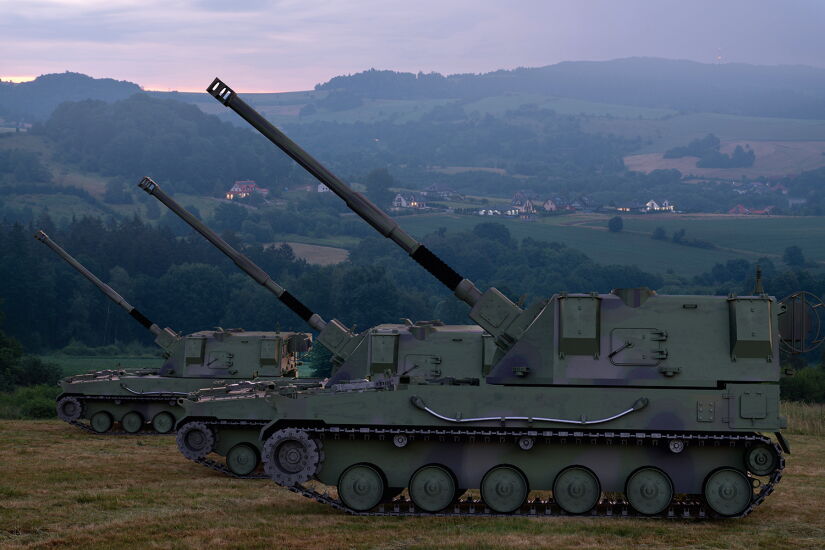
The $8.8 billion arms deal includes 100 Chunmoo rocket launchers, 180 K2 Black Panther tanks, 24 K9 self-propelled howitzers, and 48 FA-50 aircraft. The Chunmoo multiple launch rocket came into play as Lockheed Martin was unable to meet Poland’s request to increase its order of High Mobility Artillery Rocket Systems (HIMARS), used by Ukraine against Russia with devastating effect. It is the first time a NATO member other than Turkey has turned to suppliers outside the alliance for major weapons systems.
Korean arms dealers Hyundai Rotem, Hanwha Defense, and Korea Aerospace Industries have gained a competitive advantage by prioritizing “mid-level weapons” over aircraft carriers, nuclear submarines, or cutting-edge aircraft. In addition, they offer to transfer technology and facilitate local production, thereby boosting the domestic defense industries of their customers. South Korean howitzers, for example, will be produced in Poland by local partner industries.
Franken-Krab
The Krab Howitzer is a noteworthy weapon system produced by Poland through a combination of different parts from several countries. The Krab self-propelled howitzer initially won an international competition to meet the artillery system requirements of the Polish Army. The design includes a South Korean K9 Thunder chassis, a British BAE System turret, a French Nexter Systems 155mm gun, and a Polish fire control system.
As of November 2022, Poland had delivered 54 Krabs to Ukraine, some of which were built without the K9 chassis. While this may suggest South Korea’s involvement as a weapons supplier to Ukraine, the Koreans have explicitly informed their American allies, with whom they negotiated the sale of artillery shells, that they will not provide arms to Ukraine and are unlikely to do so in the future. South Korea does not intend to interfere in the conflict, but rather to benefit from the global arms trade, as weapons dealers have always done.
So distant, so similar
One might question how an Eastern European country like Poland ended up buying weapons systems from a country on the other side of the world. A cynic might suggest that Warsaw simply sought the means to defend itself and that South Korea, with its burgeoning arms industry, provided what Poland needed. However, upon further examination, it becomes clear that Poland and South Korea have faced similar challenges with their neighbors, making it natural for them to collaborate.
Both countries have battled against stronger foes to protect their cultural and linguistic heritage, having been conquered and even erased from the map. Yet, they persevered and emerged from the ashes of their enemies as equals to stand their ground. If Poland and South Korea work together it is not only that they see opportunity in each other, but that they have learned from history and have genuine empathy for one another as victims of foreign aggression.
Nuclear partnership
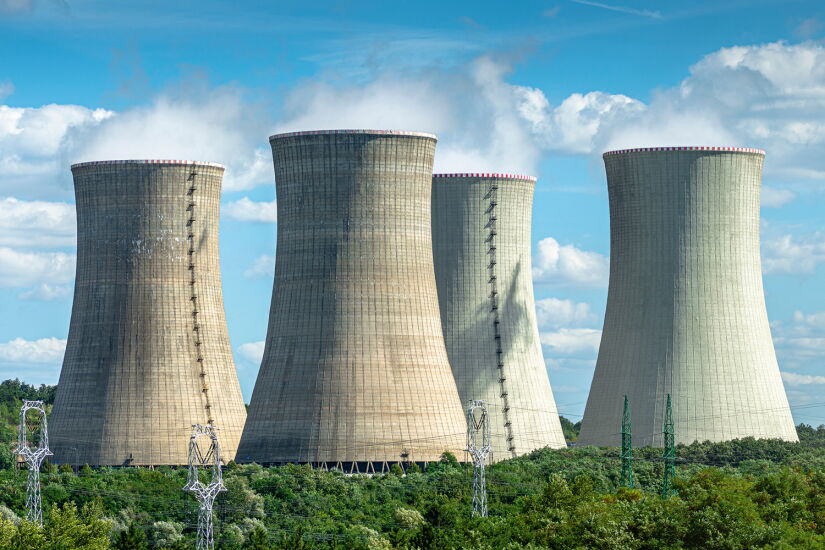
Poland is not only sourcing tanks from South Korea. Polska Grupa Energetyczna (PGE) and ZE PAK together with Korea Hydro & Nuclear Power last year signed a letter of intent for cooperation in the construction of a nuclear power plant in Pątnów.
Poland’s Prime Minister Mateusz Morawiecki said that after the recent arms deals, “our cooperation with South Korea is progressing into new areas.” He also emphasized the importance of nuclear power for the country’s energy security, which faced one of the biggest stress tests last winter, as natural gas shipments from Russia all but halted.
The partnership with South Korea is expected to come to fruition in the middle of this year.