Allure of the old
12:05
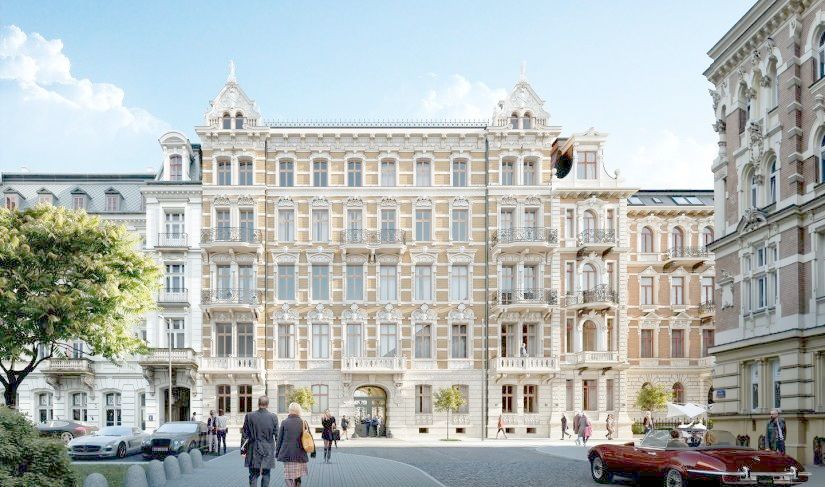
Developer Ghelamco earlier this year announced the sale of two luxury apartments covering a combined 470 sqm, located in the Foksal 13/15 historic tenement house renovation project in downtown Warsaw for a total of more than PLN 17 million. This is one of the biggest transactions to have been closed by an individual buyer in the residential property market in Poland in recent years. While not all deals in historic buildings are so spectacular, the prices of units in such properties tend to exceed those in new schemes.
Ghelamco may be better known for its numerous office developments, but the tenement house segment also attracts many specialized regional developers focused on the renovation of neglected historic jewels and their conversion into upscale boutique housing investments. Ofka Piechniczek, management board president at Śląskie Kamienice, a developer active in Silesia, argued that the region is an increasingly attractive place to live and work, while the prices of properties there are still lower than in Warsaw or Kraków.
Investors’ activity results from solid demand for luxury units in historic buildings. “There is a pretty large group of clients in Poland who are looking for this kind of product, but the product is not that easy to find,” said Daniel Puchalski, head of land advisory services at JLL. In the opinion of Marcin Marczak, a senior property advisor at Poland Sotheby’s International Realty, tenement houses that are renovated and finished to a high standard currently attract more interest from affluent Poles than modern high-rise buildings comprising hundreds of apartments.
NICHE SEGMENT
More and more such projects are being developed in Warsaw, Kraków, Wrocław and Gdańsk, but the market does not seem to be saturated. Not all the available historic property is adapted to residential functions. Puchalski noted that the hospitality sector now also generates demand for such real estate and that hotel developers are currently very active. “A tenement house is the ideal starting point for an investment process resulting in the development of a boutique hotel,” he said.
In big Polish cities, from several to over ten historic tenement house renovation schemes are launched every year. REAS data show that in 2017, in the six largest housing markets in Poland, developers put up for sale a total of more than 1,100 units in 28 such investments. At the end of June, developers had on offer over 900 apartments in tenement houses and other historic buildings in those six markets, said Katarzyna Kamińska, manager, market research, at REAS. By comparison, the total number of new units on offer stood at 44,400.
The annual number of apartment sale transactions in this segment (in the primary market) is not high as the average tenement house comprises less than 20 units. In a big city, the figure is lower than 100, Marczak argued. REAS estimates that in 2017 more than 1,200 apartments located in tenement houses were sold in Poland. “However, it is worth stressing that a considerable portion of transactions in the most prestigious locations are signed in the secondary market,” Kamińska said.
PRICEY PRODUCT
Living in a refurbished historic property which is in short supply comes at a cost. According to Marczak, the prices of housing units in renovated tenement houses can be even 20 percent higher than the prices of apartments in new buildings in a similar location. The high prices of tenement house apartments result from the fact that such buildings are usually located in central and very attractive areas, as well as from the very high standard and boutique nature of such projects.
Admittedly, the prices vary a lot depending on the particular market and its scale. According to REAS, in the second quarter of this year the highest average price (nearly PLN 40,000 per sqm) was recorded in the Tri-City, where the supply was the smallest. The lowest average price – slightly over PLN 11,500 per sqm – was recorded in Kraków. REAS classified only 15 percent (138 units) of the over 900 units available in tenement houses at the end of June as apartments belonging to the upper-middle and high-end market segments.
CAUTIOUS DEVELOPERS
One could expect the much-publicized reprivatization scandals in Warsaw, which are currently the subject of a special investigation in the Polish parliament, to have had a negative influence on this sector, but nothing of this kind seems to have happened to date. The Polish capital is notorious for its complex property ownership issues, a situation that has in recent years led to a number of what, it now seems, were illegal transfers of titles to historic properties. Several developers may have been involved or at least aware of those actions.
However, with the scandals confined to Warsaw and regarding only some of the renovation projects launched or completed in the Polish capital of late, the market as such has not been hurt. According to REAS data, H1 sales results do not show any slowdown in the sector. In the first six months of this year, some 650 housing units located in tenement houses found buyers, which is more than in the same period of 2017. Also, developers of such projects do not seem to have been put off planning new schemes.
Marczak pointed out that those who are interested in the acquisition of historic properties are most often experienced investors who already have a number of such assets in their portfolios. They always thoroughly analyze the legal status of the buildings which they want to buy. The recently revealed information on reprivatization processes in Warsaw has not negatively impacted their willingness to buy, but some of them are now indeed more cautious while planning purchases in Warsaw and commission additional legal analyses, Marczak admitted.