WBJ spoke with Monika Szelenberger, Director of Leasing and Asset Management and a member of the Management Team at Adgar Poland, about rising labor and fit-out costs, shifting tenant expectations, workplace strategy, and how AI could reshape the future of office space
WBJ: The past few years have been a period of unprecedented change for the office market. What does the market look like today, and which factors have the greatest impact on tenant decisions?
Monika Szelenberger: Over the past several years, the office market has undergone several fundamental changes. The way people work has evolved, high inflation has increased the cost of doing business, and geopolitical uncertainty has made companies more cautious in their decision-making.
At the same time, challenging periods often drive organizations to adapt and innovate. As a result, the market has become more mature and pragmatic. Today, the conversation is less about the office itself and more about how workplace strategy can support productivity, collaboration, talent retention and broader business objectives.
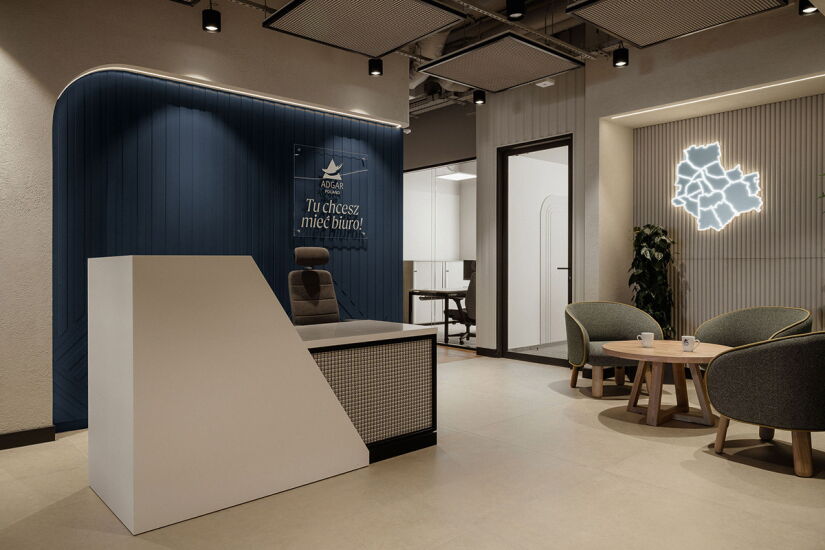
Adgar's office & showroom, Adgar Plaza One
What does that mean in practice?
One of the most important developments is that labor costs are growing much faster than office occupancy costs.
According to Statistics Poland (GUS), the average salary in Poland increased from PLN 5,167 in 2020 to PLN 8,903 in 2025, a rise of more than 70%. During the same period, office rents in Warsaw increased by between 5% and 20%, depending on location and building standards. Operating costs rose somewhat faster, largely due to increases in wages and utility prices. This fundamentally changes the perspective of management teams. If employment costs are rising much faster than office costs, the question is no longer, “How much does the office cost?” but rather “What value does it create for people and for the organization?” For most companies today, employee-related expenses outweigh office rent by a significant margin.
Does that mean office costs are no longer important?
Cost remains an important factor in any business decision, but it is no longer the sole point of reference. When comparing the cost of employing a person with the cost of office space allocated to that employee, the latter represents a relatively small share of the total. As salaries continue to rise, the difference becomes even more pronounced. In this context, a difference of €1, €2 or even €5 per sq m does not always have as significant an impact on a company’s budget as it may seem at first glance.
I imagine many CFOs would challenge that approach.
I have no doubt they would. Costs will always matter and should be analyzed responsibly. However, these decisions need to be viewed in a broader business context.
Today, office decisions increasingly involve not only finance and administration teams but also HR and other business functions.
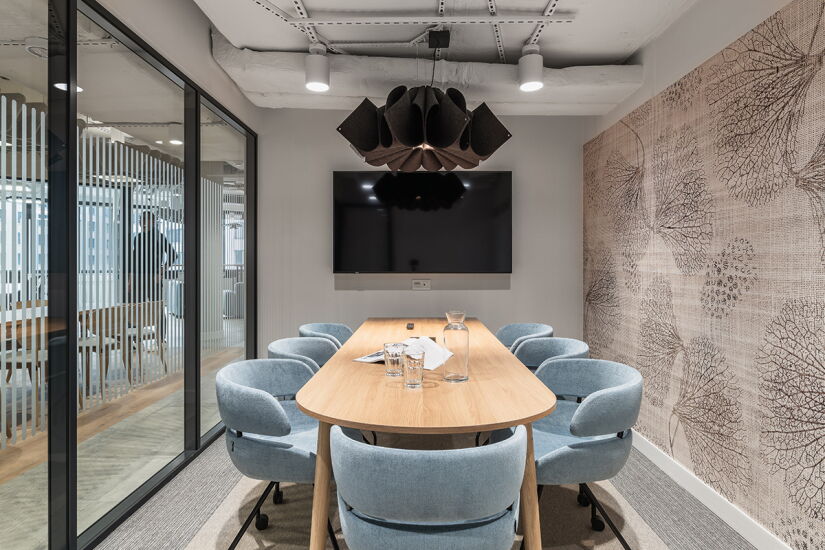
Flexi Lease, Adgar Park West
Office fit-out costs have increased significantly in recent years. How is this affecting tenant decisions?
This is a challenge for both landlords and tenants. According to Cushman & Wakefield, the average fit-out cost in Warsaw increased from approximately €1,010 per sq m in 2022 to around €1,275 per sq m in 2025.
That is why, at Adgar Poland, alongside traditional office solutions delivered according to client specifications, we also offer fully fitted Ready Office and Flexi Lease spaces, as well as Brain Embassy coworking spaces.
These products are particularly popular among small and medium-sized businesses. We also see more clients choosing premium fit-out options over basic standards because they increasingly view the office as a business tool rather than simply a cost.
Tenants seeking highly customized workplaces are also more likely to sign longer lease agreements, often exceeding five years. Lease renewals and renegotiations continue to grow in importance and accounted for 51% of Warsaw’s leasing volume in 2025, according to PINK.
If people are a company’s biggest cost, it is only natural to look for technologies that boost productivity. AI could be transformative in this respect. As the way we work evolves, will the office evolve as well?
I believe it certainly will.
If artificial intelligence takes over more routine and analytical tasks, not only will the way we work change, but so will our expectations of the office environment.
We can only speculate about what offices will look like in five or ten years. For example, voice-based AI assistants may become a natural part of daily work. If some tasks currently performed on computers are carried out in the future through conversations with AI assistants, new requirements may emerge around privacy, acoustics and workspace design. At this stage, however, it is still difficult to predict the exact direction of these changes.
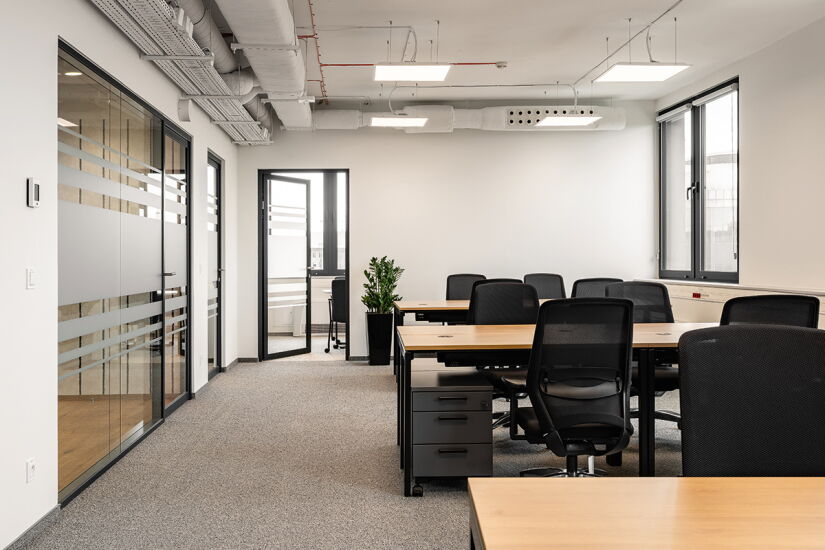
Adgar Park West, Ready Office
So will we all work in the same place, but separately?
Not necessarily.
The more routine tasks are supported by technology, the more valuable uniquely human skills become: creativity, collaboration, relationship-building and knowledge sharing.
In my view, offices will remain essential because people will remain so. AI can support decision-making and even admit when it is wrong, but it cannot take responsibility for the consequences. Technology will become an increasingly powerful tool, while accountability, risk assessment and making the most important decisions will remain in human hands.