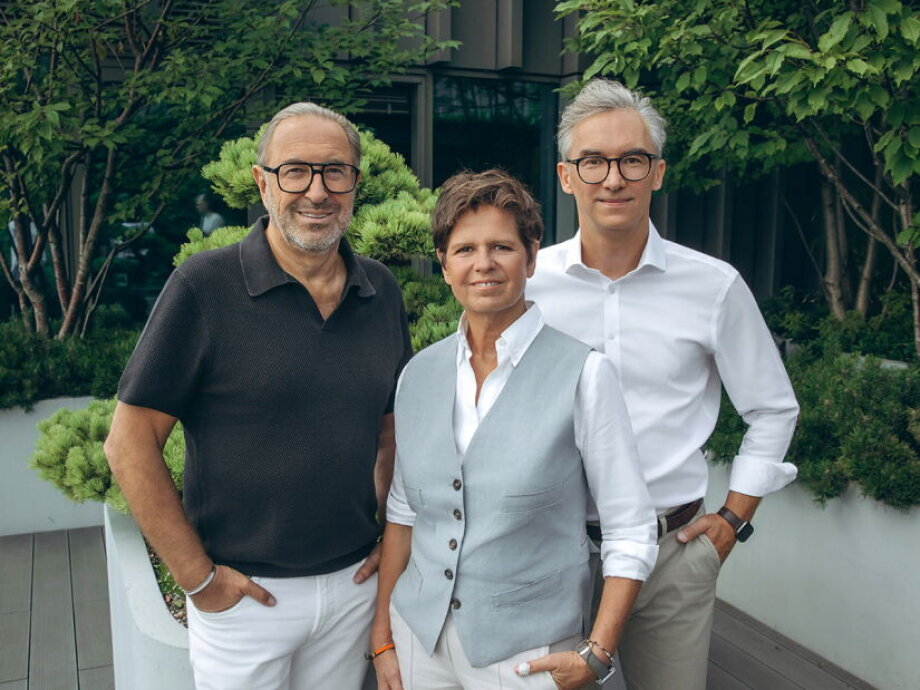
Five years after the opening of Norblin Factory, WBJ sat down with Jan Motz, President of the Management Board of Capital Park Group; Marcin Juszczyk, Managing Partner and Vice President of the Management Board; and Kinga Nowakowska, Board Member and Chief Operating Officer, to discuss placemaking, urban regeneration, and the projects shaping the company’s next chapter.
WBJ: Norblin Factory celebrates its fifth anniversary this September. Looking back, has the project become what you originally envisioned?
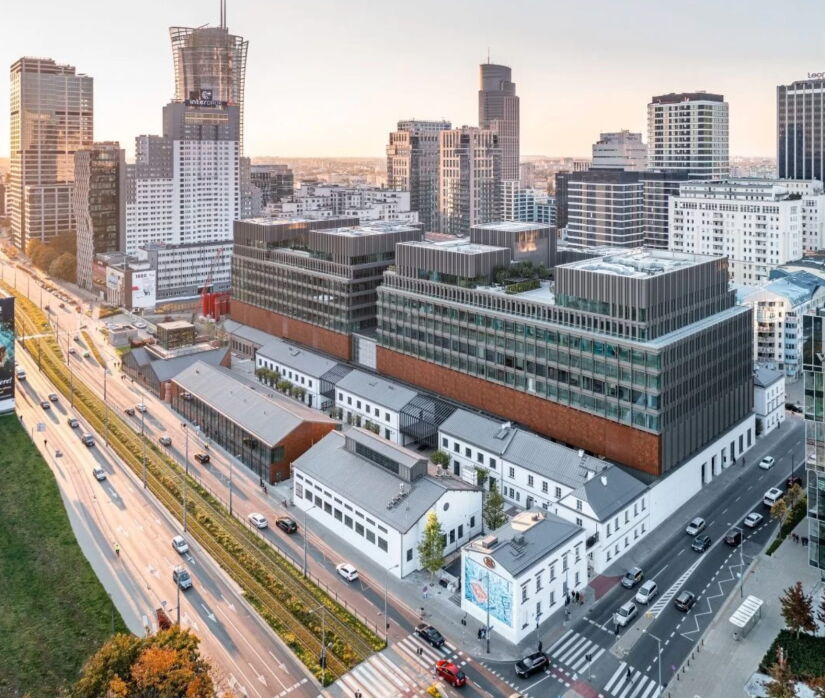
Kinga Nowakowska: In many ways, it has become even more than we imagined. When we started working on Norblin Factory, our ambition was not simply to redevelop a former industrial site. We wanted to bring an important part of Warsaw’s history back to life and create a place that people would genuinely want to use every day. Five years after opening, the project is fully commercialized and attracts around half a million visitors every month. But for me, the most important measure of success is that Norblin Factory has become part of the city’s everyday life. People come here to work, eat, shop, meet friends, be entertained, experience culture or simply spend time. Different functions reinforce one another and keep the place active throughout the day and week. What we have also learned is that placemaking does not end when construction finishes. A successful mixed-use project needs constant attention, programming and evolution. We continue to introduce new concepts, events and experiences because a place has to keep responding to the people who use it.
Has the experience of Norblin Factory changed the way Capital Park approaches new developments?
Jan Motz: Absolutely. It confirmed something we had believed for a long time: real estate is ultimately about creating places, not just buildings. Norblin Factory showed us how powerful a carefully designed combination of functions, public space, heritage and strong content can be. But our goal is not to replicate Norblin Factory elsewhere. Every location has its own identity, history and community and therefore requires a different response. What we take from Norblin Factory is a way of thinking: understanding the context, combining complementary uses, investing in high-quality public space and creating projects that remain relevant long after they open. This increasingly defines Capital Park. We are particularly interested in complex projects where we can transform an existing piece of the city and create long-term value for users and local communities as well as for our investors.
Nowy Wełnowiec in Katowice
Nowy Wełnowiec in Katowice is by far your largest urban regeneration project. Where do you stand today?
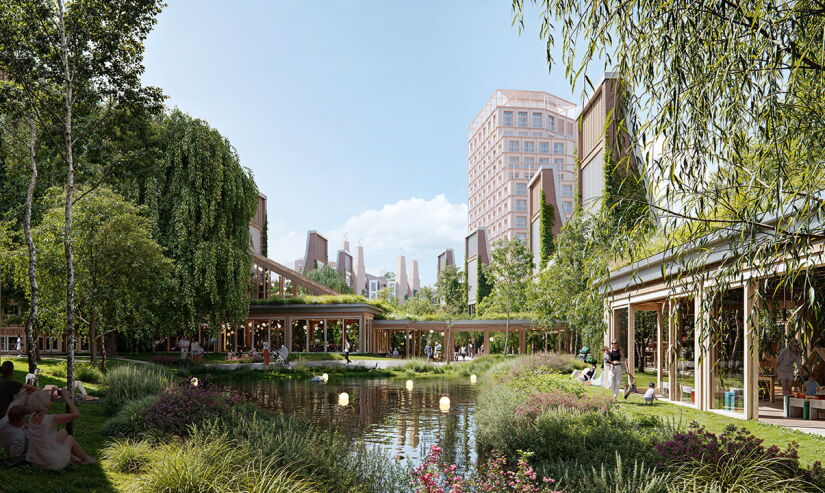
Kinga Nowakowska: We are moving from planning toward implementation, but before doing so we wanted to listen carefully to the people who already live in the area and those who may use Nowy Wełnowiec in the future. We have just completed a consultation process that lasted more than a year and involved local residents, community organizations, local authorities, experts, young people, seniors and other stakeholder groups. The feedback confirmed how important greenery, accessible public spaces, everyday services and places for different generations are to the local community. These insights will now be analyzed as we move into the subsequent stages of the project. This is particularly important because of the scale of Nowy Wełnowiec. We are transforming approximately 30 hectares of post-industrial land into a new mixed-use part of Katowice. Around 10 hectares will be dedicated to green and recreational areas, including a four-hectare central park. Car traffic will be moved underground, leaving the ground level primarily to pedestrians, cyclists, greenery and places where people can meet and spend time. For us, this is not simply a development project. It is about creating a new part of the city, and that brings a much broader responsibility.
When will that vision start becoming visible on the ground?
Marcin Juszczyk: Nowy Wełnowiec is entering the next phase of implementation. The entire development has been divided into four areas that will be delivered in stages, starting with the central seven-hectare section. We have reached another important milestone by obtaining a building permit for the first part of the development and are now launching the process of selecting the general contractor. It will include three residential buildings with more than 230 apartments and the necessary infrastructure, as well as the restoration of the historic Compressor House, the only surviving building from the former industrial complex. In the first phase, the latter will serve as our sales office and as a place for activities involving the local community. Our intention is to complete the contractor selection by the end of 2026 and then move into construction.
Residential is clearly becoming a more visible part of Capital Park’s business. Is this a new strategic direction?
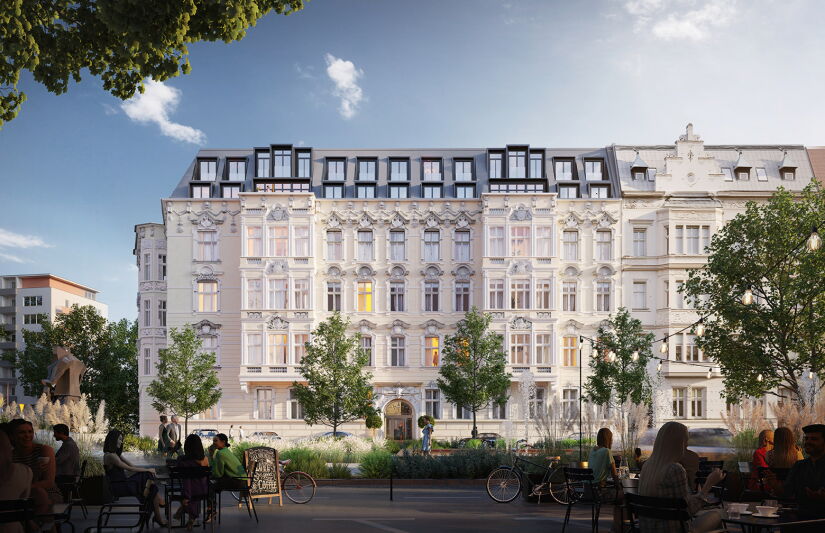
Marcin Juszczyk: It is becoming an important pillar of our growth, but I would say its an evolution rather than a change of direction. We have always looked for opportunities where our development, investment and asset management expertise can create additional value. Residential is increasingly a natural part of that strategy, particularly in mixed-use and urban regeneration projects. Nowy Wełnowiec is the largest example, but our residential activity is broader. We are also restoring the historic 19th-century Aleja Fontann Residence in Szczecin, creating 62 premium apartments. These are very different projects, but they share the same principles: a strong location, high quality and an approach tailored to the character of the place.
Kinga, from an operational perspective, does entering residential require Capital Park to think differently about its customers?
Kinga Nowakowska: It does, although there is also much more continuity than one might expect. Whether someone buys an apartment, works in one of our offices or visits Norblin Factory, the starting point is the same: understanding how people want to use a place and what creates value for them. Aleja Fontann Residence is a good example. We are working with a historic building in the very center of Szczecin, so we need to combine respect for its original architecture with the expectations of contemporary residents. It’s not about simply putting apartments into an old building, but creating a residential product that feels authentic to the location while delivering the quality, comfort and service expected today. That attention to the user experience is something we have developed across our portfolio over many years, and we can now bring it into residential.
Aleja Fontann Residence in Szczecin
Galeria Zaspa in Gdańsk could represent yet another form of transformation?
Marcin Juszczyk: It shows how existing properties can evolve together with their neighborhoods. Today, the site is dominated by a large surface parking lot, which contributes to the heat island effect, and an aging shopping center. We see an opportunity to transform this space into a much greener, more welcoming and better integrated part of the neighborhood.
We’re currently seeking planning approvals for a new mixed-use concept combining residential, retail, services and dining. Importantly, we don’t want to eliminate the everyday functions local residents already use. The future project is expected to offer close to 8,000 sq m of newly designed, convenient retail and service space, compared with approximately 8,600 sq m today, alongside around 20,000 sq m of residential space. We are already talking to existing tenants about the possibility of continuing their operations in the new development.
The transformation would allow us to replace much of today’s hardscape with greenery and high-quality public spaces. We envision welcoming public green spaces, as well as a green internal courtyard with cafés, outdoor seating, places to relax and a playground. The publicly accessible parking lot would be moved underground, freeing the ground level for people, greenery and pedestrian connections. We can preserve and improve the retail and service offerings that is important to the neighborhood while completely rethinking the quality of the space around them.
The project is still at an early stage and will evolve as we progress through the planning process and continue discussions with relevant stakeholders.
Capital Park has also been actively reshaping its portfolio. How do you decide when to develop, hold or sell an asset?
Marcin Juszczyk: Active portfolio management has always been part of our DNA. We develop assets, increase their value, manage them and, when the right moment comes, we are prepared to realize that value. The sale of Royal Wilanów earlier this year is a good example. It was a mature, successful asset, and the transaction represented the completion of an important investment cycle for Capital Park and its investors. At the same time, we remain involved in the property through management, which reflects the strength of our asset management capabilities and our long-term knowledge of the project. We are disciplined about capital allocation. Scale itself is not our objective. We look for situations where our expertise can make a tangible difference, whether through redevelopment, repositioning, mixed-use development or solving complex urban challenges. The current market is demanding, but this also creates opportunities. There are assets in excellent locations that no longer fully respond to the current market or urban needs. For an experienced investor and developer, transforming them can unlock substantial value.
After more than two decades in business, what does the next chapter of Capital Park look like?
Jan Motz: We remain entrepreneurs at heart. We like complex projects and are prepared to take a long-term perspective when we believe in a place. Over more than two decades, Capital Park has been a developer, investor, asset manager and listed company. We have worked with international capital, completed major transactions and delivered projects across different sectors. Today, all of that experience comes together in what I believe is one of our strongest capabilities: transformation. Norblin Factory is perhaps the most visible example of what that can mean. Nowy Wełnowiec takes the ambition to an entirely different scale, while projects such as Galeria Zaspa show the kind of potential we see in existing urban assets that could be reinvented for new needs. Our ambition is not to build the most. It is to identify places with unrealized potential and transform them into projects that make strong investment sense while contributing something meaningful to their cities. If the places we create become natural and valued parts of those cities, then we have done our job well.
For more information about Captial Park click here
Get the best of “Warsaw Business Journal” delivered to your inbox daily