Finding the right mix
15:04
WBJ: Vastint Poland earlier this year acquired a major post-industrial site in the downtown of Poznań which previously housed a meat processing plant. What do you plan to build on that plot?
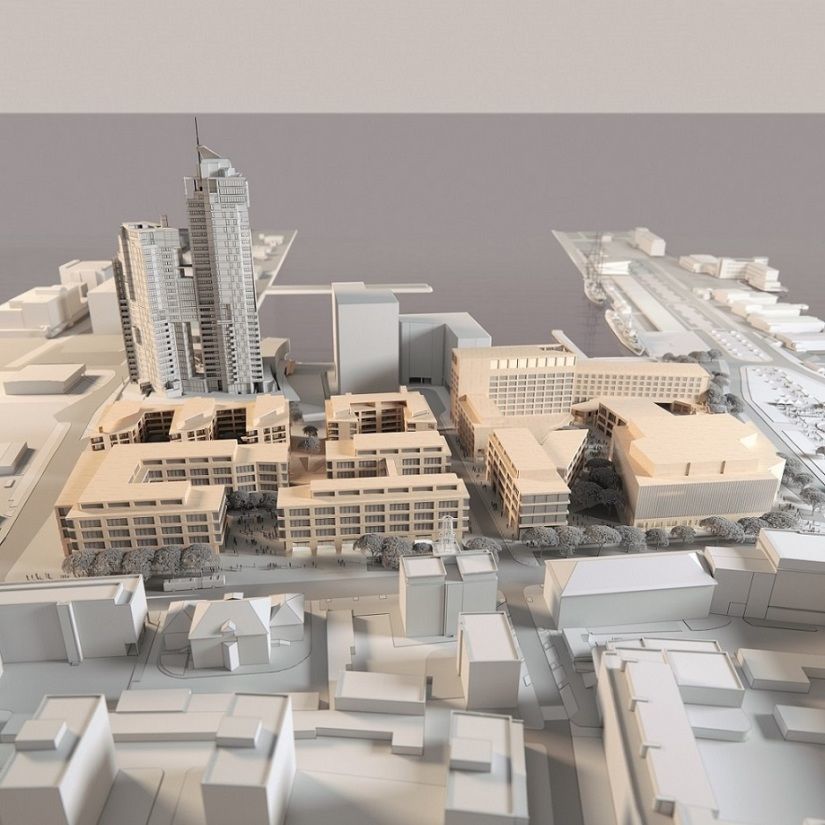
Roger Andersson: We will build a mixed-use project including residential, office, hotel and retail space. In total, the site – approximately 5.5 hectares of land located very close to the Old Town of Poznań – will be able to accommodate up to around 100,000 sqm of space. The residential function will be dominant in the scheme – it will account for about 50 percent of the total space. When it comes to offices, the figure will stand at some 20 percent. This particular mix of the various functions results from, among other things, the nature of the site, which currently houses a number of historic buildings. In accordance with the requirements of the heritage preservation officer, some of those buildings will need to be preserved. We will demolish the least valuable structures and build a number of new buildings on the site.
How advanced is the project at the moment?
The project is now at the design stage and it will take from a year and a half to two years before construction work can start. We are waiting for a new zoning plan for the area in question to come into force, and such procedures tend to be time consuming. However, generally speaking, the municipal authorities are very cooperative and share our vision for the site. The place is very well known in Poznań and many people in the city are looking forward to it being revitalized.
Your portfolio also includes a plot of land for a huge mixed-use scheme in Warsaw…
The Warsaw site, which is located close to Warsaw Chopin Airport, is much bigger than the Poznań site – it totals approximately 14 hectares and can accommodate up to around 200,000 sqm of space. We will build apartments and offices there.
What is the schedule here?
Again, we will be able to launch construction in about two years. We expect the scheme to feature some 60,000-70,000 sqm of office space that will be built in two or three phases and be completed within four to five years. When it comes to the residential space, it could take even seven to ten years to build. The good thing about mixed-use projects is that you can work on a bigger number of phases at the same time – the residential and office functions can be developed in parallel.
Meanwhile, you have been working on the Gdynia Waterfront mixed-use development in the Tri-City for a few years now. When will you launch construction work on the next phase of that investment?
The Gdynia Waterfront project will be developed in three phases. The first of them – consisting of one hotel building and one office building – was completed in 2015. The second phase, which will deliver residential (dominant function, approximately 75 percent of the total area) and office space will be launched in the first quarter of next year. The third phase – comprising hotel and conference space as the dominant function, but also including office, retail, entertainment and cultural areas – will be started a year later.
From your perspective as a developer, what is the most attractive aspect of large-scale mixed-use projects that are, by nature, much more challenging than smaller, single-function schemes?
There are several reasons why we like doing big projects of this kind. For one thing, because we are talking about very big sites and very complex schemes, there are few developers in Poland who want to start such investments, which means that it is easier for us to buy land. When it comes to the Poznań site, for instance, there was only one other company interested in acquiring the plot. Meanwhile, the sites housing projects of this kind are usually in prime locations in city centers and location is everything in the real estate market.
Creating neighborhoods that feature buildings with various functions is increasingly seen as an example of proper urban planning, whereas areas with an office monoculture do not get a good press these days…
Exactly, this is another reason why we find mixed-use projects attractive. As a professional developer, we obviously need to think about the returns on our investments, but this does not mean that we are only focused on the financial aspects of our projects. We want to contribute to the development of cities and to help municipal authorities revitalize entire neighborhoods that have been neglected for many years. Projects of this scale allow you to do exactly this – to create whole new areas, shape parts of cities anew.
What is the main challenge that you face while developing schemes of this kind?
When it comes to such sites as the one in Poznań, which houses buildings that need to be preserved, the main challenge is to come up with the right function or functions for the existing historic properties. While it is relatively easy to refurbish such buildings – it is a purely technical issue – deciding on what exactly they will accommodate proves to be very difficult. We need to make sure that the historic buildings will be integrated with the new buildings in the complex and that the concepts devised for them will work.
Is coming up with the right mix of functions a challenge?
Absolutely. Each project requires a thorough analysis of the location and its development potential. Each of the projects that we have discussed will feature a different mix of functions that will be the most suitable for the particular location.
Is it difficult to secure financing for such big schemes?
We actually rarely take out bank loans as we mostly finance our projects with our own equity. However, this comfort obviously does not mean that we do not need to be careful – we try not to overdo things and not to abuse the trust of our owners.