Most modern offices offer water retention
22:03
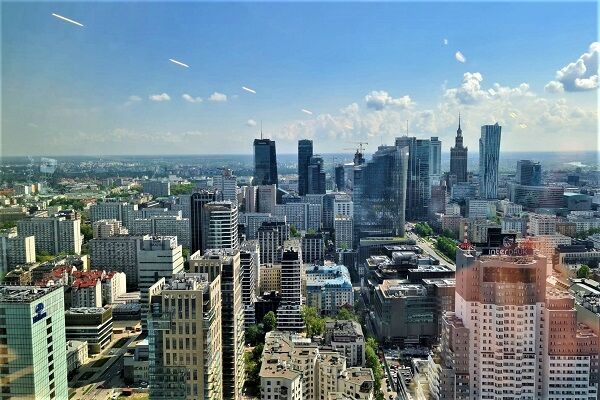
“The development of the market is focused on the implementation of intelligent, environmentally neutral buildings and the creation of innovative solutions that support the decarbonization of the existing resources and adapting them to the current requirements in the field of sustainable development,” Bartłomiej Zagrodnik, Managing Partner/CEO of Walter Herz, said.
Most modern buildings not only draw energy from renewable sources but also use technologies that reduce their consumption by automating space management. There are also more and more common solutions enabling water retention, which is of key importance in the face of the water crisis. Facility owners are serious about the problem of shrinking water resources. They invest in gray water filtering and reuse systems and rainwater management, fittings, and showers based on motion sensors to reduce network water consumption, as well as various types of water retention solutions. They create green roofs, terraces, and rain gardens. Companies are also more likely to choose buildings that meet certain standards in this area, in order to take advantage of the possibility of reducing costs.
In Poland, proper management of water resources is particularly important because, in terms of our resources, we are in one of the last places in Europe, ahead of the Czech Republic, Cyprus, and Malta.
(WBJ)