Old can be beautiful
11:42
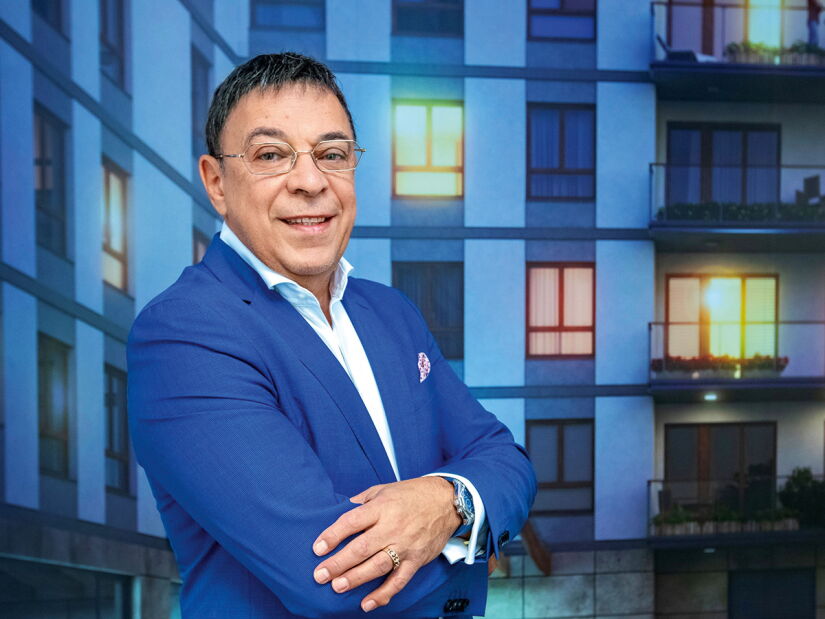
WBJ: Octava Property Trust leased 7,000 sqm in Q1 2018 and 40,000 sqm in 2017. Your leasing performance seems to belie the claim of some developers that it is aging office buildings that will suffer the most in the increasingly competitive market...
Henryk Rytwiński: We do see room for older office property in the market, which is becoming more and more segmented – there are tenants who are willing to pay monthly rents amounting to more than €20 per sqm and there are tenants who want to pay much less. For the most part, we are not a developer and our strategy does not envision realizing new office buildings. We invest in older, well-located buildings that may not be fully commercialized, require renovation or financial restructuring but which offer value-add potential.
What is the difference in rents between new and older office buildings in the same area?
I think we charge at least 20-25 percent less than the owners of some new office buildings located close to our properties. Meanwhile, we offer a very good standard and continually invest in the renovation of our properties, including fitting out spaces for new and renewing tenants.
Who leases space in older office buildings?
Our tenants come from a whole range of sectors – they include IT and telecom companies, banks and medical centers, and do not differ from those leasing in new buildings. Generally speaking, these are companies that are looking for reasonably priced office space of a good quality. It is not that old buildings are for smaller and lesser known companies – in fact, we are leasing space to a number of big and prestigious tenants. Thomson Reuters, for one, takes up most of the space in our building in Gdynia. Crédit Agricole and PZU are our main tenants in Wrocław.
What is the average age of your office buildings?
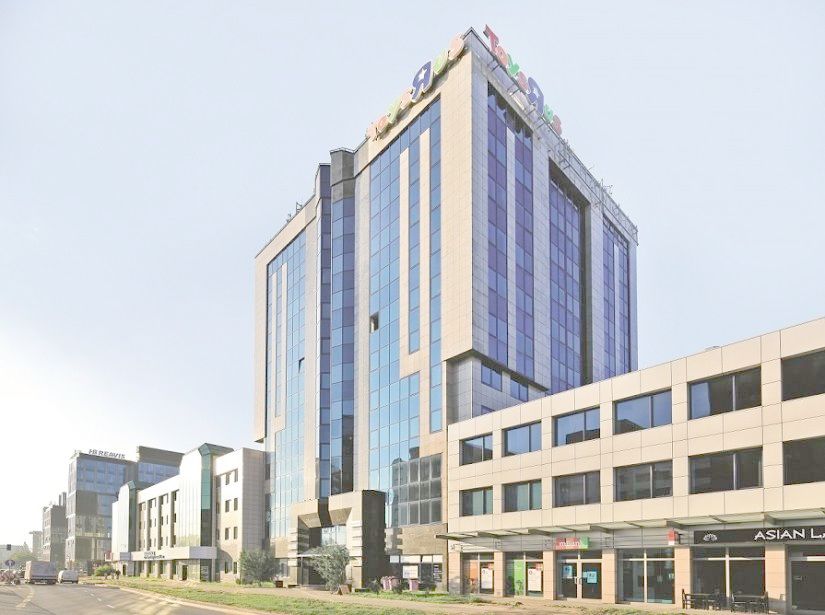
The bulk of the buildings were completed in the 1990s and the early 2000s, but the portfolio also includes Red Tower in Łódź, a property dating back to 1978. Admittedly, that building was thoroughly refurbished in the early 2000s when its former anchor tenant – mBank – was about to move into it. The tenant moved to a new building last year and we are now in the process of securing new tenants for Red Tower. We are also working on rebranding the property as many people in Łódź continue to associate Red Tower with mBank.
What is the average occupancy level across your office portfolio?
The occupancy level stands at around 80 percent for the portfolio (and it is rising), including both buildings that are almost fully leased out and properties such as the above-mentioned Red Tower in Łódź that are now being re-commercialized.
Do you see any major regional differences as far as the perception of older office buildings is concerned?
No. In general Warsaw is seeing much more demand for office space than any of the regional cities and, being a much larger market, there is a wider range of tenants for the available office space in the Polish capital. Outside Warsaw, tenants seem to be a bit more cautious, irrespective of whether they are looking for space in a new building or an older property.
You have mentioned the renovation of your buildings – do you have a specific detailed program in that respect?
Yes, we prepare capex programs every year for each property that take into account the due diligence analyses we performed prior to acquiring our assets from which we knew that some elements of a given building – such as the façade or the reception area – would need to be improved. With regards to particular office space within a building, it is an ongoing process that depends, to a large extent, on the lease deals that we sign with our tenants and the fit-out work we usually do for them. Most of the renovation work is done on the particular office floors inside the buildings when new tenants are about to move in or when we see that some installations or systems need updating. Renovation processes never affect the entire building – wusually, we are revamping space for a particular client on a particular floor or floors of the building or in a given common area, while the rest of the building operates normally.
Does your strategy envision selling properties as soon as you have increased their value?
No, the strategy is to keep our properties and to acquire more assets. We are always ready to look at offers that may arise (such as for the sale of some of the smaller assets in our portfolio), but we are not actively looking for buyers.
Will you buy any new assets this year?
We are looking at a number of opportunities currently; however, it isn’t clear whether something will close this year. We are still working on upgrading the major BPH portfolio that we acquired last year. We are obviously always ready to consider interesting new offers.
DIVERSIFIED PORTFOLIO
Established in 2014 and managed by Octava Asset Management, Octava Property Trust is an entity investing in commercial property in Warsaw and large regional cities across Poland. The company’s portfolio currently comprises a combined 18 assets in Warsaw, Kraków, Wrocław, Łódź, Poznań and the Tri-City. The portfolio totals approximately 208,000 sqm of leasable space, including around 139,000 sqm of office space and some 69,000 sqm of retail area.