URBAN SHEDS
11:20
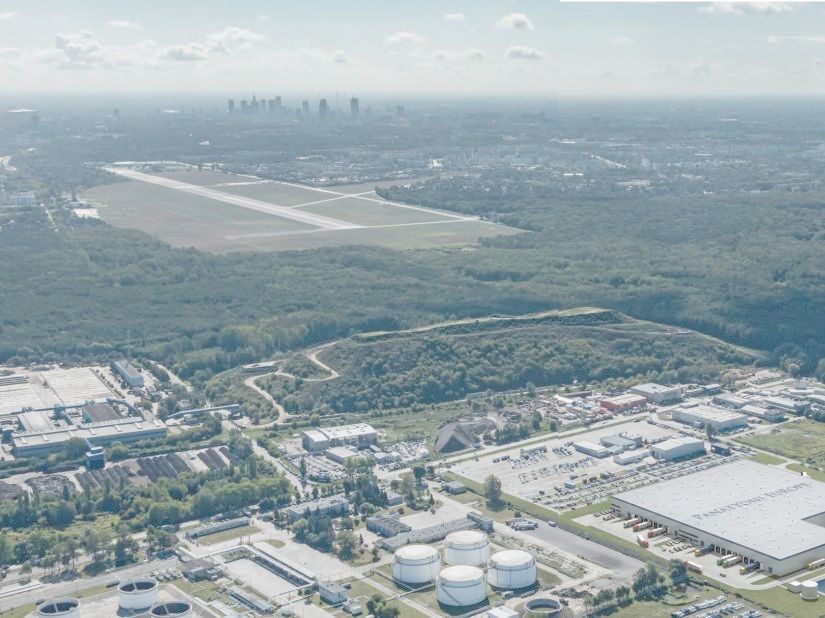
The ongoing growth of the e-commerce sector has long been predicted to bring about significant changes in the real estate industry, including in the ware- house property market, which will need to address the increasing need for storage space located close to urban clients. The changes indeed now seem to be taking place in Poland, with two of the logistics space developers active in the country having announced ambitious urban warehouse development programs in recent months. Experts expect the trend to grow further in the coming years.
URBAN PROGRAMS
Panattoni Europe revealed in May that it plans to invest approximately €1.2 billion in urban logistics projects across Europe over the next three years. In Poland, the company is currently working on four such schemes, which are valued at a total of around €65 million. The latest of the developer’s City Logistics-branded investments in the country – City Logistics Warsaw I in the Bielany district of the Polish capital – has recently attracted online super- market Frisco.pl, which will take up 11,000 sqm of space at the 26,000-sqm property.
By the end of this year, Panat- toni Europe will have delivered some 150,000 sqm of urban logistics space within the program, focusing on the Polish market, said Robert Dobrzycki, CEO Europe at Panattoni Europe. Besides the City Logistics War- saw I development, construction is now underway on projects in Wrocław and Łódź, as well as near Warsaw’s Chopin Airport. Dobrzycki added that similar schemes will also soon be launched in Germany, the UK and the Czech Republic.
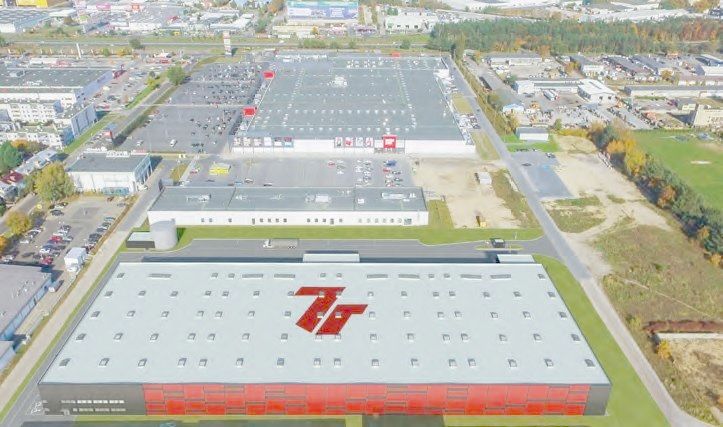
Meanwhile, 7R earlier this year announced its City Flex program, which involves the construction of a network of more than ten relatively small warehouse investments located in some of the biggest cities across Poland. The planned developments will range in size from about 8,000 sqm to some 15,000 sqm. They will be located in such cities as Gdańsk, Szczecin, Warsaw, Łódź, Kato- wice, Kraków, Wrocław, Poznań, Rzeszów, Kielce, Częstochowa, Białystok, Bydgoszcz and Gdynia.
City Flex projects will be targeted at tenants including e-commerce companies and logistics operators and will offer warehouse, office and exhibi- tion space under one roof. The smallest units will be sized from approximately 900 sqm. All the schemes are expected to obtain BREEAM certificates for energy efficiency and environmental performance. 7R’s clients will be able to sign one lease agree- ment covering several ware- houses in different locations, which will be developed within the program.
GROWING TREND
Wojciech Zoń, head of industrial agency at Savills in Poland, admitted that there is interest in urban warehouse projects.
The trend is not completely new – schemes such as the Ideal Idea parks in Warsaw have been around for some time now – but it has been growing of late. The growth is expected to continue as e-commerce keeps gaining in significance. It is tenants from that sector and their readiness to invest in so-called last mile deliv- ery that are driving the demand for such space, Zoń explained.
Urban warehouses, which are called small business units (SBU) projects, offer the opportunity to lease smaller areas than those found in big out-of-the-city logis- tics parks, but larger amounts of warehouse space can be secured there too. Interestingly, urban warehouse developments are not confined to the largest agglomerations and the most popular logistics locations across Poland. Such investments are also developed in smaller markets including Słupsk, Rzeszów and Szczecin.
How big could this market segment become? Maciej Szczepański, business development manager in the industrial and logistics space department of Cushman & Wakefield, pointed out that most urban warehouse projects are sized from 10,000 sqm to 15,000 sqm. Therefore, the share of the segment in the total annual warehouse space supply will likely amount to around 5-6 percent. According to Cushman & Wakefield data, 2.36 million sqm of warehouse space was completed in Poland last year.
The costs of building urban SBU warehouses are consider- ably higher than the costs of developing standard out-of- the-city logistics parks. This is because of factors including the high prices of plots located within the administrative bound- aries of cities. As a result, the difference in rents between the two types of warehouse projects is approximately 30-40 percent. Maintenance costs are also higher in cities, which results from such factors as high property taxes and the need to pay perpetual usufruct fees.
GROWTH BARRIERS
Admittedly, there are several barriers to the development of urban warehouse projects in Poland. Perhaps the most formidable of them is the limited availability and high costs of land for such schemes. According to Zoń, we will soon likely witness the development of more brownfield investments in this segment of the warehouse market. Develop- ers will redevelop sites in loca- tions whose attractiveness will be able to offset the demolition and construction costs.
There are already examples of such projects in the Polish market. In Ruda Śląska in Silesia, for instance, developer Hillwood has bought an older facility and plans to construct a modern logistics and industrial center on the site. In Zoń’s opinion, itis also possible that – in the longer perspective, as the segment develops – developers will build taller warehouses in cities whose height will exceed today’s standard of ten meters. This would allow smaller urban sites to be used more efficiently.
Another major barrier is the administrative issues related to the granting of building permits for new developments. The shortage of zoning plans is a big problem in many of the largest cities in Poland, Szczepański noted. Meanwhile, planning investments on the basis of so-called planning decisions, which are granted in situations when there is no zoning plan in place, is risky. “Many developers do not even consider buying land that is not covered by a local zoning plan,” Szczepański said.
At the moment, urban ware- house schemes are mainly located on the outskirts of cities. Could warehouse space possibly also be developed closer to downtown areas, for example as part of mixed-use investments that are now popular with developers? Szczepański was skeptical and pointed to practi- cal difficulties such as the lack of proper transport infrastructure (easy access and parking spaces for trucks) and the bur- densome nature of warehousing operations for the surrounding area.