Lauri Laubre on Building the Baltic Music Group – and Bringing Phantom of the Opera to Poland
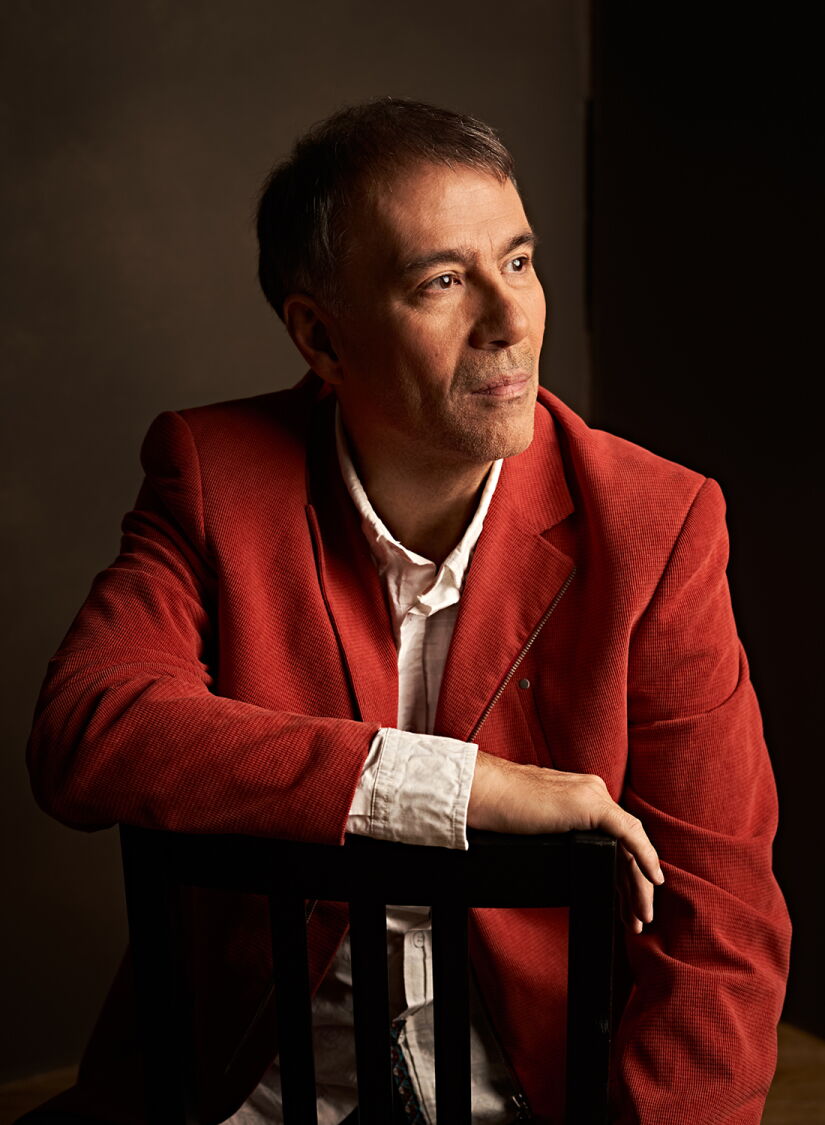
A former touring musician who became one of the Baltic region’s most influential entertainment entrepreneurs, Lauri Laubre has spent the last three decades turning post-Soviet chaos into an industry.
He created some of Estonia’s first modern nightclubs, brought Michael Jackson and The Rolling Stones to Tallinn in the 1990s, founded Piletilevi, today the largest ticketing company in the Baltics, and has promoted hundreds of concerts across the region.
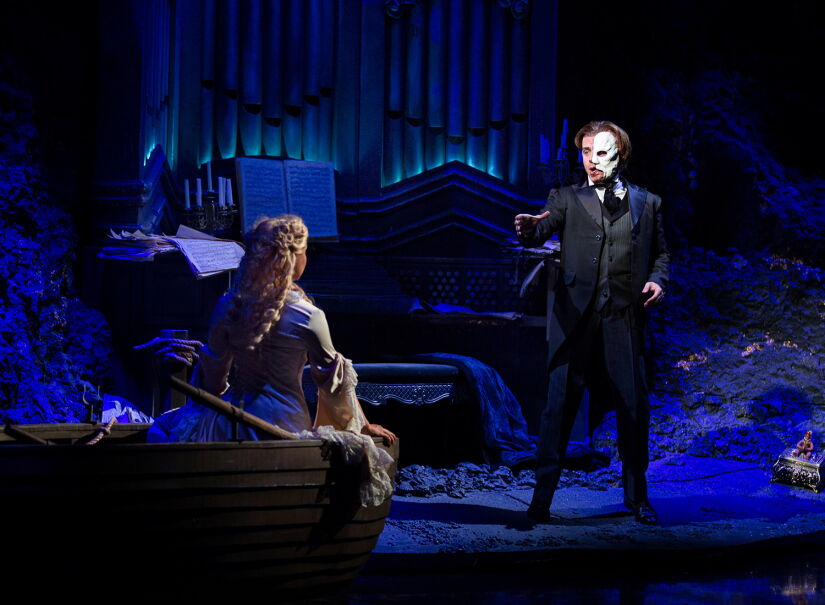
Now, through Baltic Music Group, Laubre is behind a new arena staging of Andrew Lloyd Webber’s The Phantom of the Opera – an English-language production created and supervised by Lloyd Webber’s own team – which will tour Tallinn, Vilnius and, for the first time with Laubre himself as promoter, major arenas in Poland.
The WBJ spoke with him about the wild early years of Baltic capitalism, inventing a ticketing system from scratch for Michael Jackson, the business calculus behind a 100-person touring musical, and why he thinks Poland is poised to become one of Europe’s great cultural markets.
WBJ: You’re a musician, producer and entrepreneur. How do you introduce yourself today – and who have you worked with along the way?
Lauri Laubre: First of all, thank you for having me – this is actually the first time I’m speaking in Polish media, which is exciting.
My story really begins around the time Estonia regained independence from the Soviet Union. Suddenly everything changed. The old system collapsed almost overnight – there was no real business, no structures, no jobs. But there was also a feeling that we had a historical chance to rebuild our country.
Before that, I was a full-time musician. We toured heavily in Estonia, we were on television all the time. I produced albums for several artists, including the Estonian singer Marju Länik and her album Exploring the Light, and we even toured Russia, playing big stadium shows. It was a proper, exhausting musician’s life.
When the old system collapsed, it was natural for me to stay in music – but I had to find a way to make a living from it in a completely new reality.
Your first step as an entrepreneur was actually very practical: importing musical instruments. How did that start?
It started with Finnish friends of mine. They were running a musical instrument store in Finland and were coming to Estonia quite often. We Estonians couldn’t really travel yet, but Finns came to us – and they were close neighbours anyway. Today there are around twenty ferries a day between Tallinn and Helsinki; it almost feels like the same city.
Together with them we set up a joint venture – one of the first in Estonia at that time – to bring musical instruments into the country. Yamaha was the first major brand we represented.
But there was a catch: people loved the idea, but nobody had any money. We still had Soviet rubles; our own currency only came in 1991. So we had stock, but no real market yet.
We did, however, have one big asset: a huge professional lighting rig that foreign partners had given us on very favourable terms – essentially a loan in equipment. It was hanging there, beautiful, expensive… and absolutely nobody was buying it.
That’s when I thought: If we can’t sell this light set, we should use it.
And that became my first real step into the nightlife business.
So the unsold lights became a new business model. What did you build?
We created what was, at that time, essentially the first proper nightclub in Estonia.
It was in Haapsalu, a coastal resort town about 100 kilometres from Tallinn. A lot of Estonia’s elite have summer houses there, and the road between Tallinn and Haapsalu is good, so people started to drive down on weekends.
Before that, we only had bars with some music – nothing like the club culture you saw in Berlin. We built a real club: sound, lights, local artists, and then light shows that were synced to the music. I did what I like to call my first “masterpiece”: I composed the music and synchronised it precisely to the scanners and lighting. People actually came just to see that show.
The place exploded. Suddenly everyone was there – bankers, businesspeople… and, very importantly, the bankers noticed.
You’ve mentioned that your first bank loan carried a 36% interest rate. That sounds insane by today’s standards.
It was insane! My first loan was 40,000 Estonian kroons – roughly €3,000 in today’s money – with an interest rate of 36%.
Try to imagine doing business today with 36% interest in a completely new country where nobody, including the banks, really knows how things work. But we didn’t have much choice.
The positive side is that the club business took off so quickly that I repaid the loan in three months instead of three years. After that, the bank and I became good friends. It helped that the guys who founded the bank were actually from Haapsalu as well, so there was a kind of emotional trust. Rules were a lot softer back then; bankers could still make decisions with their gut, not just algorithms.
From a resort town you suddenly jump to a giant club in the middle of Tallinn. How did that happen?
As the Haapsalu club became the place to be, business leaders from Tallinn began to show up – real estate people, bankers, all sorts. Eventually they said: “Why don’t you do something like this in Tallinn?”
They found a location in the absolute centre of the city: a former Soviet-era radio factory that had produced radios and amplifiers. Like in many socialist cities, it was totally normal to have massive factories right in the middle of town.
We took over these huge premises – about three floors and thousands of square metres – and I was offered the chance to build a club there. It was a massive leap.
By then, I had some track record, so I went back to the bank and said: “You remember how I repaid the first loan in three months? I’d like to do something bigger.”
They agreed and gave us 12 million Estonian kroons, roughly around one million US dollars at that time. Halfway through construction, the money ran out – the project was simply bigger than our estimates. I went back and said, “I need more.” They scratched their heads… and gave us another million.
It was a different era. But we finished the club, opened in 1994, and it exploded again. On some nights we had around 3,600 people inside. For early-90s Estonia, this was a huge deal.
When did you move from running clubs to bringing in global stars like Michael Jackson and The Rolling Stones?
The next big step came in 1997, when I was offered the chance to bring Michael Jackson to Tallinn. Nobody in the Baltic states had ever staged a concert of that scale. It was frighteningly expensive and logistically complex, but also a once-in-a-lifetime opportunity.
We staged the show at the Song Festival Grounds and sold around 90,000 tickets for a single night. For a country of barely 1.5 million people at the time, that’s extraordinary.
But there was a practical problem: there was no ticketing system. Nothing. So, to sell tickets for Michael Jackson, I basically had to create a ticketing company from scratch.
We started very simply. In one corner of the Tallinn nightclub we had an empty room with a window to the street. That became our first box office – maybe five square metres. When we announced the show, about 4,000 people queued outside; the line went down the street and around the corner. Our nightclub staff were running up and down offering people hot drinks while they waited.
Technically, it was almost primitive. We had a dot-matrix printer and beautifully pre-printed ticket blanks. When someone bought a ticket, we’d put a blank into the printer, push a button, and it would print a unique code on it. We added holographic stamps so you couldn’t easily copy them. There were no scanners at the gates; but also, no-one really knew how to counterfeit them. Copy machines weren’t common yet, and full-colour printing was expensive.
That system became Piletilevi, which later grew into Baltic Tickets Holding, the largest ticketing company in the Baltics, operating also in Lithuania as Bilietai and, today, even in markets like Poland.
We didn’t set out to build a pan-Baltic ticketing company. We just needed a way to sell tickets for Michael Jackson. Necessity really was the mother – and father – of invention.
After Michael Jackson came The Rolling Stones, Tina Turner… How did that shift your role in the industry?
Michael Jackson changed everything. Suddenly Estonia was visible on the map for agents and managers. In 1998 we brought The Rolling Stones, and in 2000, Tina Turner. Those shows were historic not only for us but for the whole region.
At that point, we weren’t just club owners anymore; we were concert promoters across multiple venues and countries. We started working also in Latvia, Lithuania and neighbouring markets.
But then came 1998 and the Russian financial crisis, which spilled over into our region. For four months during the Rolling Stones sales period, we sold literally zero tickets. Not one. I wouldn’t wish that on any promoter.
People simply stopped going out; consumer confidence collapsed. It was nothing to do with the artist or the marketing. It was a macro shock.
Interestingly, it was the Finns who saved that show. For them, Estonia was already a popular destination – cheap alcohol, interesting to see the “other side of the former Iron Curtain”, frequent ferries. Finnish media wrote about the Stones in Tallinn, and because the band wasn’t playing Helsinki that time, thousands of Finns started buying tickets and travelling over.
They never knew it, but they essentially rescued the project.
Looking back, do you feel you were effectively creating the concert industry in Estonia?
Yes, and that’s not just my opinion. Colleagues at Live Nation and other major promoters have said the same: that we effectively founded the modern concert industry in Estonia.
We had the first large-scale club, we brought the first mega-stars, and we had to invent everything around them – from ticketing to logistics to local crews. Before that, there simply wasn’t an industry in the Western sense.
Fast forward to today. You’re bringing an English-language arena production of The Phantom of the Opera to the Baltics and Poland. What makes this project special?
This production is, in many ways, a once-in-a-lifetime opportunity.
It’s produced by Broadway Entertainment Group in arrangement with LW Entertainment, and it is 100% supervised by Andrew Lloyd Webber’s team. Every element – staging, casting, technical details – is approved by them. The cast features artists who have performed in London’s West End and Broadway productions, and the show is performed in English, with local surtitles for audiences in Estonia, Lithuania and Poland.
The concept has been touring selected cities – Lisbon, Basel, parts of the Middle East – but it’s relatively rare, and there is a clear end date. According to current plans, after 2026 this version of Phantom will no longer tour; licensing policies are changing, and Lloyd Webber’s company wants to be more directly involved in future theatrical productions rather than licensing them out in the same way.
So what audiences will see in Tallinn, Vilnius and the Polish arenas really is a limited-time, never-to-be-repeated format.
And it’s the first time Phantom has been staged in arenas, not theatres.
Exactly. As far as Phantom of the Opera is concerned, this is the first arena format. We don’t have enough 3,000–3,500-seat classical theatres in our region to host a long run at that scale, so we had to adapt the production to arenas.
The challenge is to make an arena feel like a theatre. So we’ll black out the tribunes, build a very theatrical stage, and create the sense that you’re sitting in a West End house – just with more people.
Is this designed for a niche musical theatre crowd, or something broader?
I honestly think Phantom is for everyone.
It’s the most successful musical in history in terms of longevity and worldwide audience, and the music is extraordinary. Even if someone thinks they “don’t like musicals”, they probably know some of the songs already.
From a business point of view, it’s also a very interesting multi-night product. We don’t have just one show; we have a run of performances in each city. The first people who see it will talk, media will cover it, and every subsequent night gains momentum. It has that “word-of-mouth engine” built in.
There’s also an educational angle. If you want to introduce younger people to orchestral music, live singing, large-scale stagecraft – this is a perfect entry point. It’s not “difficult art”; it’s emotionally powerful, visually spectacular and highly accessible.
From a business perspective, what are the main cost drivers of a project like this?
First, people. There are over 100 cast, crew and orchestra members travelling with this production – singers, musicians, technical staff, dressers, stage managers, you name it. They join us around mid-April and stay until the end of June. You have to accommodate, feed and move them every day.
Second, production logistics. The physical show travels in about 15 large sea containers from London – sets, costumes, lighting, sound equipment. Those containers have to be shipped, stored, loaded, unloaded and repositioned multiple times as we move from city to city. Each of those steps involves local transport partners, stage hands, warehousing and so on.
We don’t keep all these people on our payroll year-round, of course. We work with trusted partners on a project basis – logistics companies, local crews, technical teams – many of whom we’ve collaborated with for years. But the scale is still enormous.
On top of that, you have the usual hospitality and technical riders. The show’s “bible” – the document outlining what they need – runs to around 100 pages. Everything from the right kind of water in rehearsal rooms to how costumes must be handled, where strings can be sourced, what kind of backup cast you must provide in case someone gets sick… It’s a big machine.
Typically, international producers work with a local promoter in each country. This time you’ve chosen to promote Poland yourself through Baltic Music Group. Why?
At first, the producers spoke directly with several Polish promoters. That’s the normal model. For various reasons – different risk appetites, different financial expectations, maybe doubts after so many local runs of Phantom at Teatr Roma – those discussions didn’t lead to a deal.
Because we already had a very good working relationship with the producers from our Baltic shows, they eventually asked: Would you consider doing Poland as well?”
I took some time to study the market. Poland is huge. It’s a large, growing economy with a strong cultural appetite. If you believe in the product – and I had seen Phantom in Basel and was completely convinced – then Poland is a big opportunity, not just a risk.
So I brought in my partner from Vilnius, and together we decided to enter the Polish market as promoters, under our own Estonian company. For us, it’s a breakthrough: an Estonian promoter staging a large, high-end international production in Poland.
So far, judging by ticket sales, that faith seems well placed.
What are the main obstacles you’ve encountered bringing an Estonian company into the Polish market?
The most surprising issue has been something very basic: VAT registration.
In Estonia, you can register for VAT online in half a day. It’s straightforward and fully digital; we’re a tiny country, so we make it as easy as possible for foreign businesses to come and operate.
In Poland, we hired a local accounting firm to handle it. A month later, we still didn’t have the registration. They needed a sworn translator to translate our articles of association and other documents into Polish – documents that are already public online in Estonia, I might add. We couldn’t find a sworn translator in Poland who could do Estonian–Polish, so eventually we had to go via the Polish embassy in Tallinn. That added more weeks.
It’s not a complaint, just an observation: if you want to attract foreign investment and foreign companies, these processes matter.
On the positive side, Poland has something I envy very much: 8% VAT on tickets for cultural events. In Estonia, we have 24%. So for every ticket we sell, one quarter of the price goes straight to the state. We manage because our market is strong, but from a cultural policy perspective, the Polish approach is very smart. It encourages promoters to bring in more events.
Looking ahead, how do you see the future of large-scale entertainment in Central and Eastern Europe – particularly Poland?
I think Poland is in an excellent position.
Geographically, it sits at the centre of the region, with huge flows of logistics already passing through – just drive from Gdańsk to Gliwice and count the trucks. Demographically, it’s a large nation, with a strong tradition of culture – composers, writers, theatre, cinema.
Everyone I speak to in the arena business tells me the same thing: Polish audiences love cultural life. They go to concerts, theatre, festivals. The demand is there.
Combine that with relatively low VAT on tickets and improving infrastructure – including future projects like the Rail Baltica link northwards – and I see enormous potential for Poland to become one of Europe’s major cultural markets.
We in Estonia genuinely envy that scale. We’re very small; we must always look outward. Poland has the advantage of being both a big domestic market and a natural hub for the wider region.
If Phantom goes well – and I believe it will – we would absolutely like to come back with other projects.
You’ve mentioned that Phantom is also a compelling product for corporate clients. How so?
Because we have multiple shows in each city, we can dedicate specific performances to corporate and VIP audiences.
In Estonia, for example, we’ve reserved three shows purely for corporate clients – banks, mobile operators, large industrial firms – who either invite their employees or their key customers. They can brand the evening, host receptions, and associate their name with a global cultural icon.
We can do similar things in Poland. You’re not limited to “one sponsor per show”; we can build flexible packages across several performances and cities. For a B2B company, it’s a powerful way to create an emotional experience around their brand.
With all this, do you still find time to make music yourself?
Yes – more than ever, actually.
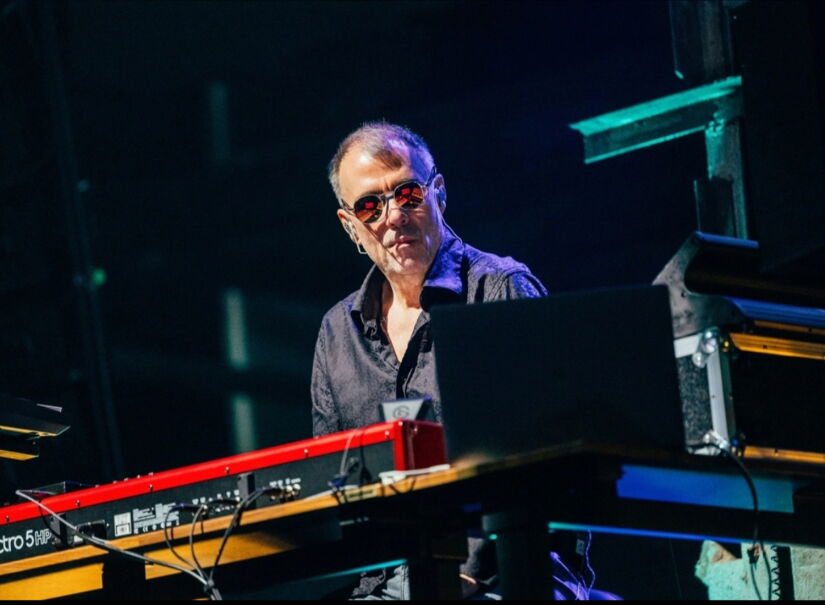
At the end of 2023 I released an album called “Northodoxian”, and I’m now working on “Northodoxian 2”. I have a home studio where I record with musicians from different countries. It’s a very personal project – when you listen, you’ll understand why I say that 2023 and 2024 felt a little different.
I don’t play live as often as in the past, but I still go on stage. For me, being a musician isn’t a phase; it’s part of who I am. The business side grew out of that, not the other way around.
You’ve called Michael Jackson in 1997 a “core memory” experience for Estonians. Do you want Phantom to be that for a new generation?
Exactly.
When I was asked back then why everyone should go to Michael Jackson, I said: “If you care about music and you want to see the absolute top of pop performance in the world, you have to go. There is no equivalent.”
I feel similarly about this production of Phantom. If you want to see the absolute top of musical theatre, with world-class performers, a live orchestra, spectacular staging and a very limited window to experience it – this is it.
I hope that in twenty years, people in Tallinn, Vilnius and Warsaw will say: “I still remember when I saw Phantom of the Opera in the arena in 2026.” That’s what makes all the risk and logistics worthwhile.