by Sergiusz Prokurat
The Polish proverb “Od Sasa do Lasa” is used to convey that two or more people, or views, differ significantly from each other and are contradictory. In other words, it highlights situations where a wide range of opposing views or contradictions coexist side-by-side. The saying has its roots in the 17th century political conflict between the followers of the Wettin (Saxon) dynasty (“Sas”) and the supporters of king Stanisław Leszczyński (“Las”). Interestingly, the original meaning of this saying likely comes from a pair of horses pulling a cart—one running slowly to the left (“sasa”) and the other heading toward the forest (“las”), signifying two completely different directions. It’s a nice exemplification of today’s Poland. After nearly a decade in power Poland’s dominant party, Law and Justice Party (PiS), was ousted in the 2023 parliamentary elections. A new multi-party coalition government, led by Prime Minister Donald Tusk, vows to do things differently. The new government aims to shift towards a more EU-friendly direction, reform judicial independence, and uphold the rule of law. However, challenges include overcoming PiS's institutional influence, restructuring state-owned companies, and demonstrating progress to the electorate.
Social vs Liberal
Poland is visibly divided into two philosophies that reflects the attitude of Poles. On one side is Social Poland, at times leaning towards socialism, which prioritizes social cohesion, welfare programs, and communal support. They are less amicable towards the EU and the global community. On the other hand, Liberal Poland champions individual freedoms, free-market principles, and minimal government interference. Liberals advocate for entrepreneurship and economic vitality. These contrasting visions offer divergent paths for Poland, impacting its economic, social, and political landscape. While the liberals emerged victorious in the last election, their mandate remains fragile, contingent on forthcoming outcomes. The ongoing debate profoundly influences the country's future trajectory, particularly with another election on the horizon.
Elections coming
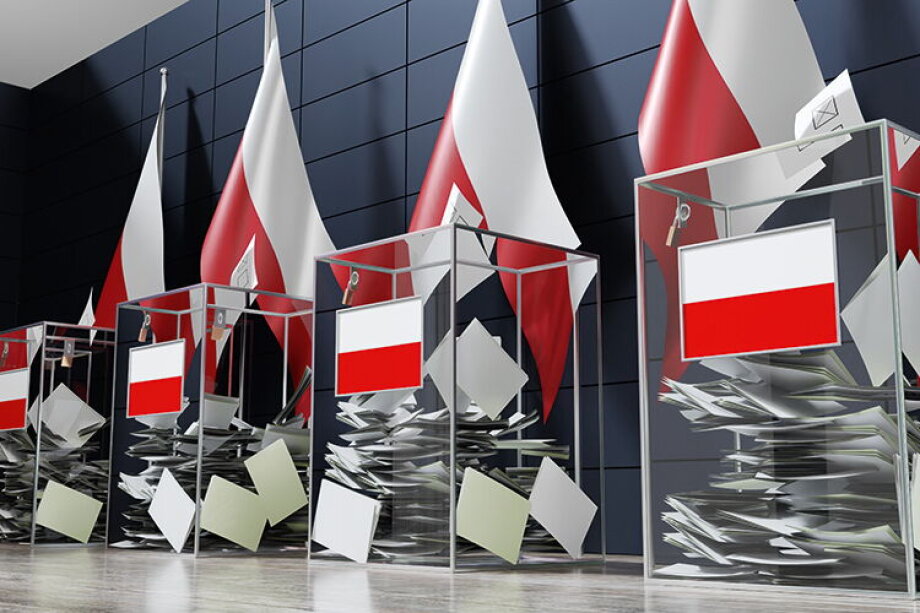
The 2024 local government elections, are scheduled to take place in April. These elections were initially planned for the autumn of 2023, following the five-year term of local government bodies. However, to avoid overlapping with parliamentary elections held in October 2023, the Polish authorities changed the schedule. Voters will select mayors, city councillors, district councillors, and representatives for municipal, county, and regional councils. At the local level, candidates and parties are wrestling with strategies to tackle regional economic challenges, promote industrial growth, attract foreign investment, and effectively oversee infrastructure development, all amid the challenges of early 2024. “Third-Way,” Civic Coalition and “Left” were the three separate electoral committees that came together to form a government in 2023 and secure a parliamentary majority. Now they have split and will fight for voters. If PiS experiences a loss, as indicated by polls, it could potentially face significant challenges and internal turmoil within the party.
In 2023, the Polish economy displayed resilience, although GDP growth reached a modest 0.2%, slightly under initial forecasts. While the 2024 outlook appears more optimistic after the short-term inflation surge of 2023 abates, projections anticipate inflation rates of 4-6% in 2024 and a milder 3-4% in 2025. Despite this, Poles continue to receive state subsidies on electricity and gas. Removing price freezes and zero VAT on food could prove unpopular. Even cautious politicians, including those of liberal leanings, would approach such measures delicately.
It's neither good nor bad
Indeed, Poland faces numerous challenges. As of 2021, the public finance deficit in Poland stood at a mere 1.9% of GDP. However, by the end of 2023, it surged to as high as 5.6% of GDP. Consequently, this spring, Brussels will initiate the excessive deficit procedure against Poland. Additionally, the government has planned for a significant deficit for 2024, amounting to 5.1% of GDP. Another challenge arises from the necessity to borrow record-high amounts from financial markets, potentially leading to a depreciation of Polish debt or even a fiscal crisis. It’s worth noting that Poland currently has one of the highest deficits in the EU, and financial transparency has worsened since the outbreak of war. Several new off-budget funds have emerged, where the government allocates its expenses, eluding parliamentary control.
The underperformance of the German economy, potentially leading to a crisis in Europe, combined with a strong Polish zloty (PLN) and increased price competition from Asian manufacturers, may impact Poland’s foreign trade balance. A huge river of funds, committed by the European Commission as a post-pandemic aid package, is expected to boost investment in Poland. However, it will also strengthen the Polish zloty (PLN) even more. In the meantime, Poland relies heavily on coal for energy, which poses both environmental and economic challenges. The nation requires a transition towards more sustainable energy sources. Investments in modern energy infrastructure, including nuclear or renewable energy, alongside enhancing energy efficiency, are crucial for ensuring stability and security in energy supply. The current government remains undecided on whether to continue significant investments, such as the construction of a new airport in Baranów and the state-owned development of Izera’s EV factory in Jaworzno. Moreover, the ongoing conflict on the eastern border exacerbates concerns regarding stability. “Od Sasa do Lasa” encapsulates the ongoing power struggles, wars and the twists of fate in Polish history.