Interview by Beata Socha and Morten Lindholm
WBJ: In your recent post, you mentioned that Poland has experienced three decades of tremendous growth and is now poised to overtake powerful economies such as South Korea. Where is Poland now in terms of its long-term development?
Marcin Piątkowski: The bottom line is that Poland is truly living through its Golden Age. Poles have never had it better in all of our history, whether since the country was founded in 966.
I define this Golden Age by looking at the distance between our income levels, quality of life, and happiness compared to the West. Poles’ average income is now about 80% of the EU average, the highest ever.
And our quality of life is even higher than income alone suggests. Thanks to ultra-safe streets, work-life balance, a European lifestyle, and improving infrastructure, our quality of life exceeds what the income numbers imply.
Poles are now among the top three happiest nations in the EU, according to Eurostat. We’re just behind the Danes, Swedes, and Finns, ahead of almost everyone else. And in the global happiness index, we’re close to overtaking Americans. If Poles are happier than Americans, I think there is no better definition of a Golden Age.
What has contributed to this Golden Age? What are the drivers of the growth?
Let me simplify it into five “Es”: egalitarianism, education, entrepreneurship, elites, and Europe.
Egalitarianism is the quiet, positive legacy of communism, which – despite its cruelty, repression, and an obviously inefficient economic system – nevertheless created, for the first time ever, an egalitarian, inclusive, socially mobile society. Poland had never had that before.
That foundation enabled the success story. Look at the leading Polish millionaires, starting with Rafał Brzoska, founder of InPost, who comes from a village near my hometown. At any point earlier in Polish history, someone like him would never have made it.
He’s a good example of how talent, ideas, hard work, discipline, and a bit of luck could finally be enough.
Second, education. Poland has had one of the biggest boosts in educational attainment worldwide. In 1990, only about 10% of young Poles received a university education; five years later, it was almost 50%. The university where I teach began as a private institution and is now the highest-ranked business school in Central Europe.
Education then fueled entrepreneurship. Unlike other socialist states, Poland already had a significant private sector before 1989, and because of our large domestic market, entrepreneurship developed more strongly here than elsewhere in the region.
Fourth, elites. Poles love to complain about elites, saying that if not for the government, we’d be much richer. That’s simply not true. Overall, our elites have conducted pragmatic, balanced economic policy. A clear example is the handling of the pandemic and its aftermath. Poland is now the fastest-growing large economy in Europe post-COVID, largely because policymakers were not afraid to deliver strong fiscal and monetary support.
Finally, Europe, and more precisely, the European Union. Without the EU’s open borders and institutions, Poland’s income today would probably be only slightly above Belarus.
“Golden age” sounds wonderful, but all golden ages come to an end. How sustainable is this growth in the long run?
Poland remains so competitive that it is almost destined to catch up with Western Europe, at least over the next decade. Our competitiveness is still very strong.
We offer high-quality human capital at relatively low labor costs. Almost half of young Poles now have a university degree, compared with only one-third in Germany.
Whether you’re a global or domestic business, you get human capital that is often higher quality than in the West, but at half the price. Combined with open borders, excellent infrastructure, and macroeconomic stability, this gives us an unbeatable formula. I expect it to support growth for at least another decade.
Where do you see the major threats? From within or from outside?
Short of Putin’s potential invasion, which we all hope never happens, the fundamental challenge is demographics. This won’t hit us too hard over the next decade, but after 2035, it will become increasingly severe.
Poland will both shrink and age. According to GUS projections, our population may fall below 30 million by 2060. At the same time, we’ll age rapidly. Today, for every 10 working people, there are about four pensioners. By 2050, for every 10 workers, there will be eight pensioners.
A shrinking and aging population makes it hard to remain a European growth leader. This is the biggest long-term challenge.
Isn’t the rest of the West facing the same issue? Doesn’t that mean we’re not losing competitiveness relative to others?
Poland is actually among the countries with the fastest population decline and the fastest aging, faster than most OECD states. And yes, demographics is a problem across Western Europe, and even globally. Europe as a whole is shrinking and losing economic relevance. That’s also a long-term risk for Poland, even though we’ve thrived inside the EU market for more than 35 years.
Demographics will also hit China, but only after 2050. India, by contrast, will continue to grow its labor force until 2060. They have the opposite problem: creating enough jobs.
Many Poles who worked abroad for the past 20 years are now returning because Poland has become a better place to live. Could that help offset demographic decline?
That’s part of the solution. Historically, since around the 16th century, Poland has had more people leaving than arriving. That is now changing. But we’ll need much more over the next decade.
By 2035, two million Poles will leave the labor market. That creates a major gap.
One big opportunity is the Polish diaspora. There are over 20 million people of Polish descent abroad: 1.5 million in Brazil, half a million in Argentina, and so on. Many live in countries with significantly lower incomes and quality of life.
There is a real opportunity to bring in millions, even if they don’t speak Polish initially. They would need support in learning the language and finding jobs. Poland has the third-lowest unemployment rate in the EU, and that won’t change anytime soon. Many could take BPO jobs in Kraków or Lublin almost immediately.
The third lever is employment rates. Not everyone who can work does work, and some retire early. Poland has made huge progress: 15 years ago, we were an EU laggard; now our employment rate is above the EU average. But we’re still far behind leaders like the Netherlands and Denmark. Matching Dutch employment levels would add almost two million workers, enough to fill much of the labor gap.
What about the AI boom? Is it an opportunity or a threat?
There’s a lot of AI hype. Everyone talks about it, but we’ve seen little income impact so far. AI, robotization, and automation are easier said than done. In principle, Poland should adopt as much labor-saving AI as possible. We will have two million fewer workers in the next decade and almost seven million fewer by 2050. We need every labor-saving technology available.
At the same time, AI gives Poland a chance to leapfrog technologically again. We’re starting virtually at the same line as most of the West, and in some respects ahead. In fact, Poland is better positioned to absorb AI than Germany.
How can Poland outpace technologically advanced economies, like Germany?
Germany has a great deal of outdated infrastructure and entrenched ideas that make modernization difficult, as seen in the EV race. They stuck to diesel and gas engines for far too long because that model served them well for 150 years.
Poland has less to lose and has already shown it can be innovative. Just look at our banking sector or digital payments like BLIK.
We’re not just at the same starting line; we’re ahead of quite a few Western European countries. And we can achieve a double win: replace missing labor and leapfrog technologically.
Foreign investment played a huge role in Poland’s growth over the past 30 years. Will that continue, or will rising wages deter FDI?
Poland is still very competitive. Even after all we’ve achieved, our income level is roughly 70% of Denmark’s when adjusted for prices.
We attract FDI inflows equal to 2-3% of GDP annually, which is significant. I’m speaking to you from India, where net FDI inflows are close to zero. Many countries would love to have what Poland has. But to keep attracting investment, Poland needs to “sexy up” its narrative.
What narrative should Poland adopt?
Western companies today are preoccupied with China. Staying competitive means being at the technological frontier and diversifying production to safer, more reliable locations. That’s where Poland comes in.
The West struggles to reshore production due to high wages, while poorer countries struggle to absorb large volumes of investment because they lack stability, infrastructure, or skills. Even Vietnam, Indonesia, and Mexico have limits.
Poland sits in the sweet spot. We’re not too expensive and not unpredictable. Investors get skills equal to or better than those in their home markets, at lower cost, with top-tier infrastructure and EU security. That’s the narrative we should push.
So you’re proposing reindustrialization, becoming Europe’s manufacturing center?
Yes. Poland can become the new industrial heart of the West, especially in regions where logistics are improving rapidly. The corridor between Łódź and Warsaw, for example, will soon be one of the best-connected places in Europe.
We’ll combine a direct rail line to China, ideally serving both directions, with a major new central airport and regional airports, and a direct highway to Copenhagen and Berlin. It’s hard to imagine a better mix of security and competitiveness.
How can Poland get that message across?
Poland needs an action plan to engage G20 countries and demonstrate why including Poland in the long term is in their interest. It’s not enough to announce that Poland wants to join the G20, even if it’s now the world’s 20th-largest economy.
What matters is the value proposition we bring. We must tell the story of how Poland can contribute, drawing on the lessons from our success. For many countries, including some G20 members, Poland’s development model is easier to replicate than East Asia’s. Our model is based on open borders, high-quality human capital, and accessible FDI inflows.
That’s the story Poland should present at the G20 level.
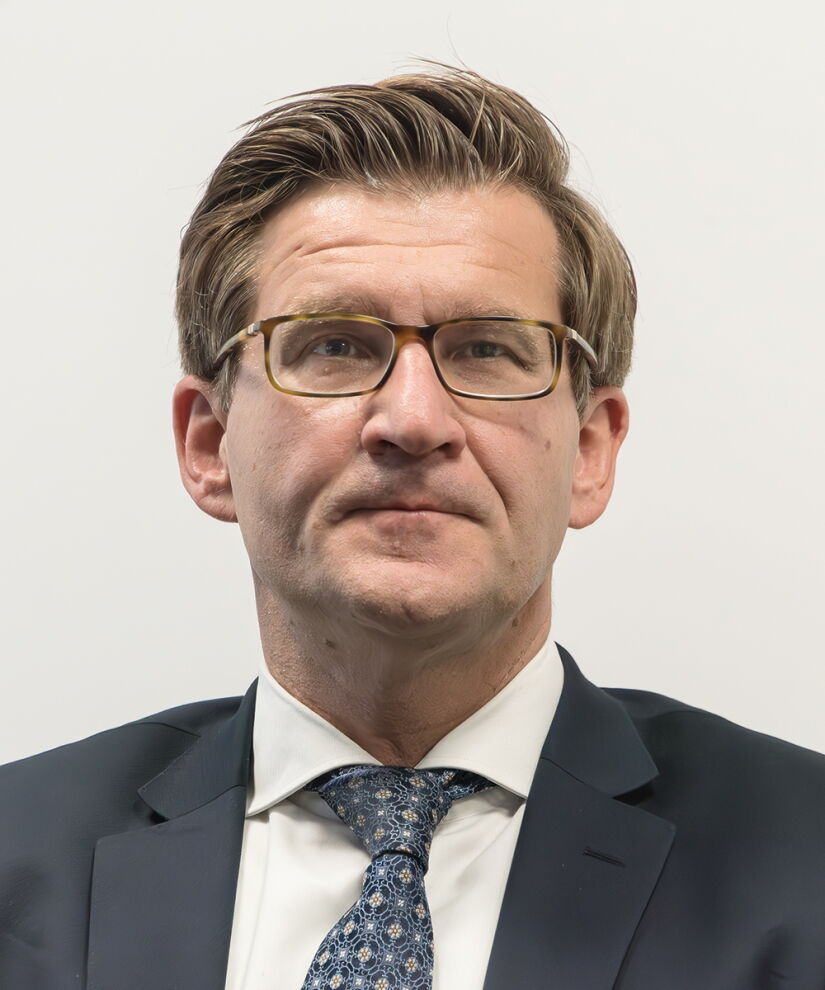
Marcin Piątkowski
Marcin Piątkowski is Professor of Economics at Kozminski University in Warsaw. He’s held a number of high-ranking advisory roles, including for the World Bank, PKO BP (the largest bank in Poland), and the European Department of the International Monetary Fund (IMF). He also served as Advisor to Poland’s Deputy Premier and Minister of Finance. He is the author of Europe’s Growth Champion (2019) and Złoty Wiek (The Golden Age), his 2023 study of how Poland became a European growth leader and what comes next.