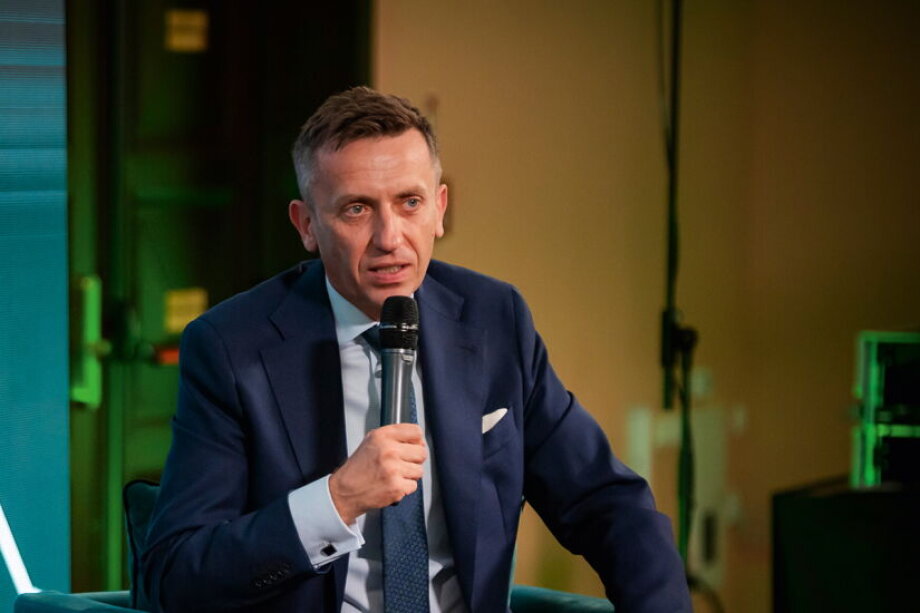
WBJ: You have led the Association of Individual Investors for many years and observed the market from close range. Looking at the 30-year history of the WallStreet Conference, how has the role and influence, of individual investors in Poland evolved?
Jarosław Dominiak: When I look back at the early days, individual investors were much more on the sidelines. Access to information was limited, tools were basic, and the overall awareness was simply lower. People were learning by doing, often through mistakes.
Today, it’s a completely different story. Individual investors are far more conscious, better educated, and much more active. They follow global trends, use advanced tools, and increasingly think in terms of long-term strategies. What’s also important is that their voice is now more organized. Through SII, we’ve been able to represent their interests more effectively, especially in areas like corporate governance and investor rights.
So I would say we’ve moved from a passive group of participants to a much more mature and influential community.
WallStreet is celebrating its 30th anniversary this year. Over these three decades, how has the Polish capital market changed, and how has the profile of its participants evolved alongside it?
The market itself has gone through a huge transformation. In the beginning, it was relatively small, quite simple, and still finding its identity. Today, it’s a much more developed ecosystem with better standards, broader access to instruments, and stronger regulation.
At the same time, the people have changed just as much. We’re seeing a new generation of investors coming in, younger, more open to the world, and very comfortable with technology. They don’t limit themselves to the Polish market anymore. For them, investing is naturally global.
And what’s interesting is that this new generation is also more curious. They want to understand what they’re doing, not just follow tips. That’s a very positive shift.
What would you identify as the most important structural shifts in the Polish capital market over the past decades, and how would you assess its current condition today?
A few things stand out to me. First, the integration with global markets – that’s been a game changer. Polish investors today think in a much broader context.
Second, technology. The development of brokerage platforms and online access has significantly lowered the entry barrier. Investing is simply more accessible than ever before.
And third, regulation. We’ve seen improvements in transparency and investor protection, although of course there’s always room to do more.
As for the current condition, I’d say the market is stable and quite solid, but it’s also at a point where we need to think about the future. We need to attract new companies, strengthen long-term investing habits, and keep building trust. These are key challenges for the coming years.
We are seeing a clear rise in instruments such as ETFs, as well as easier access to global markets. Which trends in investment products and strategies are gaining the most traction, and how are they reshaping investor behavior?
ETFs are definitely one of the biggest trends we’re seeing. They offer simplicity, diversification, and relatively low costs, which makes them very attractive, especially for newer investors.
At the same time, access to global markets has completely changed the mindset. Investors are no longer focused only on local opportunities – they’re building portfolios that include the US, Europe, emerging markets, and more.
But what’s interesting is that active investing hasn’t disappeared. Instead, many people combine both approaches. They might have a core portfolio based on ETFs and then add individual stocks on top of that.
So it’s less about choosing one approach and more about finding a balance that fits your strategy.
AI-supported decision-making is becoming increasingly visible in investing. To what extent is it already influencing individual investors in Poland, and is it changing who the “typical” investor is?
We’re definitely at the beginning of that shift, but the direction is clear. More and more investors are starting to use AI tools – whether for analyzing data, generating ideas, or simply organizing information.
I don’t think AI will replace investors, but it will change how they work. It gives people the ability to process much more information and make more informed decisions.
In that sense, the “typical” investor is becoming more analytical and more data-driven. At the same time, I think the human element remains crucial – experience, judgment, and emotional discipline still play a huge role.
The 30th edition of WallStreet is a symbolic milestone. Beyond the anniversary, what are the key themes or debates that you expect to define this year’s conference?
Of course, the anniversary is important, but we’re not just looking back – we’re really focused on what’s ahead.
I expect a lot of discussion around long-term investing, especially in the context of global uncertainty. Technology will also be a major theme – not only AI, but more broadly how digital tools are changing the way we invest.
We’ll also talk about diversification, macroeconomic trends, and how investors should navigate a more complex environment.
At the same time, we want to stay true to what WallStreet has always been about – education and practical knowledge. People come here not just for inspiration, but for real, useful insights.
In a world where investors have constant access to data, analysis, and online communities, what remains the unique value of in-person events like WallStreet? What happens there that cannot be replicated digitally?
This is something we see every year – no matter how much content is available online, people still want to meet in person.
And the reason is simple: real conversations. You can listen to a webinar anywhere, but you can’t replicate the kind of discussions that happen during a conference – after a presentation, over coffee, or just in between sessions.
A lot of the most valuable insights come from those informal moments. You exchange experiences, challenge ideas, and build relationships.
There’s also a sense of community. Investing can be quite an individual activity, but when you come to WallStreet, you realize you’re part of something bigger. That energy, that atmosphere – it’s something you just can’t recreate online.