9:27 27 February 2026
THE CAPITAL'S GREEN ALGORITHM: HOW WARSAW IS REDEFINING THE MODERN METROPOLIS











Interview by Morten Lindholm
WBJ: The capital city has been undergoing a green transformation in recent years. Can we talk about the birth of a new “Warsaw standard” in the design of urban green areas, combining aesthetics with functionality?
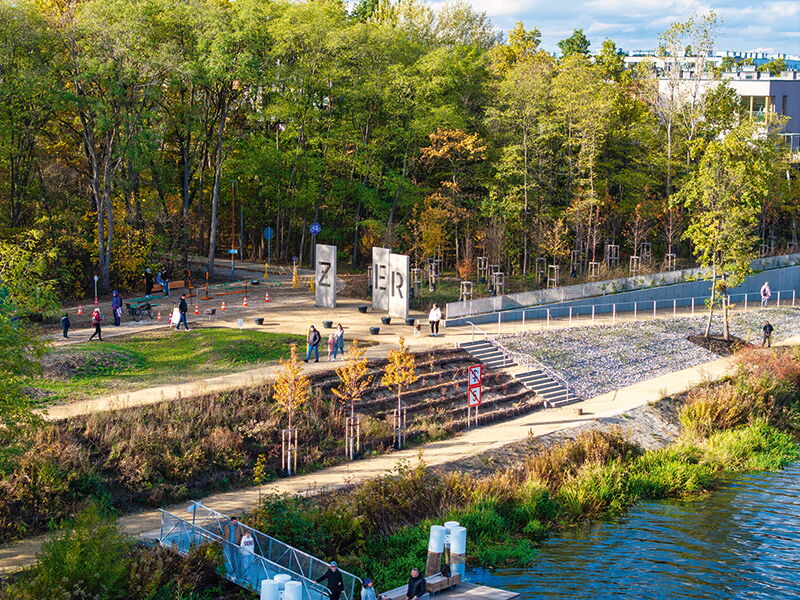
Magdalena Młochowska: Warsaw began shaping this standard 10 years ago. It was one of the first cities in Poland to focus on comprehensive green space management, establishing the Warsaw Green Spaces Authority (Zarząd Zieleni m.st. Warszawy) in 2016. As a result, the capital has not only gained new parks and green spaces, but, above all, a coherent green space management system. Warsaw projects such as Pole Mokotowskie Park, the New Center of Warsaw, and the award-winning Akcja “Burza” Park are replacing concrete with trees and shrubs, increasing both aesthetics and usability, by providing shade and a place for recreation. Warsaw design philosophy focuses on integrating aesthetics with functionality.
How do investments in greenery play a role in the development strategy of a modern metropolis and how do they affect the overall attractiveness of the city?
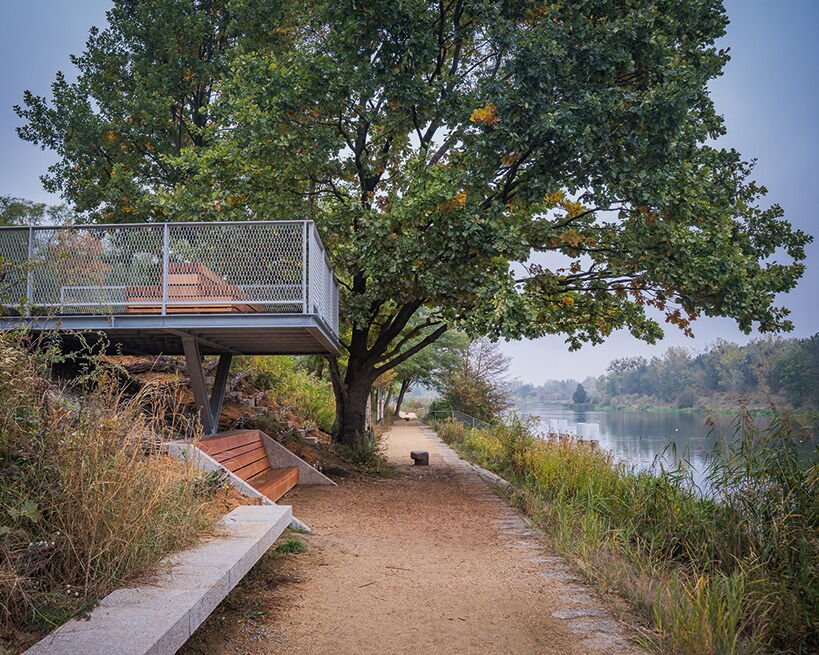
Greenery is an important element of the natural system of a metropolis, which directly influences the quality of life of its residents. Warsaw provides access to various types of green areas, from micro forms, such as pocket gardens, to large new parks, such as Akcja “Burza” Park in Mokotów or Żerański Park in Białołęka. The green, natural banks of the Vistula River (Natura 2000), which are unique on a European scale, also play a huge role. These solutions attract tourists and influence everyday decisions about choosing Warsaw as an attractive place to live and work.
Warsaw is actively pursuing a policy of removing concrete from urban spaces. What are the measurable benefits of replacing impermeable surfaces with vegetation in the context of climate change?
One of the goals of the city's greening policy is to reduce the urban heat island effect. How do we do this? Primarily through small-scale actions throughout the city, such as removing concrete slabs. Between 2019 and 2024, municipal units carried out approximately 270 projects, removing concrete from over 245,000 square meters of surface area. Where possible, we implement retention projects, meaning we collect water in the area, and as part of our modernization work, we are also creating rain gardens and infiltration basins, which help build resilience to climate change.
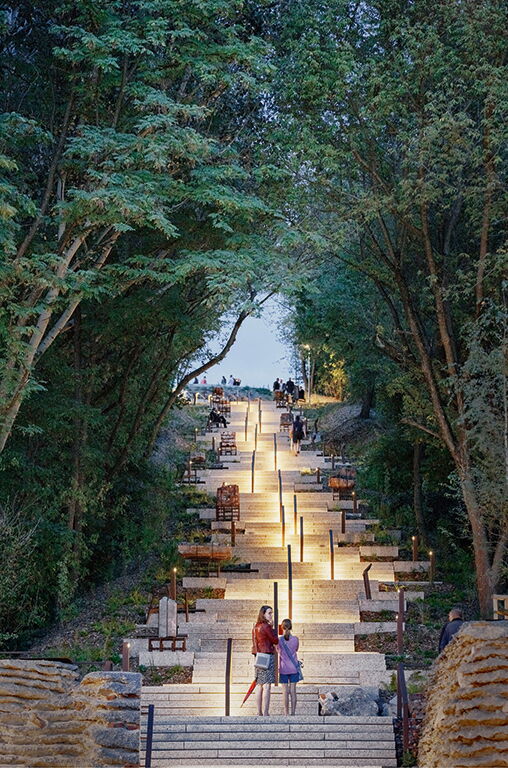
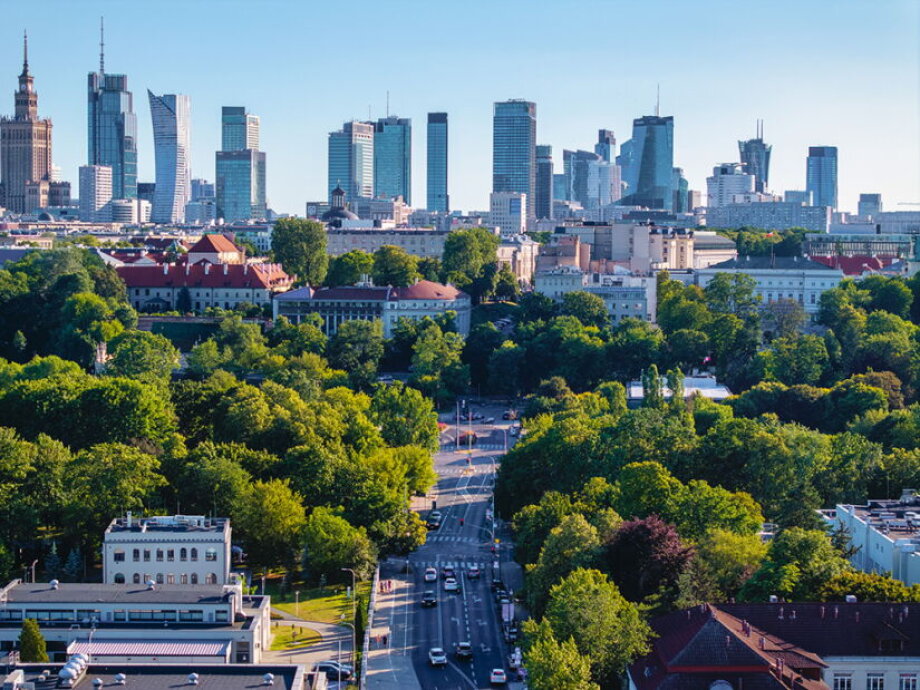
Projects involving the planting of greenery, including in the New Center of Warsaw, the revitalization of parks and former riverside and port areas, are changing the character of the city, combining natural functions with modern utility infrastructure. How are these changes perceived by residents and tourists?
“The capital of greenery” is not just a slogan on paper – this year, Warsaw took fifth place in the prestigious ranking of “The Greenest Cities in Europe 2025.” With 80 parks and botanical gardens, Warsaw, alongside Stockholm and Copenhagen, is one of the greenest capitals in Europe, and the city's revitalized green areas have received numerous awards both at home and abroad. Warsaw's green areas are also appreciated by experts – for example, Akcja “Burza” Park with the Warsaw Uprising Mound received an award in the Green Cities Europe competition, the European Award for Urban Public Space, and was shortlisted for the Mies van der Rohe Award, one of the most prestigious architectural awards in Europe. Greenery is a very important element in municipal building investments, included as one of the criteria of the Warsaw Green Building Standard. Private investors also recognise the value of greenery by including it in their housing estate and building designs.
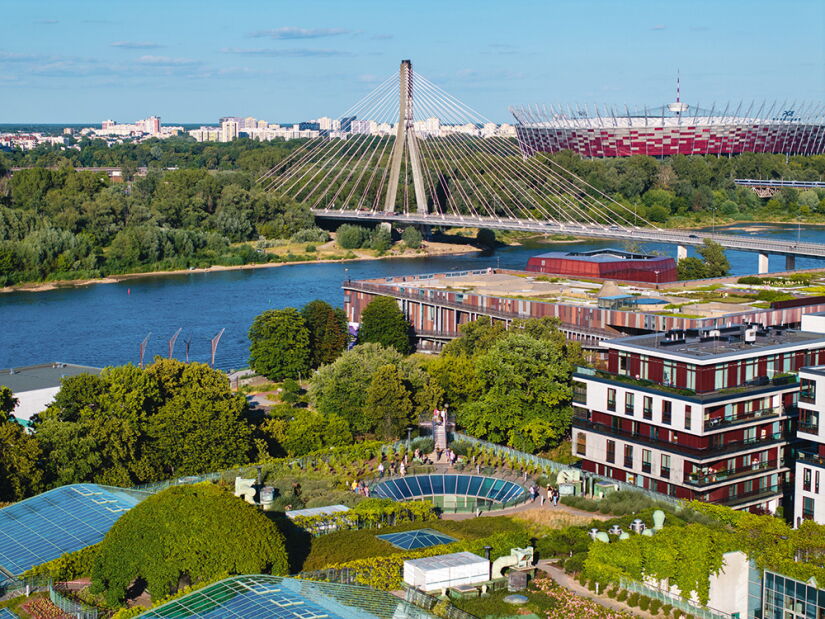
Warsaw is at the forefront of global Smart City rankings. How do modern technologies support the management of urban greenery and blue infrastructure on such a large scale?
Warsaw proves that “Smart City” status is not only about advanced digital services, but above all about improving the quality of life of its residents. We believe that technology only makes sense if it translates into real comfort for Warsaw residents – cleaner air, lower temperatures on hot days and access to healthy nature within walking distance.
On the scale of such a large metropolis, we rely on precise data analytics, which allow us to manage the urban ecosystem extremely effectively. An important tool is the Comprehensive Tree Crown Map.
We use innovation to create a more resilient and friendly city, which, combined with the exchange of experiences during Smart City Expo Poland 2025, means that technology in Warsaw always puts people and their needs at the center.
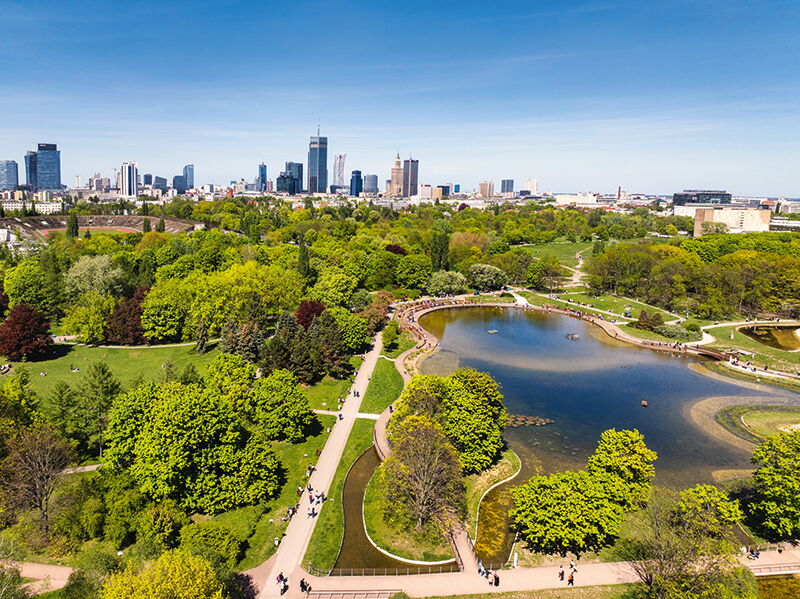
Warsaw is committed to its “Green Vision for Warsaw” with the goal of climate neutrality by 2050. What specific incentives and standards does the city set for developers to ensure that new commercial projects harmonize with the urban natural system?
The “Green Vision for Warsaw” translates into specific regulatory and operational frameworks that redefine the relationship between commercial investment and the urban natural system. The city is increasingly clear in communicating that new developments should contribute to green and blue infrastructure, rather than merely compensating for it.
The basic tools are spatial planning standards, such as the Green Space Protection and Maintenance Standard or the Warsaw Green Building Standard, local plan provisions and environmental decisions, which we use to preserve existing trees, introduce tall greenery and ensure a biologically active area with real ecosystem value. In practice, this means moving away from symbolic greenery in favor of landscape structures: retention courtyards, green roofs and terraces, and green corridors connected to the surrounding area. As a result, investors are gradually being involved in the implementation of climate neutrality goals by designing buildings and building complexes as elements of the city's natural system.