11:28 5 May 2026
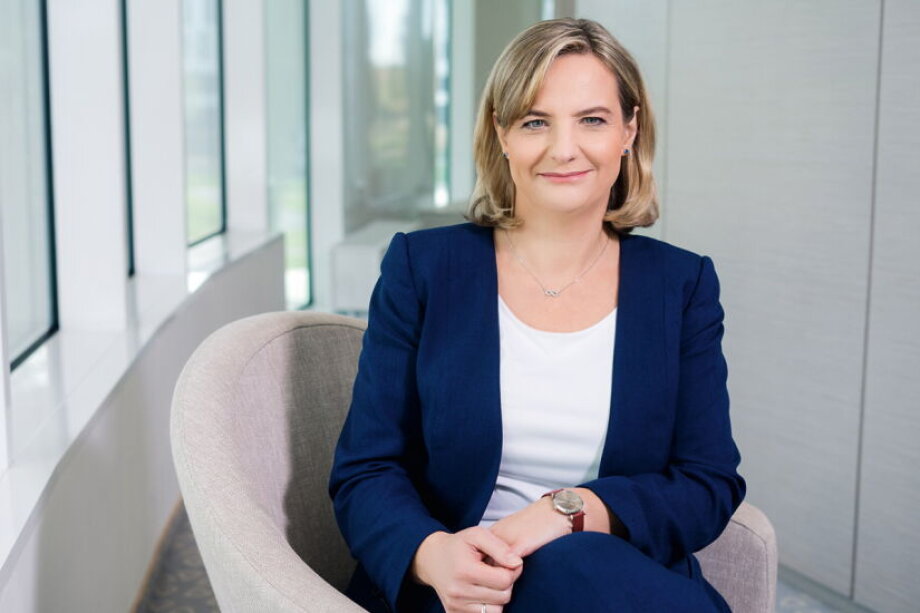
BIK, Agnieszka Szopa-Maziukiewicz Vice President and CEO of Digital Fingerprints
Leadership beyond hierarchy











Leadership beyond hierarchy
WBJ: You started your career in IT at a time when women were rarely visible in the field. What shaped your path most: education, early roles, or the organizational cultures you worked in?
Agnieszka Szopa-Maziukiewicz: My career began at a time when women in IT, especially in leadership roles, were far less visible than today. What mattered most, however, was the environment I entered. From the start, I worked in international organizations, including an American company, where competence, preparation, and commitment were valued above all else.
That experience shaped my approach. The corporate cultures I encountered in international banks were built on professionalism, responsibility, openness, and mutual respect, and these values have stayed with me.
Education also played a key role. I studied mathematics, which aligned with my analytical mindset and interest in problem-solving. In the 1990s, technical fields in Poland were still strongly male-dominated, so choosing that path required determination. In practice, it was consistent performance that allowed me to progress and challenge stereotypes.
At BIK, you’ve led large-scale transformation across technology, data, and anti-fraud systems. Which initiatives best illustrate that change, and what tangible impact did they have on the organization and the wider financial sector?
At BIK, I led the transformation of our technological architecture and operating model to ensure 24/7 service availability and process automation.
We moved to a microservices architecture, increasing flexibility and scalability, across one of Poland’s largest data environments, covering the credit histories of 25 million individuals.
We also strengthened IT–business collaboration, enabling new products, including anti-fraud solutions such as the BIK Anti-Fraud Platform, Cyber Fraud Detection, and the Behavioral Verification Platform.
This required strong management alignment, trust, and clear direction, resulting in a modern technology organization supporting the financial sector’s security and efficiency.
What does effective leadership look like in a fast-changing technology environment, and how do you build teams that can operate with both autonomy and accountability?
Today, effective leadership is less about hierarchy and more about creating an environment where knowledge, responsibility, and collaboration drive outcomes. In agile organizations, what matters most is a “democracy of competence,” where expertise outweighs formal position.
Strong teams rely on transparency, shared accountability, and responsiveness. Leadership is not about control, but about enabling people to perform at their best. Competence, empathy, maturity, and readiness for act and partnership matter more than any title.
The number of women entering technology is growing, but leadership representation still lags. What trends are you seeing, and what actually helps women progress into senior roles?
The data shows clear progress. According to the “Women at Technical Universities” report, the number of women in technology-related fields in Poland increased by 15% between 2019/2020 and 2023/2024. In IT programs, the increase reached 35.3%, compared to 19% among men.
At the same time, women still represent only 15–18% of the IT workforce in Poland. Globally, this rises to 25–30%, and in mature markets such as Switzerland, it reaches up to 43%.
This shows that progress is possible, but it requires deliberate action. Transparent career paths, equal pay, flexible work models, and active promotion of talent make a real difference. Mentoring and reskilling programs are equally important, helping women navigate complex career paths and build confidence.
Support networks, often led by experienced women, play a key role. They enable knowledge exchange, help break down stereotypes, and strengthen diversity, which directly supports innovation.
In areas like cybersecurity and data, does diversity of perspective translate into better outcomes? Where do you see that most clearly in practice?
Diversity of experience is essential in technology. Different perspectives improve problem-solving and drive more innovative solutions.
In areas such as cybersecurity, attention to detail and the ability to anticipate user behavior are critical. Diverse teams are better equipped to identify risks and design systems that reflect real-world usage, resulting in stronger, more resilient solutions.
What matters is not a single perspective, but the combination of different ways of thinking. That diversity drives progress.
You’ve said that today’s weakest link in cybersecurity is often the user, not the system. What does an effective, system-wide approach to security look like in that context?
Modern cybersecurity must go beyond protecting institutions and address the fact that users are often the most vulnerable element. An effective approach rests on three pillars.
The first is education. Most attacks target individuals through social engineering, so the most effective tools are those based on real scenarios that make risks tangible and influence behavior.
The second pillar is advanced, multi-layered security systems. At BIK, we develop solutions that detect fraud in real time across financial processes. Behavioral verification is key, enabling us to identify unauthorized access even when correct login data is used by analyzing user behavior patterns, all while respecting privacy.
The third, and most critical, element is sector-wide data exchange. Sharing information about threats enables faster response and helps prevent fraud across institutions. This model of cooperation is central to BIK’s approach in an environment of constantly evolving cyber threats.
In practice, security is not just about technology, but about collaboration, trust, and collective action across the ecosystem.
Agnieszka Szopa-Maziukiewicz is President of the Management Board of Digital Fingerprints and Vice President of BIK. A mathematics graduate of the University of Siedlce and an Executive MBA holder from the University of Warsaw, she has built her career in banking IT since 1993, in AmerBank, holding senior roles at Raiffeisen Bank Polska, Deutsche Bank PBC, and Kredyt Bank. She joined the BIK Group in 2013, leading IT transformation and anti-fraud innovation. A CIO Diamond award winner in 2018, she oversees IT, security and the development of BIK’s anti-fraud services, she oversees IT and the development of BIK’s anti-fraud services.