11:07 5 May 2026
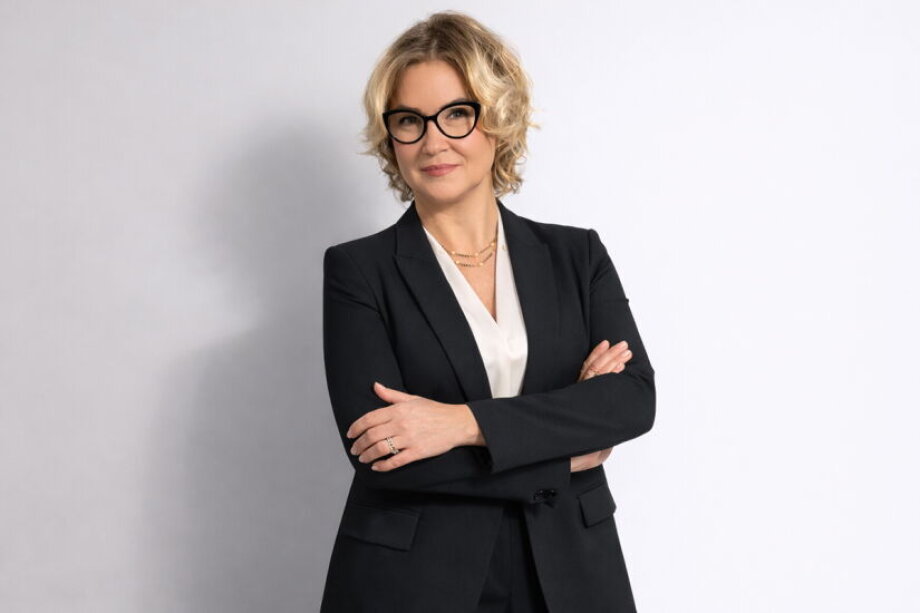
ERBUD, Agnieszka Głowacka Vice President
Change is opportunity not a threat











Change is opportunity not a threat
WBJ: You have built an impressive career in the construction industry, rising to the position of Vice President of one of Poland’s leading engineering and construction companies. What was your career path like?
Agnieszka Głowacka: I’ve always been drawn to numbers, facts, and data – much closer to being an accountant than an artist. I studied financial management, statistics, and econometrics, and even construction-related businesses.
Looking back, my career has been quite “Japanese-style”: I joined ERBUD early and stayed, growing together with the organization. But back then, it was a completely different company – smaller, more agile, and far from the scale we operate at today. I grew with the organization step by step and joined the management board nearly a decade ago.
Along the way, I’ve seen it all – rapid growth, two IPOs (ERBUD in 2007 and ONDE in 2021), and several serious market downturns. Construction is a tough industry, and crises are part of its DNA. Going through them doesn’t just test you, it shapes you. It builds resilience, discipline, and perspective.
What were some of the most meaningful achievements in your career and what lessons did you learn from them?
In the 1990s, many companies either disappeared or were absorbed by large international players. Construction is a low-margin business, sometimes a single project can determine a company’s future.
We started as a small, local firm in Toruń, operating out of a house on the outskirts of the city. Today, we are one of the leading players, with operations across Poland, Germany, and Lithuania. Of course, this is a collective success, built by many people over many years. But I value having been part of that journey from the very beginning.
What has changed, however, is how we think about leadership. It used to be said: “A true samurai must embrace the inevitability of death.” Today, even that feels outdated. I believe leadership is about your next move – your ability to grow, adapt, and keep learning. That’s something I work on constantly. Past success is never a guarantee. What matters is whether you’re still evolving.
How do you approach building strong and effective teams in such an environment, and what role does diversity play in strengthening organizations today?
I built my career in environments where women were often the minority. That teaches you quickly how to navigate different perspectives and dynamics. Today, I see diversity as one of the strongest drivers of performance – not only in terms of gender, but also experience, background, and ways of thinking.
The best teams are not the most similar ones; they are the ones that challenge each other, complement each other, and bring different viewpoints to the table. Diversity is not a slogan; it’s a real, measurable advantage.
In your experience, how important are networks of support and mentorship among women, and what can female leaders do to open doors for others?
Looking back, I can clearly recall moments when one conversation or one piece of advice made a real difference in my career. That’s why I believe so strongly in mentoring and in women supporting other women.
Today, as leaders, we have both the privilege and the responsibility to open doors for others. Sometimes it’s not about large programs; it’s about small, meaningful gestures: sharing knowledge, recommending someone, or simply giving them a chance. We can be the support system we didn’t always have.
Your initiatives encourage girls to consider careers in construction and technical fields. Why is it so important today to inspire young women to enter STEM-related professions?
This is an area where we’ve been very intentional at ERBUD; I would even say we’ve been pioneers. Our “Młode Majsterki” construction workshops at the Copernicus Science Centre have turned out to be a huge success. They have already reached over 300 participants, but just as importantly, they have generated strong media attention, allowing our message to go much further.
We also created a children’s book series, “Klara Builds,” where the main character constructs everything from wind turbines to treehouses – but above all, she builds her confidence. Internally, we run ERWOMAN, a program that connects women across all parts of the organization, from construction sites to offices and industrial services. These initiatives matter. They build visibility, confidence, and real change.
These are wonderful initiatives, and they show us how companies can change. Where do you see other stakeholders play their part, e.g., universities, and industry organizations, to prepare the next generation of engineers and managers?
We can no longer afford to operate in silos. The real value lies in collaboration between academia and business. The most effective initiatives are practical: internships, joint projects, and direct exposure to real working environments.
When universities bring theory and companies bring practice, we create something truly meaningful. Personally, I stay actively involved through advisory boards, university programs, and as an endorser for Nicolaus Copernicus University (UMK). I also do this to normalize the presence of women in this industry, so that in ten years, it is no longer something worth pointing out.
The construction sector is undergoing major changes, from digital technologies and new materials to sustainability requirements and the energy transition. Looking ahead, which developments do you believe will most shape the future of construction in Poland and Europe?
There is still a lot to build in this country. At the same time, we are entering a period of profound transformation. Technology is accelerating, expectations around sustainability are rising, and our impact as an industry is enormous. We need to adapt faster than ever before. But I see this as an opportunity, not a threat. An opportunity to build smarter solutions, increasingly supported by artificial intelligence, and at the same time more sustainable ones. I believe that the companies that successfully combine innovation with responsibility will define the future of construction in Poland and across Europe.
Agnieszka Głowacka is the Vice President of ERBUD. She graduated from Nicolaus Copernicus University in Toruń, Faculty of Economics and Management, where she currently serves on two advisory boards. She completed the ICAN Business Advisor management program and The Strategic Leadership Academy at ICAN Institute, and holds a certification to serve on supervisory boards of state-owned companies. She was the first Polish woman recognized by AACSB’s Influential Leaders. Named one of Poland’s “100 Businesswomen” by Puls Biznesu, she also co-founded the ERBUD Foundation, supporting foster youth, and leads the “Young Builders” initiative promoting construction careers among girls.