10:22 5 May 2026
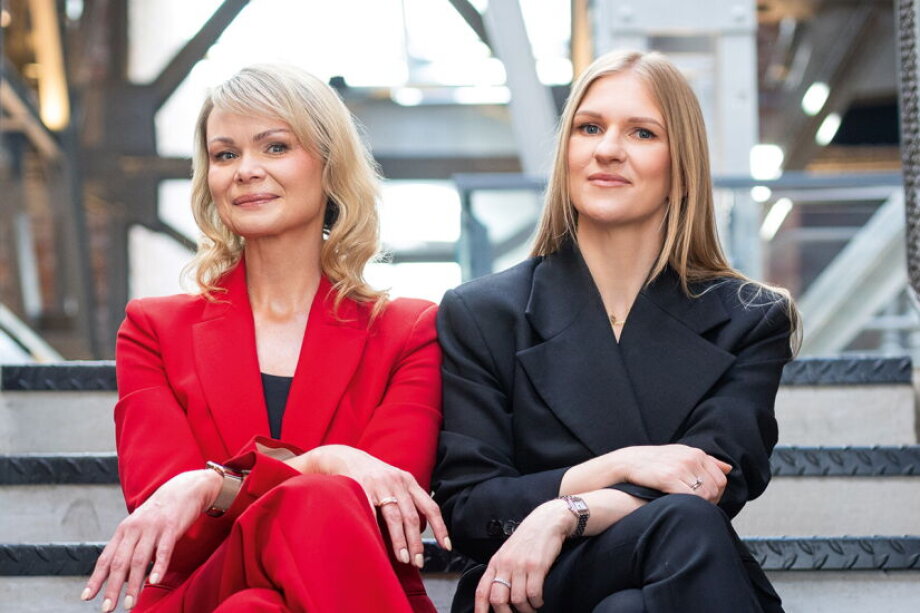
Neo-Świat, Jolanta Augustyniak-Praczyk Project Director and Justyna Roman Project Director
Competence over stereotypes











Competence over stereotypes
WBJ: Real estate is a highly technical sector. What key experiences shaped your career paths and led you to leadership roles in this field?
Jolanta Augustyniak-Praczyk: I think the key factor in getting to where we are was gaining hands-on experience. As new challenges emerged, tied to increasingly complex fit-out and construction projects, we had to continuously adapt to our environment, find our footing quickly, often in very demanding conditions, and take on growing levels of responsibility.
It was also important to combine technical expertise with a business mindset, along with the ability to work with people in challenging circumstances.
Real estate and construction used to be seen as male-dominated sectors. How do you think women are doing in this industry today?
JAP: That imbalance is still visible, although seeing a woman on a construction site no longer causes surprise as it once did. Women are increasingly taking on project management roles and are also proving themselves in highly precise fit-out work.
We are multitaskers, well organized, and often better at coordinating work and managing multiple threads at once. Our technical knowledge and preparation for leading projects are no different from men’s.
We also often stand out for our determination and resilience. We do not give up and consistently pursue our goals. Women are taking on more positions of responsibility, showing that competence and commitment matter more than stereotypes. Still, I feel that across the broader market, there should be many more opportunities.
Do you see a trend of women in real estate moving into more technical and specialized roles?
Justyna Roman: Absolutely, especially in recent years. Women are increasingly taking on technical roles in fit-out projects, including project coordination, site supervision, and engineering. This is no longer an exception but a clear industry direction.
This shift reflects changing priorities. Organizational, communication, and analytical skills now matter more than stereotypes, while the industry itself demands greater precision and interdisciplinarity.
In my team, most are women, and they successfully deliver complex projects. The change has already happened. A completed space has no gender, and leaders increasingly recognize that.
What role does mentoring play in helping women grow, and what kind of support is still lacking?
JR: Mentoring is crucial, especially early in a career and when moving into leadership. In a demanding field like construction, learning from experienced professionals accelerates growth and builds confidence.
Access to visible female role models also matters. The more examples there are, the easier it is for others to follow. It is important to show that a successfully delivered project has no gender.
Daily team support is just as important. Open communication, knowledge sharing, and real responsibility often work better than formal programs.
You have both delivered complex, non-standard projects. Could you share an example of a particularly challenging project and explain what made it so demanding?
JAP: I can share two examples. The first is a swimming pool hall with an SPA function and very high technological complexity. It is located far from central Poland, limiting access to specialized contractors. Challenges include demanding finishing details and the use of specialized equipment due to the building’s height, all under time pressure and strict quality standards.
The second is a hospital outpatient clinic with complex technical and medical installations, delivered in an older office building with active tenants, which increased organizational complexity. Logistics related to installing large, heavy equipment was also a challenge.
These examples show that fit-out goes far beyond interiors. These are highly specialized projects requiring expert input and strict quality standards.
What are the biggest challenges of delivering projects in buildings that are already in use?
JR: Delivering projects in operational buildings is one of the biggest challenges in our industry, as it requires balancing construction work with ongoing tenant activity. Logistics and precise scheduling are critical, with work often carried out at night or in phases, while minimizing noise, dust, and disruption.
User safety is the top priority, alongside coordination of multiple stakeholders, including clients, tenants, building management, and subcontractors. Strong communication, planning, team experience, and a quick response to change are key. These projects leave no room for improvisation.
Jolanta Augustyniak-Praczyk A civil engineer and architect with full professional licenses in both fields and over 15 years of experience in the industry. Currently a Project Director at Neo-Świat. She is responsible for delivering complex fit-out projects for demanding clients, combining design and execution expertise and managing investments from concept through to completion. Mother of two.
Justyna Roman A civil engineer with full professional licenses, graduate of the Faculty of Civil Engineering at the Warsaw University of Technology and postgraduate studies in project management at the Warsaw School of Economics (SGH). She has been active in the construction industry for over ten years. Currently a Project Director at Neo-Świat, where she is responsible for team management and end-to-end project delivery. Mother of two.