10:03 5 May 2026
Szczęśliwa Strona Życia, Kamila Śniegoska Therapist and Founder
Coaching women with purpose, not pressure
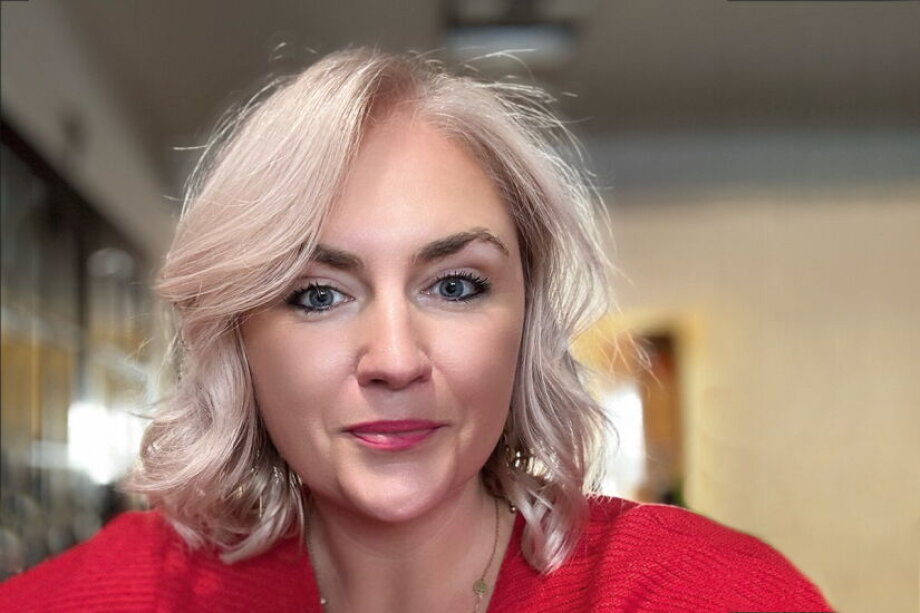











Coaching women with purpose, not pressure
WBJ: You work primarily with women as a coach and therapist, focusing on both personal and professional development. How did you arrive at this point in your career?
Kamila Śniegoska: Not directly. What I do today is rooted as much in my personal experience as in my career. I grew up in a difficult home, with a lot of instability, and from a young age, I took on the role of the one who holds things together. I remember thinking even as a child that I wanted to help women avoid accepting certain patterns in their lives. That stayed with me.
Professionally, I took a very different path at first. I spent 14 years in insurance, starting as an agent and moving into leadership roles at companies like PZU and Nationale-Nederlanden, eventually becoming a regional director. I built teams and delivered strong results, but what interested me most was always people, not numbers.
That became very clear during the pandemic. In 2021, I left corporate life and started from scratch, without clients or a clear safety net, but with the conviction that I wanted to build something more aligned with who I am and how I work.
That is a significant pivot. What exactly did you want to build instead?
The starting point was simple: I wanted to work with women. That was always there. Men do come too, but the focus of my work is women’s development.
I am less interested in motivation and more in understanding patterns. Many women look successful on the outside but feel exhausted or stuck. They operate from patterns built much earlier in life, which later show up in relationships, work, and even physical well-being.
I often work with high-performing women who feel trapped in the role of the “good girl,” constantly adapting and overdelivering. My role is not to push them into rebellion, but to help them understand where those patterns come from so they can move beyond them more consciously.
Who comes to you most often? Do you see generational differences between your clients?
Yes, and the differences are quite striking. I work across age groups, but most of my clients are women over 40, particularly between 40 and 50, with a growing number closer to 60.
Younger women are more aware of self-worth and more willing to challenge expectations, but they are often less emotionally resilient. Women in midlife usually arrive at a turning point. Their lives look stable on the outside, but internally they begin to question long-standing roles and obligations.
Across all groups, one issue repeats itself: emotional disconnection. Many women function well on the surface but no longer know what they truly feel, and that gap is often covered with work, activity or constant distraction.
Your work spans both personal development and business. How closely are the two connected?
Very closely. I see a direct link between emotional patterns and how women operate in business. Issues around self-worth, trust or control often show up in leadership, decision-making and even financial outcomes.
Many problems that look operational, such as hiring, money, or burnout, are often rooted deeper. I see women earning well but unable to keep money, or running successful businesses while being completely exhausted and unable to step back.
At the end of the day, the business reflects the person leading it.
What have you learned about solidarity among women? Is it improving?
It is mixed. I do see progress, as there are more communities and initiatives where women support each other, and that is encouraging.
At the same time, rivalry is still very real. Women can be supportive, but also competitive or envious, especially when someone becomes more visible or successful. A lot of that comes not only from workplace pressure, but from patterns we bring from home, where acceptance was often conditional.
That is why I focus on creating spaces where women feel genuinely safe. In my work, trust is non-negotiable, and many women tell me it is the first time they can openly share both success and struggle.
Did you have strong mentors along the way?
Not many. I did have women who influenced me, but some relationships became difficult once I started to grow. Support was often there only up to a point.
There was one exception from my corporate years, but overall I did not experience much unconditional encouragement from women. Interestingly, some of the most consistent support came from men in senior roles.
That shaped how I approach mentorship today. I run my own academy and will graduate more than 20 women this year. Their growth is not a threat to me, it is the point.
Where do you see this field heading in the next 5–10 years?
Demand will grow. More people understand that change is not only external, it depends on what is happening internally.
I see coaching, therapy and other forms of self-development becoming more mainstream. AI will support this, but it will not replace what people are really looking for: authenticity and real human connection.
Uncertainty is not going away, and that only increases the need for self-understanding.
Kamila Śniegoska is a psychotraumatologist, systemic constellations therapist, and founder of Szczęśliwa Strona Życia, where she works with women on personal and professional development, combining therapeutic methods with a practical approach to overcoming internal barriers and building resilience. She has created educational and development programs focused on self-awareness, relationships, and growth in both life and business. Recognized with the “Leader of Personal Development” award and featured in publications such as 50 Business Personalities and Success is a Woman, she supports women in moving from survival mode toward more conscious, sustainable development.