Women Leaders Forum 2026: Leadership beyond the stereotypes
From influence and mentoring to confidence, diversity, and wellbeing, Women Leaders Forum 2026 brought together business leaders, entrepreneurs, educators, and experts to explore what modern leadership really looks like – and what still stands in the way.
By Beata Socha
Source: Sean Reynaud
From influence and mentoring to confidence, diversity, and wellbeing, Women Leaders Forum 2026 brought together business leaders, entrepreneurs, educators, and experts to explore what modern leadership really looks like – and what still stands in the way.
“It’s not important to be the loudest person in the room. What’s important is being in the right room. Influence begins with knowing where you want your voice to matter.”
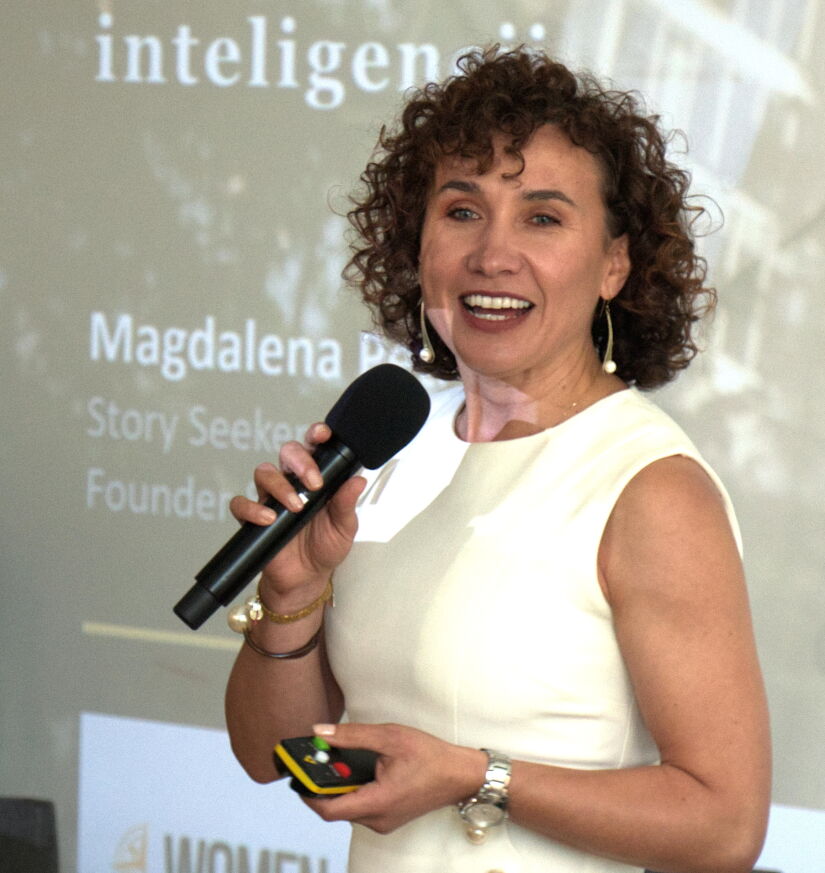
That observation from Magdalena Petryniak, Global Communication & Influence Advisor at Story Seekers, captured one of the central themes of Women Leaders Forum 2026, organized by Warsaw Business Journal and Valkea Media on May 27 in Warsaw.
Magdalena Petryniak
Throughout the event, speakers returned to a common idea: leadership is no longer defined by hierarchy, visibility, or authority alone. It increasingly depends on influence, relationships, confidence, empathy, and the ability to create opportunities – not only for ourselves, but for others.
The forum brought together executives, entrepreneurs, educators, and experts from across industries to discuss the realities of career advancement, women’s representation in leadership, the future of work, and the evolving nature of modern leadership.
Leadership starts with people
The day opened with a keynote dedicated to mentoring and leadership development.
Representing the Foundation of Women Business Leaders, Krystyna Boczkowska, former President of Bosch Poland and a longtime advocate for women’s leadership development, argued that mentoring remains one of the most powerful tools available to organizations seeking to build strong leadership pipelines.
“Mentoring remains one of the most effective leadership development tools we have today,” she said.
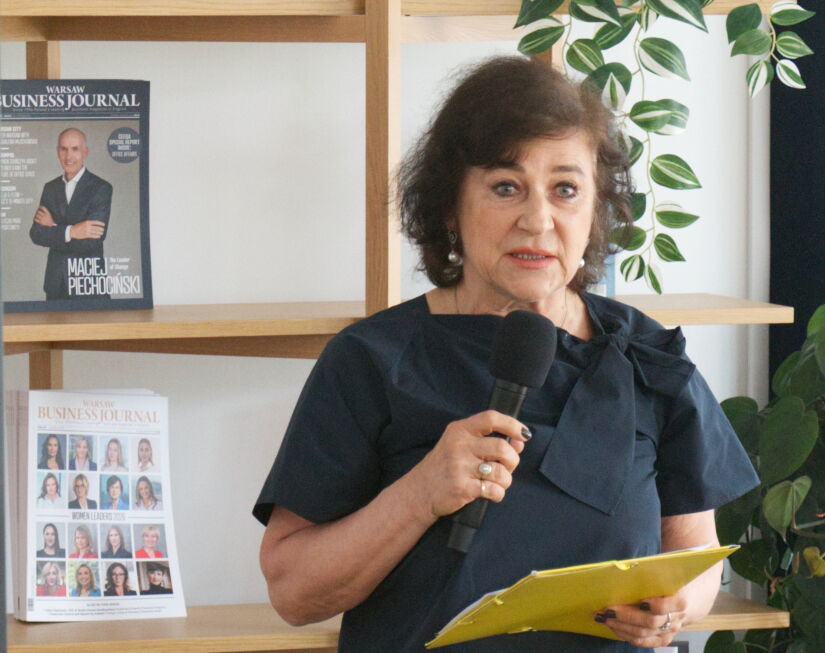
Krystyna Boczkowska
But mentoring, she emphasized, is not about providing ready-made solutions.
“Mentoring is a space for honesty. It doesn’t provide ready-made answers. It helps people ask the right questions.”
The message served as an ideal introduction to a day that repeatedly highlighted the importance of support networks, sponsorship, and leaders who are willing to invest in the next generation.
There is no single path to leadership
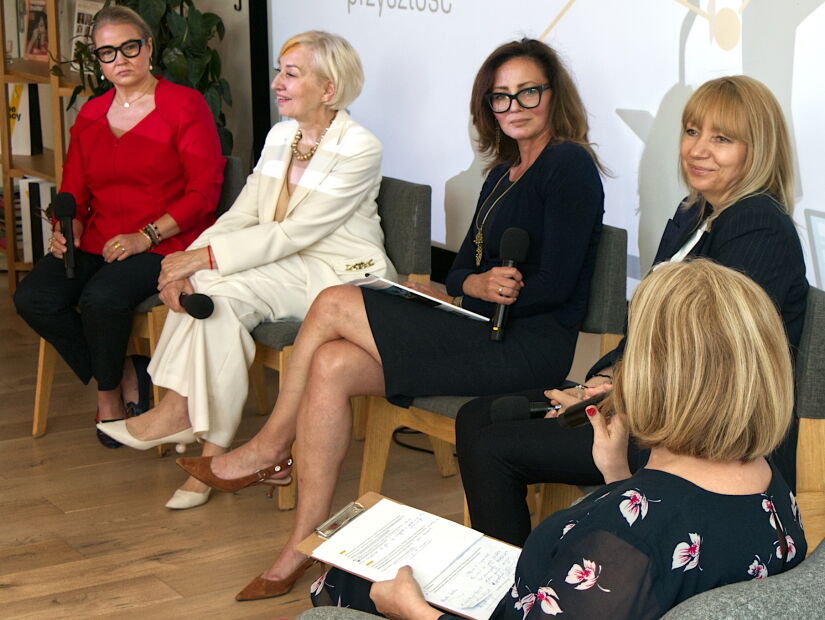
The first panel, moderated by Beata Socha, Editor at Warsaw Business Journal, titled "Glass corridors, broken rungs or your own path? How does the road to leadership really look for women?," focused on career journeys and the moments that shape them.
(L-R): Ewelina Woldan, Katarzyna Kowalska, Joanna Erdman, Dr. Katarzyna Borzym-Grzesik, Agnieszka Radwan.
Despite representing very different industries, the panelists shared remarkably similar experiences. Career progression rarely followed a straight line. Instead, it was built through calculated risks, unexpected opportunities, and people who believed in them before they fully believed in themselves.
Katarzyna Kowalska, Vice President of the Management Board at KUKE, summarized this approach succinctly:
“I always tried to embrace every opportunity life presented me with and then prove, through hard work, that I deserved it."
Joanna Erdman, President of the Cashless Poland Foundation, pointed to mindset as a defining factor.
“Once you truly believe that nothing is impossible, you become free to achieve anything,” she said.
She added that leadership requires courage, a willingness to leave one’s comfort zone, and mentors willing to open doors.
“When someone believes in you, invests in your potential, and gives you that first opportunity, extraordinary things can happen.”
The discussion also explored visibility and self-advocacy. Agnieszka Radwan, Director of Human Capital Management and Diversity Officer at Totalizator Sportowy, argued that women cannot assume their work will automatically speak for itself.
“We need to take ownership of our own visibility, step outside our comfort zones and tell others who we are and what we do in an honest and authentic way.”
That theme was echoed by Ewelina Woldan, Communication Manager at Lenovo Polska, who reflected on how seemingly small decisions can reshape careers and organizational visibility.
“Sometimes a single decision can change how the market sees us. It can transform our visibility and open doors we didn’t know existed.”
Meanwhile, Dr. Katarzyna Borzym-Grzesik, Deputy Head of Akademeia High School encouraged participants to rethink the fear of making mistakes.
“There are no bad decisions. There are only decisions we might make differently in hindsight.”
Together, the panel painted a picture of leadership that is far less about following a predefined path and far more about embracing uncertainty and growth.
Beyond the stereotype
The second discussion shifted the focus to industries traditionally dominated by men.
Moderated by Wioletta Fabrycka, owner of A Propos, the conversation began with a stark reality check. While women account for the majority of university students in Poland, their representation in technical and emerging technology fields remains disproportionately low.
“Women make up 58.5% of university students, yet only 32.4% of those studying technology-related fields and just 15.4% in emerging technologies,” Fabrycka noted.
The consequences are visible across sectors such as construction, logistics, transport, and real estate.
Yet the panelists argued that progress is happening.
Agnieszka Głowacka, Vice President of ERBUD, pointed to growing numbers of women taking leadership positions on construction sites and project teams.
“I am encouraged to see more women succeeding in roles traditionally seen as male, from construction site managers to project leaders.”
At the same time, she challenged the increasingly common narrative that diversity initiatives come at the expense of competence.
“The suggestion that women reach leadership positions because they are pushed into them rather than because they are qualified is simply untrue.”
She also highlighted ERBUD’s “Małe Majsterki” initiative, which introduces girls to construction through hands-on experiences long before career choices are made.
For Jolanta Sawińska, Regional Director at Raben Logistics Polska, the challenge is not attracting women into organizations but helping them progress through them.
“Women account for half of all new hires, yet their representation decreases at every higher level of the organization.”
Krystyna Swojak, Managing Director of Top Woman in Real Estate, shared examples of talented women whose expertise remains invisible despite their contributions.
“I witnessed a situation where a female director prepared a male CEO for a high-profile panel discussion, even though she herself could have been sitting on that stage.”
Monika Woźniak-Zawioła, Partner & CEO Poland at The Concept, brought the discussion back to business outcomes.
“Women in leadership are not just a matter of representation or political correctness. They are a business imperative.”
The discussion made one thing clear: the conversation has moved beyond access. The focus today is on retention, advancement, and ensuring that talent has equal opportunity to reach the top.
The leadership qualities we overlook
The final panel explored a topic increasingly relevant in today’s workplace: empathy, emotional intelligence, and well-being.
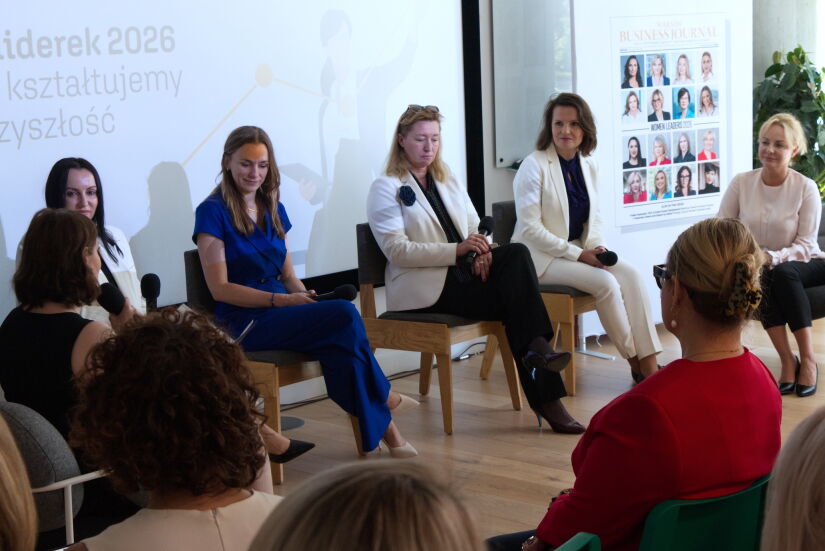
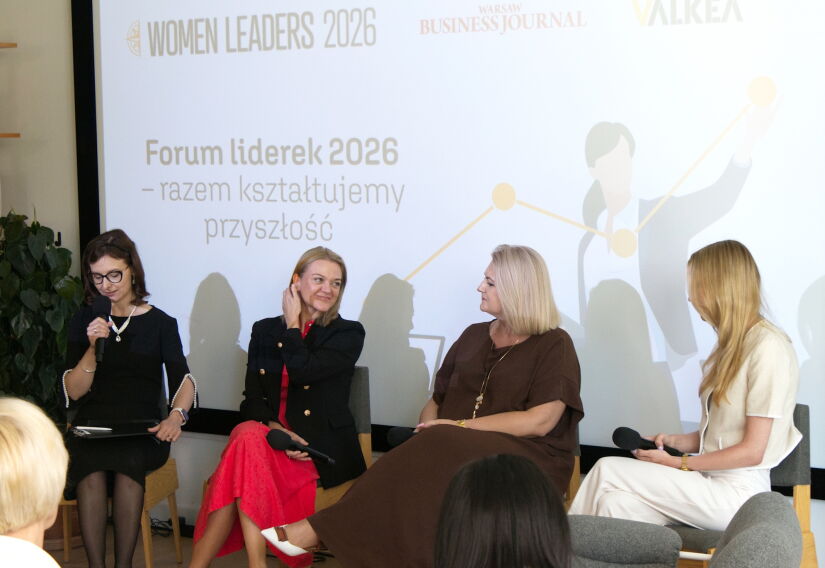
(L-R): Agnieszka Matłoka, Magdalena Zagrodnik, Kamila Śniegoska, Marta Rzeszotarska.
Moderated by Agnieszka Matłoka, Associate Partner Sustainability at Civitta Poland, the discussion examined whether organizations are adequately recognizing the leadership skills that often remain invisible.
Matłoka pointed to persistent biases in how performance is evaluated.
“When employee performance is evaluated, 66% of women’s reviews include comments on personality traits and soft skills, while men are assessed primarily on business outcomes.”
The panelists argued that leadership models are evolving, driven in part by changing workforce expectations.
“The younger generation expects more space for emotions and human connection at work,” said Marta Rzeszotarska, Executive Vice President at ClinMark.
But she also warned against confusing empathy with indecisiveness.
“I cannot imagine an effective leader who is empathetic but lacks decisiveness.”
For Kamila Śniegoska, therapist and founder of Szczęśliwa Strona Życia, the discussion turned to the hidden costs of leadership.
“Many leaders were raised to be responsible, determined, and always in control.”
Those qualities often drive success, she argued, but can also create intense pressure and ultimately burnout.
“Burnout rarely arrives overnight. It begins with poor sleep, loss of concentration, frustration, and the feeling that even success no longer brings joy.”
Perhaps the most powerful observation came when she reflected on the loneliness that can accompany achievement.
“We collect applause, promotions, and achievements, yet those external successes can sometimes mask a deep sense of internal loneliness.”
Magdalena Zagrodnik, Co-owner and Board Member at Walter Herz added that confidence remains one of the biggest barriers facing women in leadership.
“Empathy is a strength, but it must be paired with confidence.”
Influence in the age of AI
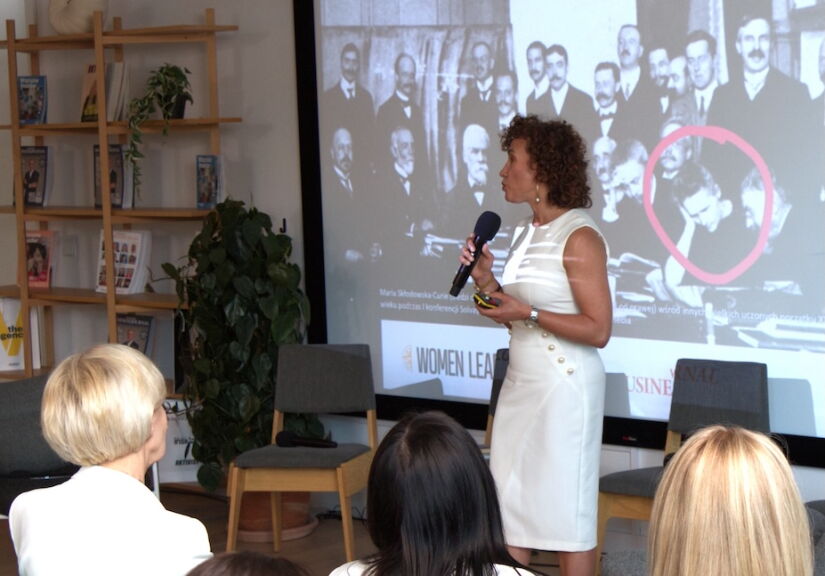
The forum concluded with a keynote by Magdalena Petryniak on influence as a leadership competency in an era shaped by artificial intelligence and changing work models.
Her central argument was simple but powerful: influence is becoming more important than visibility.
“Building influence starts with three things: defining your arena, understanding your mission and the change you want to create in people’s lives, and shaping your narrative. That’s the difference between popularity and influence.”
As organizations become more distributed and AI increasingly takes over routine tasks, the ability to persuade, inspire, and create meaningful human connections may become one of the most valuable leadership skills of all.
Looking ahead
Women Leaders Forum 2026 demonstrated that conversations about leadership, diversity, career growth, and wellbeing continue to resonate across industries.
The event was made possible thanks to the support of our partners: Civitta, Foundation of Women Business Leaders, Story Seekers, Top Woman in Real Estate, A Propos, Akademeia High School, ClinMark, ERBUD, Cashless Poland Foundation, KUKE, Lenovo Polska, Raben Logistics Polska, Szczęśliwa Strona Życia, Szkoła Numer Jeden im. Benjamina Franklina, Walter Herz, The Concept Poland, and Totalizator Sportowy.
We would also like to thank Orivene, a Polish premium skincare brand specializing in advanced skin bio-regeneration. Developed and manufactured entirely in Poland, Orivene provided the gifts included in participants’ press packs and helped make the event a little more memorable.
Most of all, thank you to the speakers, panelists, and attendees who made this year’s forum such a thoughtful and engaging conversation about the future of leadership.
(WBJ)
Get the best of “Warsaw Business Journal” delivered to your inbox daily