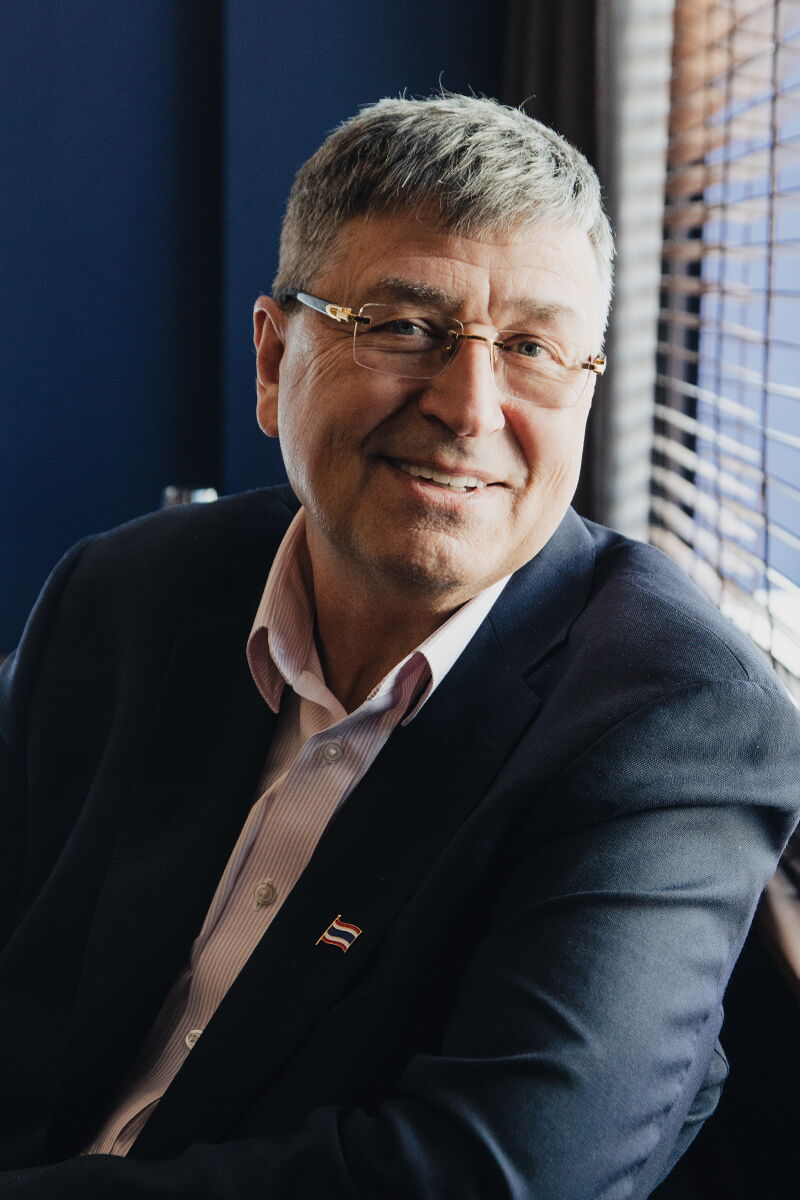
Martin Phillips of Phuket Plus, a developer specialising in condominium projects on Thailand's most sought-after island. We sat down with him to find out why Warsaw is increasingly looking east — far east.
Martin Phillips is a partner of Phuket Plus
What is driving the recent surge of interest from Polish investors in Phuket?
Around 60% of our buyers are currently from Poland, and we've been actively marketing there for the past 12 months. But the motivations are layered, because we deal with buyers across a wide age range — from younger professionals right through to those planning for retirement.
For the investor-minded, it comes down to two things: capital appreciation and yield. If you get into a project at the off-plan stage, you benefit from price increases as the building goes up — typically a minimum lift of around 20%. Then on the rental side, buyers who place their property into long-term rental can expect returns of 6 to 7%. So as a pure investment, it's quite attractive. And of course, they can use the property themselves.
Beyond the numbers, there are other motivations. Some people are concerned about security in Europe given what's in the news. Others simply want to spend extended periods somewhere with a better climate. And then there are those planning for retirement who might buy multiple units — one to live in and others to generate income. We like to say that Phuket is more than your second home.
How do Polish buyers differ from investors you see from Western Europe or the UK?
Polish buyers make faster decisions — I'm quite convinced of that. When we deal with German buyers, for example, they tend to be very methodical and precise, sometimes to the point of overanalysis. That's not a criticism; it reflects a certain engineering mindset. UK buyers, for us at least, are relatively few right now — whether that's the economy, distance, or something else, I'm not entirely sure.
Polish buyers, by contrast, are open, concise, and direct. They ask a question, we answer it, and they make a decision. There's no lingering. From our side, we're entrepreneurial — we make quick decisions too and can be flexible to meet buyers' needs. It's a very good fit.
Why should a Warsaw investor consider Phuket over Spain, Portugal or Dubai today?
Dubai is a different conversation now — the bottom has fallen out of that market very recently, and I think the tensions with Iran have finally caused what was always a hanging risk to materialise. When I was there in November, there was enormous construction, much of it standing empty, and Airbnb operators were telling me their rental income wasn't meeting expectations. We're now actively seeing capital flight from Dubai coming into Thailand.
Spain and Portugal are mature markets. Polish people know them well — they're accessible, you can practically drive there. But tourist arrivals from Poland to Thailand have more than doubled in the last three years, with well over a quarter of a million Polish visitors now making the trip annually. Direct flights are increasing to meet demand. So accessibility is improving, and when people get there, they find the properties are more affordable than the Mediterranean alternatives — with stronger investment fundamentals. The two things fit together very naturally.
Do Polish clients buy mainly for returns, wealth diversification, or lifestyle?
Honestly, it's a blend, and that blend is actually one of the things that makes this market so compelling. Some buyers are genuine Thailand enthusiasts who want to spend more time there — for them it's clearly a lifestyle purchase. Others are purely investment-driven, buying one or several units for rental income. But the majority sit somewhere in between: they'll rent the property and use it themselves. Having affection for the country you're investing in is a wonderful position to be in.
What are the biggest misconceptions Polish investors have about buying property in Thailand?
The main one is overestimating the risk. People hear "Thailand" and assume the legal framework is somehow precarious, when in fact Thailand has very strong condominium laws. If you're buying a freehold condominium, your ownership is as solid as anywhere in the world — you own it in perpetuity.
Leasehold is where the misconceptions really multiply. The registration is for 30 years, and the government doesn't allow a 90-year lease to be registered in one go. But what that misses is that you can have a legally binding contractual agreement with the developer for renewal periods beyond the initial 30 years. Those contracts, external to the land office registration, are entirely valid and enforceable — provided you're working with a reputable, experienced developer and your documentation is properly drafted.
Yes, foreigners cannot own land in Thailand — that's a fact, and I won't pretend otherwise. But the condominium laws allow foreign ownership of apartments in freehold, and leasehold with good documentation is a very secure structure. Hundreds of thousands of foreigners have invested in Thai property successfully. The risk is very manageable, and most of the people warning against it are speaking without being fully informed.
Which parts of the Phuket market do you see offering the strongest growth over the next five years?
You have to understand the structural reality of Phuket: it's an island, roughly the size of Singapore, and a significant portion of it is protected national forest or parkland that can never be developed. You cannot manufacture more land on a tropical island the way you might extend a city outward on the mainland. That finite supply, combined with growing tourist arrivals year on year, means property prices have a structural tendency to rise over time. There will always be peaks and troughs that mirror broader economic conditions, but the long-term trajectory is upward. If you're on a popular island with increasing visitor numbers and constrained land supply, you simply won't see a sustained declining market.
As lead investor in Phuket Plus, where are you personally placing capital today — and why?
All of our capital is invested in our active projects. We don't believe in overextending — we operate quite sensibly, and we'll only look at new opportunities once we've substantially sold through our existing developments. We do have a clear sense of where we're heading next, but I'll keep that close to my chest for now. What I can say is that we stay firmly focused on Phuket. We stick to our knitting.
The Element Condo is currently offering off-plan units in Phuket. For further information, visit phuketplus.com or phuketplus.pl for Polish.
Get the best of “Warsaw Business Journal” delivered to your inbox daily