9:00 5 May 2026
Unum Życie, Aneta Podyma CEO
Leadership requires trust











Leadership requires trust
WBJ: Your career includes some of the most important institutions in global finance. What experiences have shaped your leadership the most?
Aneta Podyma: What shaped me the most were moments that tested not only my competencies, but above all my values. These are situations that require courage, including decisions made under uncertainty, and responsibility for people during ownership changes, mergers, the pandemic, and the war beyond our eastern border. These are moments that are a real test of not only your strategy, but also your values. In such moments, your values stop being declarations and become a compass. They show whether we are able to act consistently, making business decisions that are at the same time fair, responsible, and attentive to others.
For me, leadership is exactly this consistency: the ability to combine a business perspective with empathy. Results matter, but the way they are achieved builds the long-term strength of an organization. People quickly sense whether values are real. When they are, they create a sense of security and belonging, and strengthen engagement, especially in difficult times.
What achievement at Unum Życie is most important to you?
Of course, we are proud of our results. We are growing at around 15% annually, we provide coverage to more than 550,000 people, we employ over 1,000 employees and associates, and every year we pay out benefits to clients amounting to hundreds of millions of złoty.
But numbers are only part of the story. What matters most is trust. Clients entrust us with protecting what is most valuable, their life and health. They do so because they believe that on the other side there are people who will support them in the most difficult moments.
For me, this is more than business. It is a responsibility. Every decision has a real impact on someone’s life. That is why leadership requires both ambition and humility, because behind every policy there is a person and their story.
How do the values of diversity and equality translate into everyday leadership?
Diversity is not a slogan. It is about daily choices and decisions. It is the way we build teams, conduct conversations, and make decisions. Organizations that are inclusive achieve better results. McKinsey research shows that companies with the highest gender diversity in leadership are about 25–30% more likely to achieve above-average financial performance. Different perspectives mean better decisions, greater innovation, and stronger resilience to change.
In practice, this means paying attention to every voice, creating space for dialogue, and having the courage to challenge established patterns. At Unum, we build this culture consciously through the Better with U program, engagement surveys, workshops on inclusive behaviors, and initiatives such as Equality Week and Diversity Month. These are not one-off actions, but a deliberate process that strengthens mutual respect and the quality of collaboration.
What role do mentoring and women’s solidarity play in business?
A huge one. Each of us remembers a moment when someone reached out a helping hand. Mentoring is more than sharing knowledge. It is about building courage, strengthening self-confidence, and creating space for honest and supportive conversation.
In initiatives such as LiderShe, the Women Brokers Club, or the Women Leaders Club at Unum, I see how valuable authentic support is. These are spaces where women share experiences, including difficult ones resulting from balancing multiple roles: professional, family, and social.
We still face challenges, including pay gaps, limited access to promotions, and stereotypes. At the same time, many women have great ambition and potential to reach further. That is why we need partnership between women and men. We increasingly see men who are conscious allies and understand that diversity is not a “women’s issue,” but a foundation of healthy organizations and strong societies. Today, mature leadership means creating space for equal opportunities and growth for everyone.
How has the role of women in finance changed, and what still needs to be done?
More and more often, we see that the so-called “glass ceiling” is no longer the only issue leading to disparity at higher levels. Increasingly, we see women’s careers stall because of a “broken rung,” a moment early in their careers when, often due to family decisions and social pressure, their professional path slows down or stops. This is where the gap begins, which later translates into lower representation of women in top positions.
Data from the Polish Economic Institute shows that women currently make up about 30–35% of board members in Europe, while in Poland it is around 25%. This is still a significant disparity. That is why EU regulations are so important, such as the Women on Boards directive, which aims for 40% women on supervisory boards or 33% on company boards by 2026, as well as the Pay Transparency Directive and the Work-Life Balance Directive.
However, regulations are only the foundation. The key is real change within organizations: investment in development, mentoring, transparent career paths, equal pay, and access to growth opportunities. We must also not forget about women aged 50+, who are still too often overlooked in the labor market. If we talk about true diversity, we must think about it in an inclusive way, at every stage of life and career.
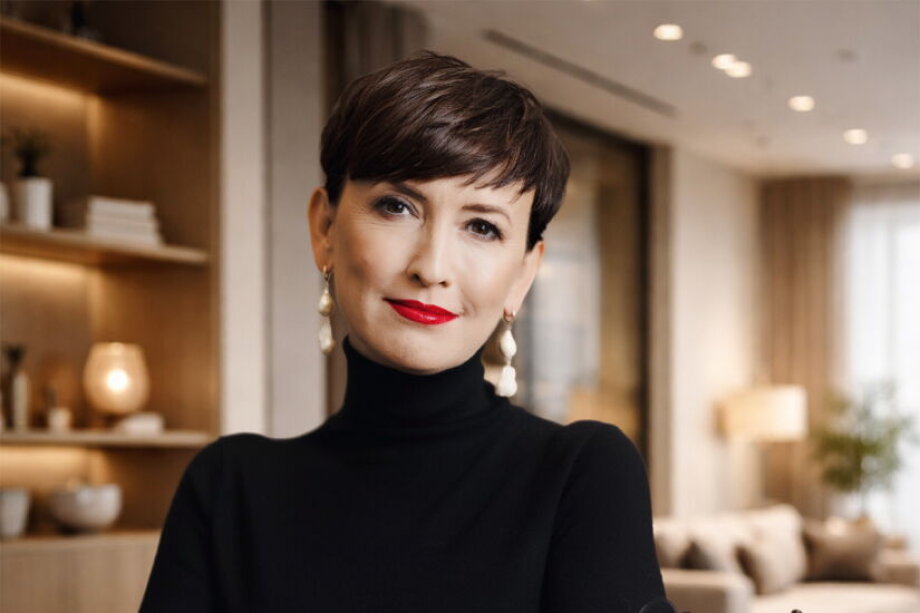
Aneta Podyma is a leader with many years of experience in finance and insurance, combining a strategic approach with empathy. She built her career at Merrill Lynch, BlackRock, AXA, and Genworth. Since 2016, she has been the CEO of Unum Życie, where she focuses on transparency, quality, and ethical relationships with clients. She is actively involved in the development of the market through the Polish Insurance Association and supports social initiatives and the advancement of women in business. She is also a lecturer at Kozminski University. She promotes equality, diversity, and preventive healthcare, and has received multiple awards in business rankings.