A leader of change who combines a vision of growth with responsibility
WBJ sat down with INEA CEO Maciej Piechociński to discuss digital transformation, social responsibility and the “I Don’t Pick Up Hate” campaign shaping business culture in Poland.
Interview in collaboration with the WBJ
WBJ: Let’s begin with the “I Don’t Pick Up Hate” campaign, which drew significant media and business attention. How did it start, and why did you decide to get involved?
Maciej Piechociński: The idea for the “I Don’t Pick Up Hate” campaign arose from observing the real challenges faced today by customer service teams, regardless of the industry. People working on the customer service front lines – with phone calls, email, chat, or social media – face the same challenge every day: helping customers solve their problems, often in stressful situations. Unfortunately, in addition to substantive issues, they also have to deal with verbal aggression and hate, which should not be perceived as an acceptable part of the job. The campaign’s primary goal is to draw attention to this problem and initiate a public discussion about communication based on respect and the well-being of those who serve as the first point of contact for customers.
The campaign was created in partnership with Discidius and the Polish Marketing Association SMB. What did this collaboration look like, and what role does INEA play in its implementation?
As a telecommunications operator handling thousands of customer contacts every day, INEA was a natural partner. We had absolutely no doubts about that.
The inspiration to take action was created by Discidius. Its message highlighted the scale of the problem. This prompted further reflection and the decision that the topic required broader discussion and practical action. We proposed expanding the initiative into a nationwide social campaign and engaging additional partners – this is how the collaboration with Discidius and the Polish Marketing Association SMB was born. We want the campaign to be a shared voice for business experts in communication with employee support. We are striving to ensure that the initiative is conducted not only digitally, but through meetings and educational activities with employees in various organizations, showing that a culture of dialogue and professionalism in communication are values we should promote together.
The campaign was inaugurated with a conference in Warsaw in January this year. What were the reactions of participants and partners during the event?
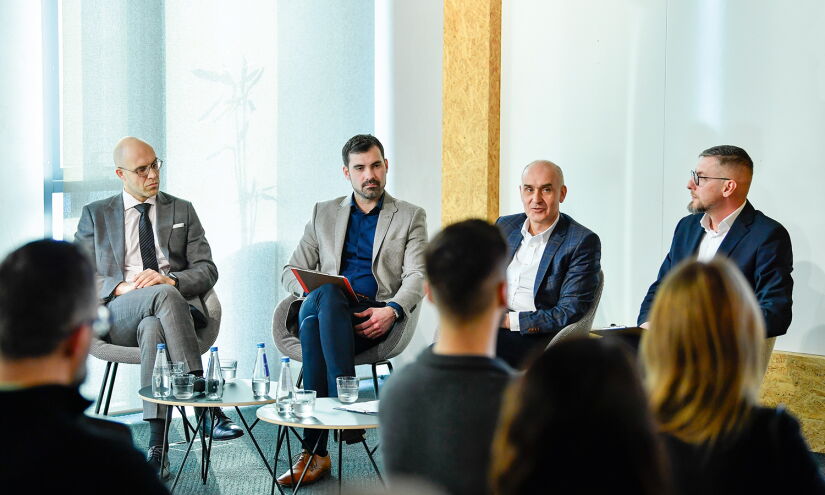
The inaugural conference provided an opportunity for a substantive discussion with communication experts, opinion leaders, and business representatives. We talked about how hate and verbal aggression affect not only employees, but the quality of customer service. We wanted to convey that conversation begins with respect and that professionalism does not mean giving up on our principles or tolerating verbal abuse – either in contacts with customers or teams. The reactions were very positive. We all agreed that this is an underestimated issue, yet one that is crucial to building healthy relationships and business standards. We have definitely had a strong start to this initiative.
In the context of the campaign, data has also emerged regarding the scale of aggression toward call center employees. In your opinion, does this indicate what further steps should be taken?
Nearly 300,000 people in Poland experience hate every day while providing remote customer service. In many cases, this is accompanied by pressure and frustration that affect employee health and turnover. There is no doubt the phenomenon is intensifying and has real consequences for society. Our observations regarding the scale of hate will certainly serve as a basis for practical educational initiatives and efforts to promote communication competencies. We hope this will further encourage additional organizations to join the debate about communication standards.
Let’s turn to 2025 at INEA. It was a busy year, especially in digital transformation. How would you assess 2025 from a strategic and operational perspective?
The year 2025 was another step in strengthening INEA’s position as a partner in the digital transformation of companies and institutions in Poland. We want technology to be a tool that helps people and organizations increase efficiency, security, and competitiveness in the digital realm. Cooperation with projects, such as the prestigious Digital Excellence Awards, showed that the digital transformation is not just about tools, but about changing approaches, organizational cultures, and competencies. Being a partner of such an event means promoting solutions that have proven effective in practice – those based on the real needs of organizations and their customers.
How did INEA implement its digital transformation communication strategy in 2025? This seems to be an area often underestimated in technology projects.
Communication around transformation has been and remains one of the key pillars of our work, because technological change is one thing, and a change in mindset is another. We maintained a dialogue with clients, partners and teams, showing that digital transformation is not just about implementing new systems, but about building competencies, understanding processes and anticipating challenges and benefits.
This translated into tools such as digital maturity assessments, advisory reports, training and support programs, and practical guidance on how organizations can prepare for change. Our communication is educational and partnership-driven, because I believe a digital strategy should be consciously understood by organizations, not simply imposed as a set of technologies.
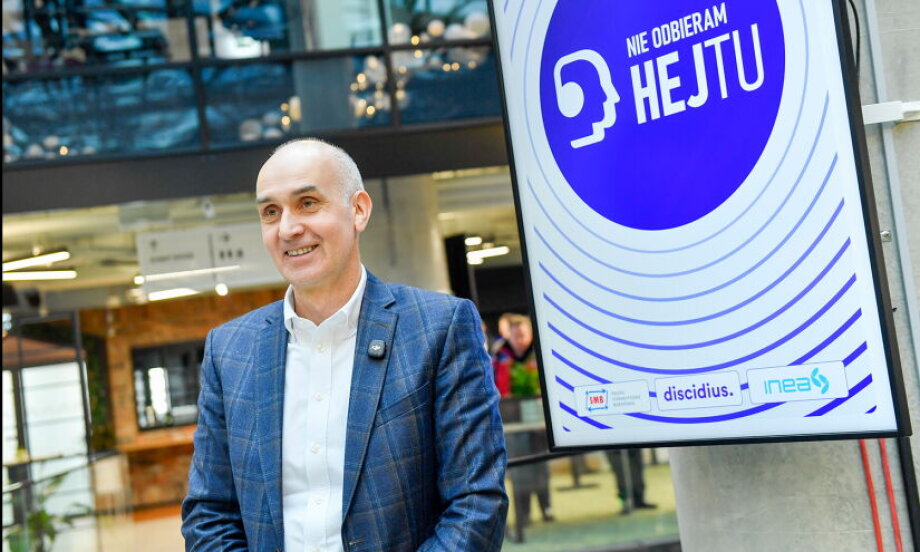
Maciej Piechociński at the “I Don’t Pick Up Hate” conference
We can see that transformation is not only about technological offerings, but also about competencies and culture within the organization. What were INEA’s greatest successes in 2025?
From a strategic perspective, one of the greatest successes was maintaining a coherent vision by combining technology with social and communicative responsibility. We carried out projects supporting the digitalization of companies and institutions, as well as educational initiatives and industry debates. Recognition for change leaders, such as the Manager of the Year 2025 title, confirms that this strategy delivers results and is gaining recognition in the business community.
However, the greatest success is that more and more clients – from small enterprises to public institutions – are beginning to view digital transformation not only through the lens of technology, but also through competencies, communication and the quality of customer experience.
And which challenges were the most difficult, both in the context of transformation and the social campaign?
The most difficult aspect was reconciling the pace of technological change with organizations’ readiness to adopt it. Transformation is a long-term process. Not only does technology change organizations but people as well: their habits, competencies, and ways of working. In the context of the “I Don’t Pick Up Hate” campaign, the challenge was turning a general problem into actions that would have a real impact on employees’ and organizations’ daily life. It is not a one-time task. It requires ongoing education, work on communication culture, and shared responsibility for creating a work environment based on respect and professionalism.
Turning to the industry, it is hard not to notice your activities within the Polish Chamber of Electronic Communications, PIKE. Could you share more details?
With PIKE, we actively participate in events that play a significant role in the telecommunications market, treating them as a space for substantive exchange of experience and for developing common directions for industry growth.
In the discussions I chaired, we focused on solutions that increased content accessibility for viewers, built broader program offerings, and enhanced advertising effectiveness. This marks the beginning of a strategic collaboration that, in my view, will strengthen the market’s value and open a new era of services tailored to the growing expectations of viewers. We are convinced that further industry development requires a business approach based on partnership. There is still much to do.
What are INEA’s plans for 2026? Will the digital transformation strategy continue, and if so, in what direction?
The near future will be full of new opportunities. We will remain close to people, to their daily matters and the challenges they face.
In 2026, we will certainly continue and scale the initiatives launched as part of our long-term strategy based on INEA’s values. We will develop our support programs for organizations, both in the area of digital competencies and in the protection and automation of processes that are becoming standard in the digital environment. Education and dialogue, with clients, partners and teams, will remain key. I believe that transformation without communication skills, contextual understanding and interpersonal competencies has no chance of success. Continuing the “I Don’t Pick Up Hate” campaign and expanding support programs are part of our responsibility for how technology impacts people and the business environment.
As a leader of change, what is most important today?
The most important thing is that technology serves people, not the other way around. Our social campaign and transformation efforts aim to show that business can, and indeed should, combine technological innovation with social responsibility and a communication culture that builds relationships based on mutual respect and professionalism.
advertisement
Get the best of “Warsaw Business Journal” delivered to your inbox daily