Interview with Paweł Michalik by Morten Lindholm
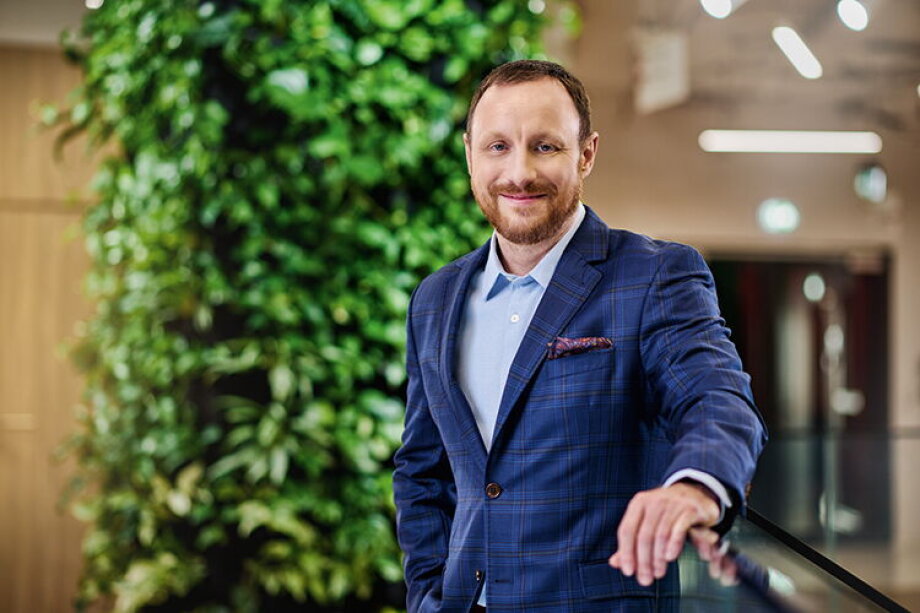
Paweł Michalik, head, ING Hubs Poland
An accomplished executive with more than 10 years of experience in IT, finance, commerce and general manager positions, Paweł was appointed head of ING Hubs Poland — a global shared services branch located in Katowice and Warsaw.
You are based in Poland but your teams work internationally and the impact is global. Can you give us a quick rundown on how it works?
We are trying to capture the best knowledge, the best competencies, and the best specialists around the world to create value for ING. And this is why our modern HUB concept was introduced — ING has five hubs in location terms but we don’t count them as geographically placed units anymore. We like to look at the hubs in a more content-based way instead. Hubs don’t work in isolation but as cross-location and cross-global organizations. No matter where in the ING organization certain specialists and experts are working — cyber-security, risk, or KYC (transaction-monitoring) — we want them to work together.
This sounds like a matrix organization…
This is a matrix structure that helps in the management of risks and proper placements of financial flows as well.
We want to make sure that the responsibility and the majority of the decision-making are actually done where the majority of competencies are placed. Kind of the next level of matrix organizations.
Our structure is different from the model where there is one leader and everyone supports the strategy that this leader introduces. We instead influence the strategy with teams that are cross-located. This is obviously difficult because it also requires a different leadership approach, which is not yet so common in organizations.
In our view, the role of the leader is not to set the direction. It is to facilitate how teams cooperate and how parts of the organizations cooperate to get as much value as possible from the teams and let them decide on the strategy.
What is your role in the structure?
My job is to make sure that our employees and teams are sufficiently skilled in finding and using synergies, cooperation between different areas, and that we also use expertise outside of the organization to contribute to the bigger picture.
I make sure job positions correspond to their maturity and their competency.
What are the benefits people get when choosing to work for ING?
Firstly, they know they are making an impact. Secondly, we really want them to grow, especially, in terms of combining different skills and different activities to create more comprehensive solutions. Through the marriage of technology and operations in business, we don’t seek to create one team that is responsible for operations and another team responsible for technology. We want those teams working together because that creates development opportunities for everyone.
The third point would be the environment we create. This means the physical place that we introduce our employees to, the flexible models of work that we offer them, and from a more psychological perspective, we want to listen to them and create a safe environment in terms of the stability of plans, the transparency of our way forward, and the transparency of influence or contribution of everyone to the overall picture.
My perspective is to build trust not only in terms of our strategy and cooperation with our partners at ING but also between the management team and employees. This is crucial for me.
Any thoughts about the competitive Polish labor market?
Labor markets are hot now. This is not something unique to Poland as it is what we see when we look across all the markets. It is a global trend now, not easy for everyone, but this is something we must take as a given and be prepared for. Fortunately, we have a strong brand and we can offer employees to be involved in defining, designing, and supporting the strategy of ING. This is what we emphasize: being with us means having an impact and influence on what is happening at ING.
Tell us about the anti-fraud services you are developing.
Anti-fraud services describe out intention quite well. It is one of the projects we are working on right now, though not the biggest. This brings us back to the concept of hubs. We began building anti-fraud support for ING a few years ago but right now we are accelerating this support by creating an anti-fraud hub. More specifically, this means that we would like to collect and combine the experience and knowledge of anti-fraud experts from around the world.
This function will help all of the ING countries to counteract the fraud threats out there. This is not unique to ING. Cyber and fraud threats are rising in all environments and institutions.
So, this is certainly a very hot topic now with a lot of money involved and many financial institutions allocating big budgets to investments in this area.
What is a bit different for us is exactly how we do it. For example, we get experts from the most developed markets. Markets with more digital exposure are most heavily affected by threats and we want to use specialists from those markets to contribute to the central solution and help the countries and the markets that are less developed. This explains the concept of hubs quite well. We collect the best knowledge that is out there and help the ones that lack this knowledge and competency in their local markets.
This idea breaks the practice of building centralized functions in bank headquarters, as was typically the case in the past. Wherever the headquarters were placed, the expertise of that location’s market was used. We want to change this by using hubs. We want to find the best experts, not only in the central location but maybe in the Polish market, which is much more experienced and much more affected by cyber security threats and fraud threats because the market is more advanced and more digital.
What will your future focus be on? What are your plans for further developing ING Hubs Poland?
People are always going to be at the heart of our strategy. We will continue to have investments in various areas that develop our technology support, going much deeper with the responsibilities that we have, having more influence in tech, more influence in AML, and more influence in risk management. This is going to be our strategy.
The future bank products and services should come from hubs. Not only from my part of the organization but, in general, we must make sure we now deploy the technology that is going to make it possible to scale our support faster than the growing volumes. This is our game and our goal. This is a broader discussion at ING. We are now building a capacity or capabilities in certain locations, the next step is to use technology to a greater extent, building competency in the hubs and powering them with technology to scale the impact.
In some business areas, we are still going to grow up, strengthen our competences, secure the pool of specialists and experts, and make sure that such approach is the basis of our strategy. The next step will be not to grow up so rapidly but focus on impact we create on our customers, services we provide.
I think this is also something that should be mentioned. It is a journey. You can talk about this kind of transformation only when you are ready, only when the foundation has been built. It's when you already have a team that is competent and can make this next step. They understand the impact of the activities being done. This is the kind of concept that we have now, that we want to look for other business areas in which we are perhaps not as involved, maybe not so well developed in terms of competencies and we want to help here to be able to take the next step.
In terms of the development of your people’s managerial, leadership skills and business skills, what kind of programs or systems do you use?
Our program aims for the development of leaders and it is pretty broad. So, it is not closed to the MT's small leadership team but targets the whole management layer. This is important as we expect slightly different things from the managers now. I mean extending their expertise outside of their current domains. We seek to expand technical profiles with business knowledge, and business profiles with technical understanding. This is in general a developing activity. I would say that this is a must for the future. We have been pretty successful so far and we already see many development opportunities for our leaders and managers. This is an appealing story that we are making now.
Do you think it will mean that they have to travel more again or is everything doable digitally?
Our intention would now be to make sure that we align the teams that are in different locations. Not only or not always on the receiving site or strategic steering site.
We are rather going to visit other locations, maybe not only headquarters, so it's still going to be important to travel. Probably less than we did before the pandemic but I also believe in personal contact because if you really want to understand what challenges the teams face you need to be with them. It doesn’t matter whether you are a line manager of a small team or a department head. You need to be with the people to know the work, to get the context, help them, and see their struggles.
This is exactly the role of a leader now. Understand why people are struggling and make their environment better, not only set directions.