15:14 3 August 2026
Poland posts strongest first half in eight years as investment exceeds EUR 3 bln










According to Colliers’ latest report, CEE Investment Scene H1 2026, commercial real estate investment volume in Poland exceeded EUR 3 bln, representing an increase of 71% y/y and the strongest first-half result since 2018. The performance confirmed Poland’s position as the most liquid and diversified market in the CEE region.
Compared with other regional markets, Poland stood out not only for the scale of investment activity but also for its structure. Major transactions were completed across the retail, office, logistics, and residential sectors, meaning that Poland’s strong result was not dependent on a single asset class. This broad-based investor activity was particularly important for the market, while the level of diversification reinforced Poland’s position as the most liquid and diversified market in CEE.
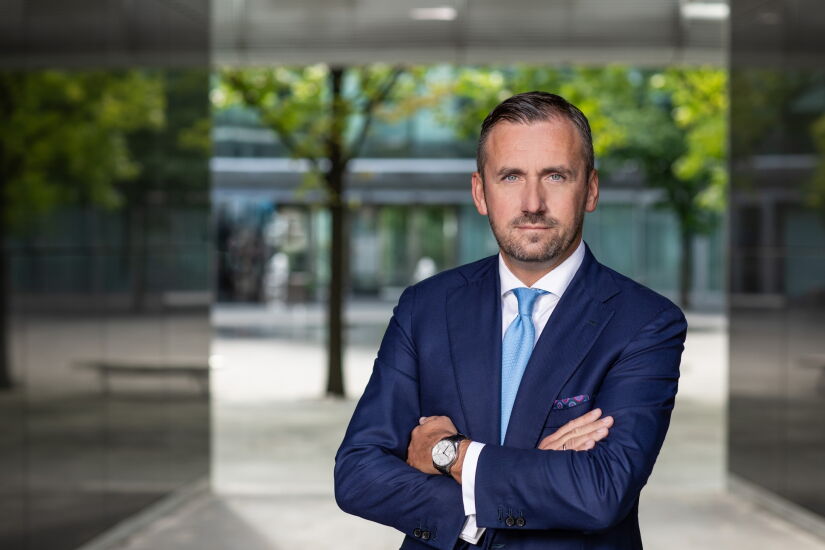
“Investment activity in Poland accelerated significantly in the first half of 2026, supported by growing investor appetite across all major asset classes. Transaction volume reached EUR 3 bln, an increase of 71% y/y. The EUR 2 bln invested in the second quarter resulted in the strongest Q2 performance ever recorded in Poland’s commercial real estate market. Investment volume in H1 2026 reflected not only transactions carried over from 2025, but above all a broader recovery in investor activity across the sector and deals initiated this year,” says Piotr Mirowski, Senior Partner and Head of Investment Services at Colliers.
Retail leads the market
Broad investor activity was particularly important for the Polish market, as its strong performance was not dependent on a single asset class. Retail remained the leading sector, with transaction value exceeding EUR 1 bln. It was followed by industrial and logistics properties, private rented sector housing, and offices. This diversification indicates a more balanced capital market than during the most defensive phase of the cycle.
The office sector also regained momentum, particularly in Warsaw and selected regional cities. Polish investors played a significant role in several transactions involving prestigious office assets, confirming that domestic capital is no longer merely a substitute for foreign investors during periods of uncertainty. It is increasingly becoming a structural source of liquidity, particularly for mid-sized assets that are well known to the market.
“Prime asset valuations generally remained stable. However, we expect yields for the best office buildings in Warsaw’s central business district to fall clearly below 6.0% in the coming months, while capital values are likely to reach new records. Market liquidity in the first half of the year continued to be supported by strong activity from Czech, US, and German investors, alongside continued engagement from domestic capital. We expect the second half of the year to bring further diversification in capital sources,” adds Piotr Mirowski.
Largest transaction in the history of Poland’s PRS market
One of the most important transactions in the first half of the year was the sale of 18 completed Resi4Rent projects to Vantage Development for EUR 575 mln. The portfolio comprises 5,322 apartments in Warsaw, Kraków, Wrocław, Gdańsk, Łódź, and Poznań.
It was the largest transaction in the history of Poland’s institutional private rented sector market and represents an important benchmark for the segment’s further development. Another major transaction was the sale of a 70% stake in the Posnania shopping center.
Poland leads the region
Commercial real estate investment across the six main Central and Eastern European markets, known as CEE-6, reached EUR 5.8 bln in the first half of 2026, confirming a clear return of investment activity to the region.
However, the recovery is not broad-based. Capital is flowing selectively toward assets offering stable income, high energy efficiency, compliance with ESG standards, and long-term growth prospects.
Against this backdrop, Poland was the region’s standout investment market. The Czech Republic recorded more than EUR 1.4 bln in investment during the first half of the year, remaining one of the most stable and lowest-risk markets in the region. In Hungary, investment volume approached EUR 0.6 bln, the highest level since 2021, reflecting the gradual return of investor confidence following several years of caution.
Strong economic fundamentals support the real estate market
Poland remains one of the fastest-growing large economies in the European Union. GDP growth is forecast at 3.5% in 2026 and 2.9% in 2027. Economic expansion will be supported by private consumption, EU-funded investment, infrastructure development, the energy transition, defense expenditure, and industrial modernization.
This is highly significant for investors. Poland is no longer viewed solely through the lens of cost competitiveness. It is increasingly regarded as a large, diversified, and strategically important European economy combining strong domestic demand, developed logistics infrastructure, industrial capacity, a polycentric urban structure, and a growing role in strengthening the resilience of European supply chains.

“The return of capital to the CEE region is largely driven by relatively strong economic fundamentals, with Poland standing out in particular. The country’s strong performance shows that investors are increasingly positive about the outlook for the Polish economy compared with the rest of Europe. Amid high geopolitical uncertainty and weaker growth in parts of Western Europe, capital is seeking markets that offer scale, liquidity, and long-term growth potential. Poland is increasingly meeting all three criteria simultaneously.
“Our forecasts indicate that commercial real estate investment in Poland may reach approximately EUR 6 bln for the whole of 2026, while investment volume across the CEE region could reach EUR 12.5–13 bln. This would mean that nearly half of all investment in the six largest Central and Eastern European economies would be allocated to Poland, further underlining the importance of the Polish market to regional and global investors,” says Grzegorz Sielewicz, Chief Economist for Central and Eastern Europe at Colliers.
Outlook for the second half of the year
The first half of 2026 demonstrated that capital is once again recognizing the potential of Central and Eastern Europe. However, investment decisions are now being made far more selectively than in previous cycles.
The region’s competitive advantage is increasingly determined not only by its economic growth prospects, but also by asset quality, the resilience of business models, and the ability to respond to long-term economic trends. In this environment, Poland remains one of the most important destinations for capital in Central and Eastern Europe due to the scale, liquidity, and diversification of its market.
(Press Materials)