6:01 9 September 2026
Invoice exceptions test finance automation
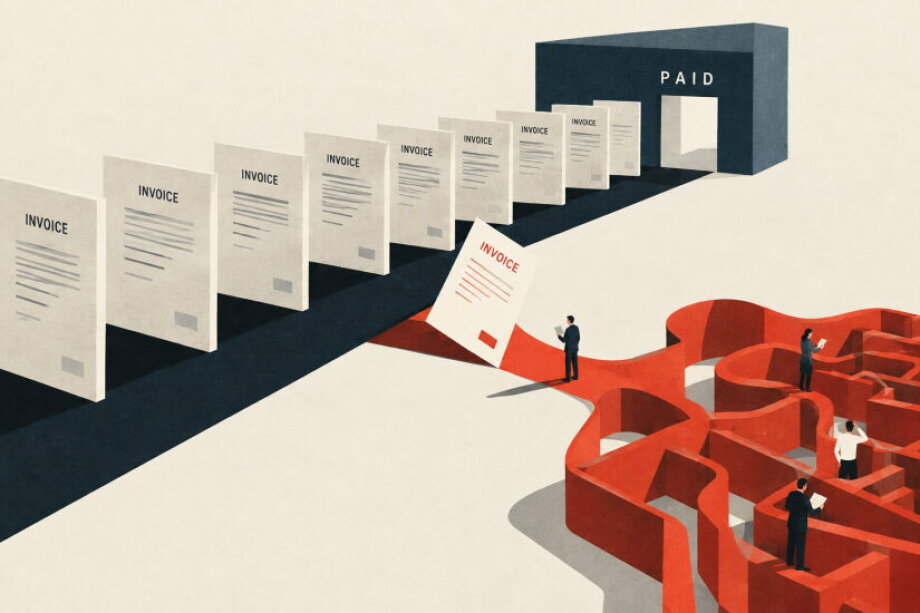









Since the launch of the National e-Invoicing System (KSeF), routine invoices are now being processed with increasing efficiency. However, bottlenecks still remain. Among the most significant are exceptions, which may arise for different reasons but lead to similar outcomes: delayed cash flow, missed early payment discounts, strained supplier relationships, and tied-up working capital. Ionuț Valentin Sas, SVP Finance at UiPath, outlines the challenges associated with these exceptions, their underlying causes, and potential solutions.
When an invoice deviates from the expected pattern, there may be several reasons: a mismatch with the purchase order (PO), a missing approval, incorrect coding, or a supplier inquiry. From that point onward, the issue typically moves into email threads and spreadsheets, making the work of finance departments increasingly complex. How can organizations simplify and accelerate the processing of invoices that do not follow the standard path?
To properly understand the issue of exceptions, it is useful to introduce the concept of straight-through processing (STP) – a process in which an invoice moves from receipt to payment without human intervention. This is one of the most effective tools available to finance departments as document volumes continue to grow. Companies such as Canon report STP rates of as much as 90 percent for certain categories of invoices.
Meanwhile, according to the Ardent Partners State of ePayables report, even the highest-performing accounts payable departments achieve only around one-third of that result. This gap illustrates the transformation already taking place within accounts payable. As routine invoices become increasingly self-processing, the verification of standard transactions is becoming less important than assessing situations, coordinating activities, and resolving cases that fall outside the standard workflow.
Most automation systems were designed with predictable transactions in mind. All other cases continue to return to people, without any mechanism that would allow them to be resolved more quickly or consistently. Missing information is rarely the issue. The problem is that the required information is scattered across multiple systems and must be manually assembled before a decision can be made. Handling an exception often requires collecting data from ERP systems, procurement platforms, contracts, transaction histories, and supplier correspondence. This is precisely where most of the time is lost.
Poland phased in the introduction of the National e-Invoicing System (KSeF) starting with large taxpayers in February 2026, extending to all remaining businesses in April of this year, with micro-entrepreneurs to follow in January 2027. This represented an evolution in itself, while simultaneously providing clear and increasingly urgent signals of the transformation taking place within finance departments.
The system's first months of operation have shown that document standardization simplifies routine processing while also bringing to light issues that previously remained in the background. As implementation experience indicates, the greatest challenge has not been the technology itself, but the organization of work.
Processes that had relied for years on emails, scanned documents, and PDFs suddenly had to be redesigned. This is further complicated by the specifics of the Polish market: purchase invoices received from foreign suppliers remain outside the scope of KSeF and continue to be processed through separate channels. As a result, many companies now operate parallel document workflows: a structured process for domestic sales and a traditional one for imported purchases. This represents a new, clearly defined category of exceptions that accounts payable systems must deal with every day.
Moreover, regulatory compliance is only the starting point. The ongoing evolution of accounting also presents an opportunity to modernize the entire corporate finance function and transform the approach to exception handling—not only to meet implementation deadlines, but also to set the pace of automation within the competitive landscape.
As AI agents take over an increasing share of the work involved in resolving exceptions, transparency, auditability, and control become critically important. Governance should not slow down decision-making; rather, it should give organizations the confidence to automate low-risk tasks while maintaining operational transparency, explainability, and meaningful human oversight for higher-impact decisions.
Well-designed orchestration ensures that people remain responsible for decisions rather than simply processing them more efficiently. This becomes increasingly important as finance departments automate successive stages of the invoice lifecycle. Trust in AI does not come from removing people from the process altogether, but from clearly defining when human judgment should remain an integral part of it.
By fostering this type of accountability through effective governance, organizations can transform control and regulatory compliance from a constraint into an accelerator for further automation and digital transformation.
The changing paradigm in finance can be summarized as a shift from automating invoices to resolving exceptions. CFOs must begin to view exceptions as the next frontier of finance automation rather than as a final add-on to document processing. The foundation of this transformation is business orchestration: bringing together the work of people, systems, and AI agents for every exception, instead of simply passing the case to someone else for later handling.
AI agents can complete most of the preparatory work before a human becomes involved. They can gather the necessary information, analyze how similar cases have been resolved in the past, recommend next steps, and prepare draft communications for suppliers. They will not replace human judgment. They can, however, accelerate it and ensure that it is grounded in better information.
The greatest competitive advantage will belong to those leaders who turn what has traditionally been a source of delays into a strategic asset. Poland already has examples of successful digitalization and automation, including organizations such as PZU and Tauron. Local organizations now have another opportunity—this time in finance—to set the pace and direction of digital transformation across the region. Those that succeed will be the ones that bring exceptions under control.
About UiPath
UiPath (NYSE: PATH) is a leader in business orchestration and automation, trusted by organizations worldwide to transform enterprise complexity into intelligent, secure operations where AI agents reason, robots act, and people lead. Built for the modern enterprise and the world's most regulated industries, UiPath integrates automation, orchestration, AI, and testing into governed, scalable workflows—unlocking innovation at the speed of business while delivering the controls and compliance enterprise leaders demand. Visit www.uipath.com or Test Cloud for more information.